








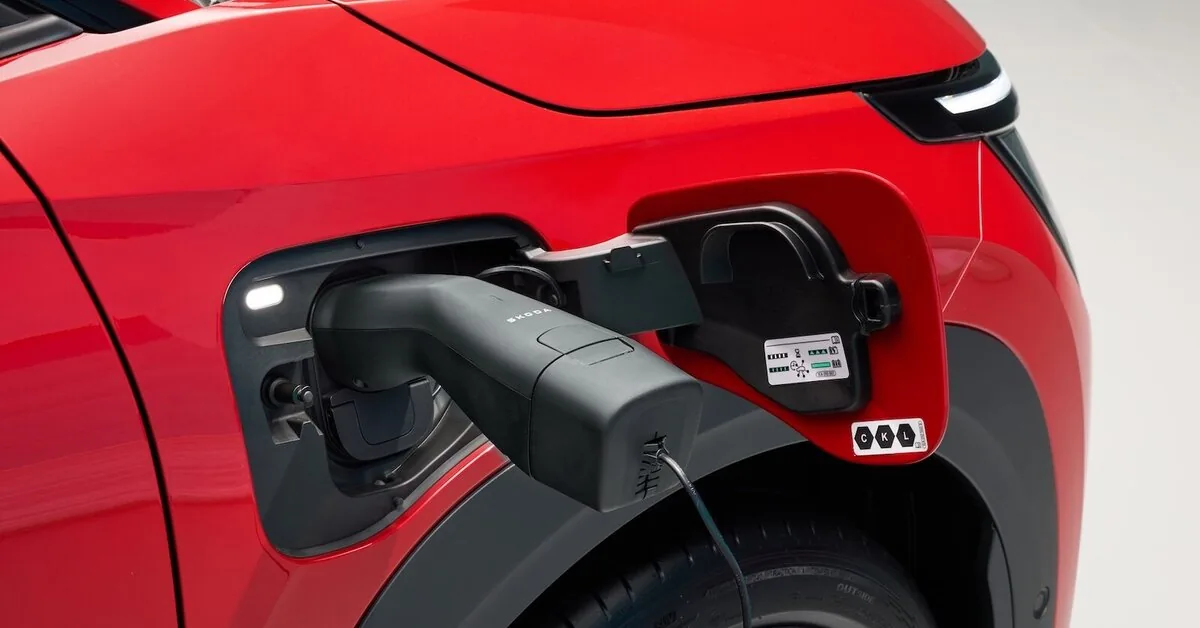
However, this technological barrier is beginning to fade – during the live presentation of the new Škoda electric cars, a solution was demonstrated where the electricity usually flowing from the house to the car was redirected in the opposite direction. Energy was transferred at a power of up to 11 kW.
Read more After the Fed interest rate decision, most Asian stock market indices are rising
The relevance of this technology is increasing in Lithuania. According to the Lithuanian Energy Agency, by the end of 2025, there were 44.3 thousand electric cars registered in the country and 170.2 thousand prosumers operating. For 68 days last year, Lithuania produced more electricity than it consumed at that time. Therefore, it is becoming increasingly important not only to produce energy but also to have a place to temporarily store it to save or partially hedge against natural disasters.
One battery would be enough for several days
ESO calculates that a small individual house consumes about 3 thousand kWh of electricity per year, while a larger one consumes about 5 thousand kWh. This corresponds to about 8 and 14 kWh per day, respectively.
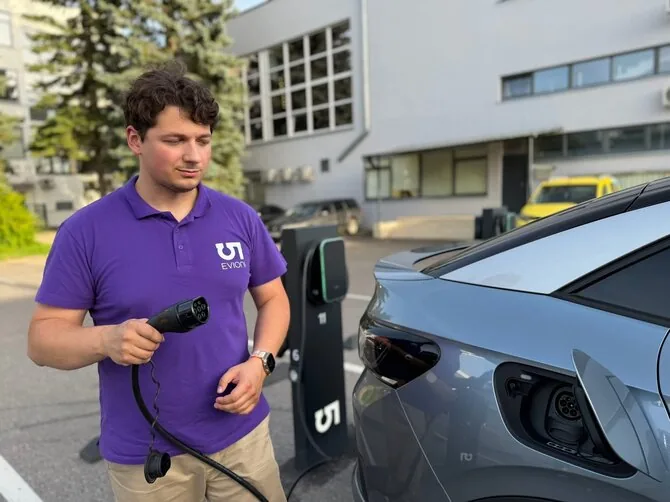
“Let’s say an electric car has a 60 kWh battery, but a fifth of its energy is reserved for a future trip. Considering about 10% energy transfer losses, about 43 kWh could be used for the house. This amount would be enough for a small individual house for more than five days, and for a larger one – about three days. In winter, if electricity is also used for heating, this time would be much shorter,” explains Ignas Petrikonis, head of the charging solutions company Evioni.
The specialist warns that it is important not to confuse power and capacity. The 11 kW power achieved during the demonstration shows how many devices the car could power simultaneously, but not how long the energy will last. Using the full power continuously, 43 kWh would be used up in about four hours.
From a coffee machine to the power grid
The simplest way to use such technology is to power individual devices directly from the car, for example, tools, a coffee machine, or a refrigerator. This function is called V2L and is already offered in some current electric cars.
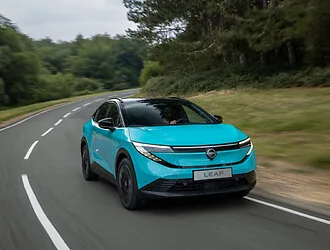
The next step is V2H, where the car battery is connected to the entire home electrical system. The surplus energy produced by solar panels could be stored during the day and used in the evening. With a variable pricing plan, the car can also be charged during cheaper hours and its energy used when electricity prices rise.
For example, if 6 kWh is transferred this way per day, and the final electricity price difference is 15 cents per kilowatt-hour, considering energy losses, theoretically about 290 euros could be saved per year. The actual result would depend on the electricity plan, car parking time, equipment cost, and battery usage limits.
Read more John Malkovich returns to Lithuania: a biting performance awaits
The third level is V2G, or returning electricity to the grid. Cars could be charged when there is a lot of cheap energy and give it back when consumption increases. The International Energy Agency points out that this requires not only suitable equipment but also clear regulation and a settlement model.
The technology already works, but the entire chain is missing
Evioni’s head I. Petrikonis states that an important change will take effect on January 1, 2027. From then on, newly installed or upgraded public and private charging stations must comply with the ISO 15118-20 standard, allowing the car and station to exchange data not only about charging but also about electricity delivery.
However, a common standard does not yet mean that every electric car can power homes. This requires a fully compatible chain: the car, the station, software, and a properly prepared home electrical system.
There are already AC stations prepared for this technology on the market costing less than 1 thousand euros, but they still cannot deliver energy from any electric car.
Well, according to the previously given example of 290 euros annual savings with a compatible bidirectional station currently costing 3 thousand euros, the payback period would be about ten years. Moreover, constant use of the electric car as a storage device may accelerate battery degradation. Therefore, at least for now, the greatest value of such a system may not be a lower bill but preparation for natural disasters and temporary power outages.
An electric car would also not automatically replace a generator. For it to power the house during a power outage, the building must be safely disconnected from the main grid and switch to an independent mode.
“So, the electric car does not replace either a conventional storage device or a generator. However, in the long run, such a car can definitely be used as a plan C. If the entire home system is adapted for this, the car battery, depending on consumption, could power the most important devices from a few hours to several days. In everyday life, it would also allow better use of own solar energy and reduce electricity costs,” summarizes I. Petrikonis.
Read more A rare find on the edge of Lithuania: beneath a thin layer of soil lies 1000 years of history