








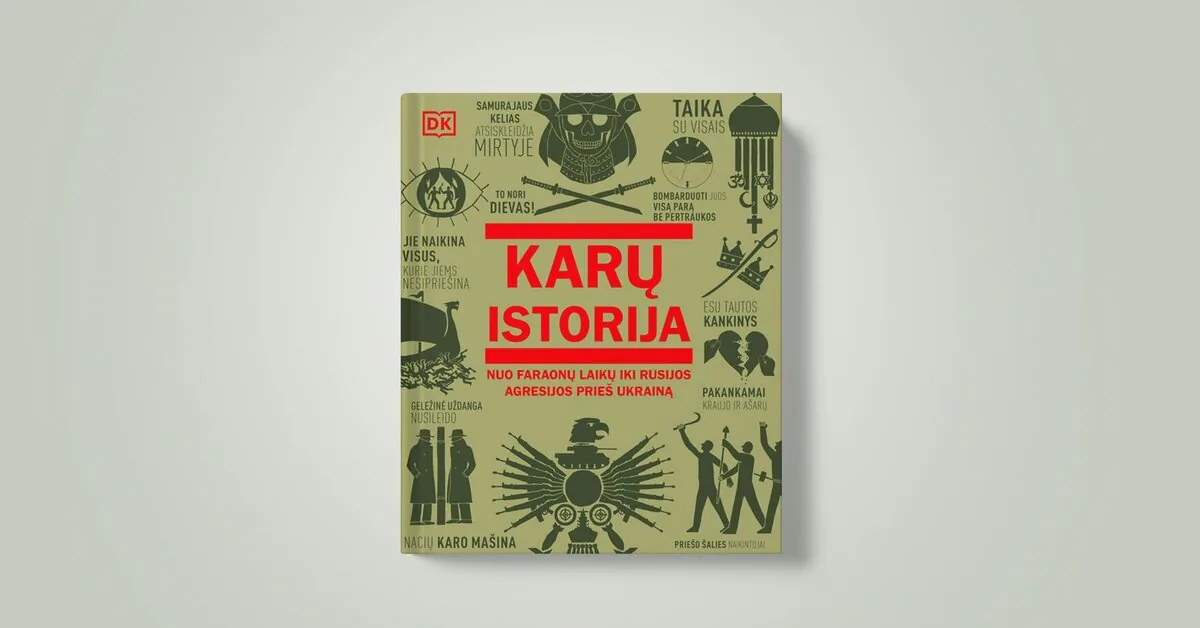
War is one of the oldest and at the same time most complex phenomena in human history. From the first armed clashes to modern conflicts, it has accompanied the development of civilizations, destroyed states and created empires, changed borders, societies, and people’s destinies. But why did people start to wage war in the first place? What prompted communities to take up arms and kill each other? Have the causes of wars fundamentally changed over thousands of years, or have only the justifications and means of war evolved?
Read more It has been revealed how many Revolut customers in Europe were affected by the data security breach
The authors of this book, among whom are many professional historians, do not limit themselves to recounting the most important battles and conflicts. They seek to look at war more broadly – as a political, economic, social, and technological phenomenon. The reader is told why specific conflicts arose, what goals their participants pursued, how armies were organized, how war strategy and tactics changed, and how new inventions fundamentally transformed the nature of warfare itself.
At the beginning of human history, conflicts arose over the most basic things: water, food, hunting grounds, or a safe place to live. With the formation of the first states, fights began over fertile lands, trade routes, natural resources, political influence, and power.
Ancient empires expanded their territories, in the Middle Ages religion was often used to justify wars, and in modern times violence and aggression began to be justified by communist, Nazi, or other ideological doctrines. However, despite different periods and ideologies, many wars share similar core aims: to seize territory or resources, establish dominance, impose one’s will on others.
Read more For two operations, border guards detained 6 people for smuggling, 3 of them – officers
Along with humanity, war itself has changed. Stone weapons and clubs were replaced by spears, bows, and swords, later by gunpowder and firearms. As technology advanced, the battlefield was supplemented by artillery, machine guns, tanks, aviation, and submarines. In the First World War, new means of destruction were used on such a scale for the first time – from machine guns and chemical weapons to tanks and military aviation – demonstrating the destructive power industrialized war could achieve. In the Second World War, this power grew even more. The advent of nuclear weapons made it possible to destroy entire cities instantly and even raised questions about the survival of civilization itself.
However, “The History of Wars” covers not only well-known European conflicts. The book also tells about wars that took place on other continents, allowing the reader to gain a much broader picture of the development of warfare and the experiences of different civilizations. Unfortunately, wars have not faded into the past – they continue today. The large-scale Russian aggression against Ukraine that began in 2022, which is also discussed in this book, has no end in sight yet.
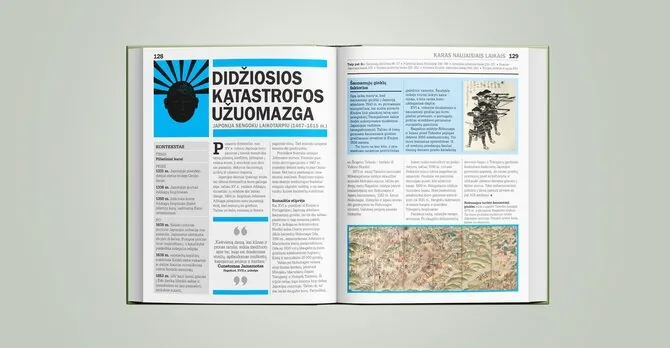
The reader will meet many historical figures in the book – rulers, military leaders, and politicians whose decisions in one way or another changed the course of history. Various narratives are complemented by abundant visual material: historical photos and illustrations, maps, and diagrams that help better understand the scale, course, and significance of the described conflicts.
Read more Expert warns: what data should not be trusted to artificial intelligence
The book was translated from English by Norbertas Venckevičius.