








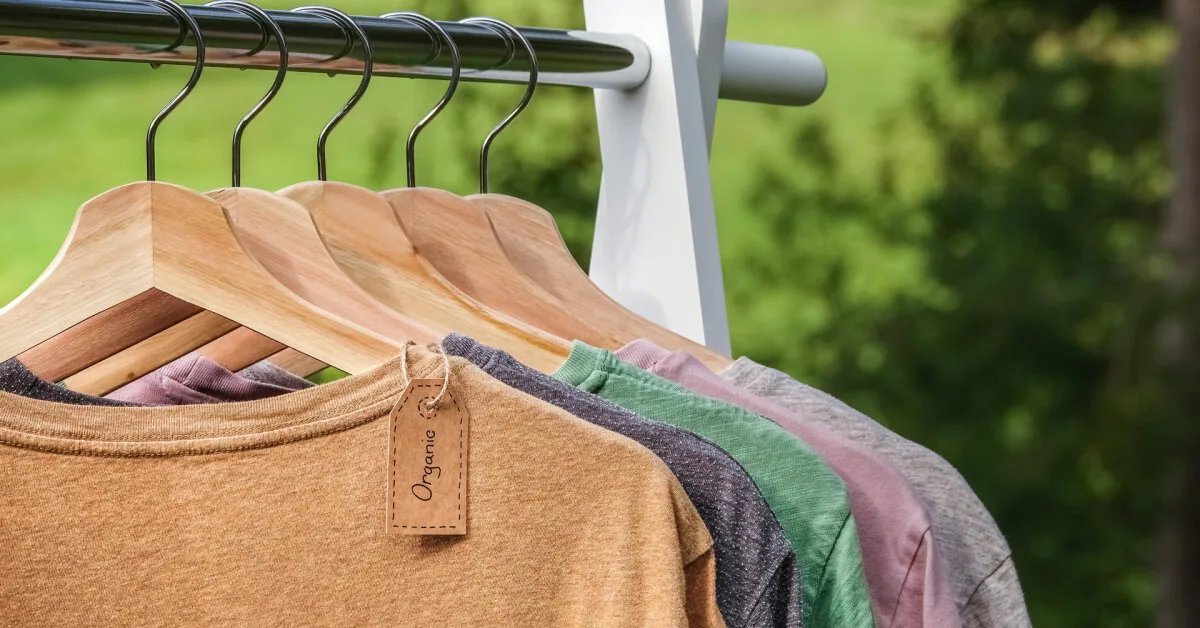
Is it possible to have clothes whose production is environmentally friendly? A team of scientists from the Textile Technology Department of the Center for Physical and Technological Sciences (FTMC) is developing eco-friendly clothing solutions – and for this purpose, they are working with one of Lithuania’s most famous fashion designers, Seržas Gandžumianas.
Read more „We have no other choice“: Lebanese leader spoke about the agreement with Israel
New eco-friendly and fashionable clothing collection – January 2028
One of the important projects carried out by the FTMC Textile Technology Department is the development of eco-friendly casual wear. To ensure they are not only sustainable but also aesthetic, the scientists invited S. Gandžumianas to assist – and this is not the first time: a jointly created collection was presented in 2022; vests, sweatshirts, and pants were made from hemp fibers and other material blends. This time, the aim is to use pure hemp fiber for the production of knitted fabrics – for the first time in Lithuania.
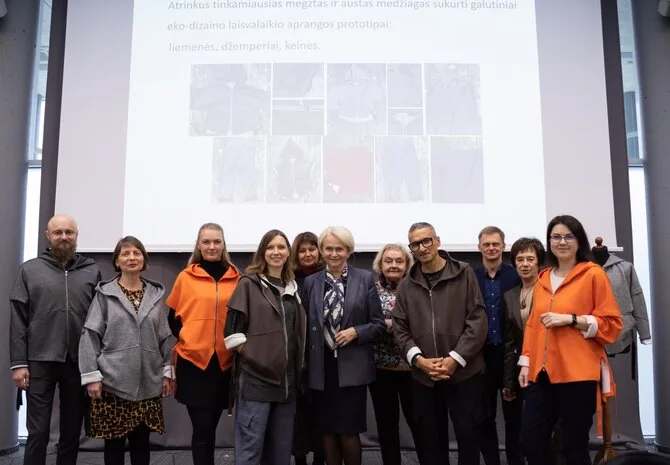
Why? The project leader, Dr. Aušra Abraitienė, senior researcher at the Smart and Functional Textiles Laboratory of the FTMC Textile Technology Department, emphasizes the sustainability aspect:
“Cotton dominates the natural fiber market worldwide, but its cultivation requires many pesticides, water, and crop rotation. The productivity of cotton per hectare is relatively low – so it is no longer considered an eco-friendly fiber. Meanwhile, growing hemp fiber is much simpler: it does not require chemicals, is undemanding to climate conditions, does not require crop rotation, and from the same land area, about twice as much fiber can be obtained compared to cotton.
Another advantage is that practically the entire plant is used. Hemp can be used to produce textile fiber, press oil, manufacture construction and insulation materials. Finally, hemp fiber has many valuable properties. It is light, very strong, and durable,” says the FTMC scientist.
She adds that this fiber is resistant to mold and moths and has excellent thermal insulation properties. Thus, this project aims to create a sustainable alternative to cotton fiber products and expand the eco-friendly clothing market by introducing all manufacturers and consumers to new possibilities for environmentally friendly textile production.
The new clothing collection is planned to be presented in January 2028.
“This project reflects my chosen path – to create sustainably. Collaborating with the FTMC team allows me to engage with the latest innovations and explore previously untried material and creative possibilities. This is essential in contemporary fashion and the constantly changing environment,” says fashion designer S. Gandžumianas.
According to scientist A. Abraitienė, it is much easier to create and produce textiles where hemp is blended with synthetic fibers. However, although these blends facilitate easier processing into products, they do not decompose quickly in nature, and their further use remains problematic. Therefore, the FTMC textile experts’ idea is to use pure hemp yarns without any additives.
Another innovation is that materials made from hemp yarns for such clothes will be dyed not with chemical but natural dyes. Various plant waste, coffee grounds or residues, wood processing waste, and other biologically derived materials that release color pigments may be suitable for this.
“We aim for the entire production process from start to finish to be as environmentally friendly as possible. We invited the well-known designer S. Gandžumianas as a partner because he has extensive experience in sustainable and ecological fashion. His involvement is an important recognition of our work and the project itself,” says the scientist.
Necessary solutions for current problems
A festival held a few weeks ago brought together leaders in fashion, business, science, and innovation shaping the future of sustainable fashion. FTMC Textile Technology Department’s Smart and Functional Textiles Laboratory employee Dr. Ingrida Padleckienė participated, presenting a report and speaking in a discussion.
“The future belongs to sustainable textiles – materials made from renewable raw materials, lasting longer, and easier to recycle,” says the scientist.
She devotes much attention to developing eco-friendly textile solutions: applying methods that allow future clothes to have additional properties using less water, energy, and chemicals.
For example, her team’s research is related to the treatment of natural fiber materials with low-pressure plasma. This method activates the surface of materials and thus helps reduce the amount of chemicals and dyes used in dyeing and finishing processes. The biological origin materials used for dyeing and finishing are obtained from agricultural, food, and wood industry waste.
Read more 25 political prisoners released from Belarus will be transported to Lithuania
Equally important are the studied properties of newly developed materials, such as comfort, resistance to various environmental factors, and durability.
According to I. Padleckienė, these and other solutions are becoming increasingly relevant today because conventional clothing and other textile product manufacturing is one of the biggest (though little visible) challenges related to consumption. She spoke about these and solutions to the public at the “Sustainable Fashion Week” event.
“A big problem is so-called fast fashion. Clothes are bought more often, worn for shorter periods, and discarded faster. The majority of textile waste (about 85%) ends up in general waste containers and is later incinerated or disposed of in landfills, where products made from synthetic fibers do not decompose for several centuries.
Fifteen percent of textile waste is collected in special containers, where it is sorted for recycling and use for technical purposes, such as cleaning rags. And less than 1% of textiles worldwide are recycled back into new clothes, so most valuable raw materials are simply lost.
We have such a low figure for a reason. Textile products made from two or more different fibers can usually only be recycled chemically by dissolving one of the fibers. This is an uneconomical and environmentally unfriendly process because it requires a large amount of chemicals. For this reason, chemical recycling is applied quite rarely, and the possibilities for recycling mixed fiber textiles into new textile products remain limited,” explains the FTMC scientist.
She emphasizes that challenges are posed not only by textile waste but also by production itself – it requires large land, water, and energy resources and uses many chemicals. About 60–70% of today’s textiles consist of synthetic fibers, mostly polyester, made from petroleum products. Washing synthetic products releases microplastic particles into the environment, whose capture in wastewater treatment plants remains a significant challenge. Therefore, some microplastics enter rivers, lakes, and other water bodies.
Three paths to more sustainable textiles
At the fashion festival, I. Padleckienė talked about the solutions world experts propose to address these ecological problems. According to the scientist, there is increasing discussion about materials made from a single type of fiber, wool, and hemp – these three ways are considered among the most promising directions because they help reduce waste, extend product lifespan, and create better conditions for recycling.
“The main advantage of single-fiber materials is that they are much easier to recycle and can be returned to textile production processes. This is one of the most important principles of the circular economy.
However, it is important to understand that sustainability does not always mean a product made from a single fiber. Although such textiles are generally easier to recycle, it is necessary to evaluate the entire product life cycle. If a properly selected blend of natural and synthetic fibers ensures greater garment durability, better shape retention, and allows it to be worn for many years, such a product can be more sustainable than a single-fiber garment that quickly wears out and becomes waste. Therefore, to reduce environmental impact, it is important to find a balance between recyclability, functionality, and product durability,” says Ingrida.
Another solution is wool, which is a natural, renewable, and biodegradable fiber. According to the scientist, this material has excellent thermoregulation properties: it warms in winter and helps maintain a comfortable body temperature in warmer weather. Wool absorbs moisture without causing a damp feeling, naturally accumulates fewer odors, so woolen clothes can be washed less often. This saves water and energy. Moreover, quality wool products can be worn for many years or even decades.
“However, wool production also poses certain environmental challenges, so it is important to choose responsibly grown or recycled wool products,” reminds I. Padleckienė.
Speaking about hemp, the FTMC researcher reiterates its good properties – strength, eco-friendly growing conditions, and natural biodegradability. However, there is a challenge: hemp fiber is more difficult to process and to make soft, consumer-attractive clothes from it. That is why active scientific research is being conducted in this area to preserve hemp’s good properties while improving wearing comfort.
“In summary, materials made from a single fiber help solve textile recycling problems, wool allows longer use of products and reduces care needs, and hemp provides the opportunity to create clothes from raw materials with a smaller environmental impact. The goal of all these solutions is the same: to create durable textiles that serve as long as possible and, after their use, can be efficiently returned to the circular production cycle,” says the scientist.
Read more The doors opened to the renovated «Lemon Gym» sports club