






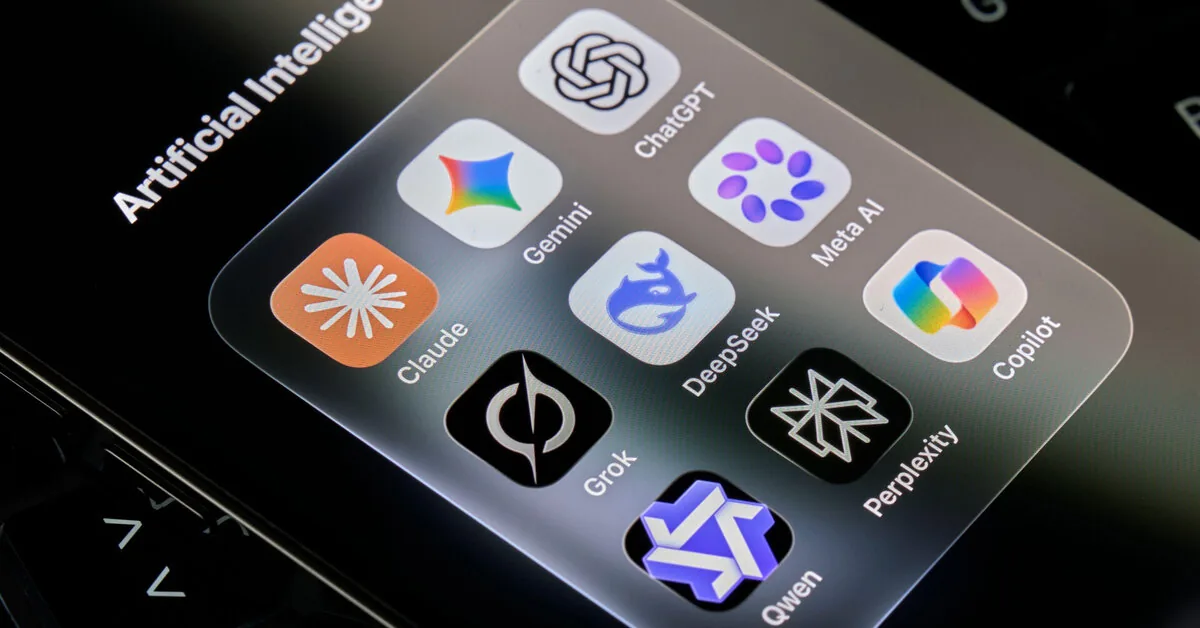
OpenAI stated that it is working together with Anthropic and Google to implement an idea proposed by Google DeepMind CEO Demis Hassabis.
Read more From the court – a blow to Donald Trump
He suggested establishing a self-regulatory institution modeled after the Financial Industry Regulatory Authority, which oversees US financial brokers and investment firms.
D. Hassabis called in July for the US to create an organization that would test the most powerful AI systems before they are released to the public.
“Funding should be substantial and probably mostly come from the industry to attract world-class technical talent and provide the necessary computing resources for large-scale testing,” wrote D. Hassabis.
However, there is no general consensus on how to move forward.
The head of Canadian AI company Cohere recently accused dominant US AI labs of forming a “cartel” under the guise of safety.
“AI needs safeguards. This is not up for debate and never has been. The debate is about who writes them, who can participate, and whose interests the rules protect,” wrote Cohere co-founder and CEO Aidan Gomez in a blog post on Sunday.
Concerns about AI safety have increased in recent weeks, including warnings from two employees who left major AI developers due to concerns about risks to humanity.
Last week Jacob Coxon left Anthropic and warned that AI companies are “gambling with our lives.” He previously also worked at OpenAI.
Read more Italy and Spain have extended mutual border controls aimed at managing the influx of migrants
On Monday, former Google DeepMind researcher Bilal Chughtai agreed with the concerns expressed by J. Coxon and others.
“I sincerely believe that AI could kill us all and that we may run out of time to avoid such an outcome,” B. Chughtai wrote on social media.
On Saturday, Anthropic CEO Dario Amodei called for slowing down the pace of AI development. This opinion was supported by OpenAI CEO Sam Altman, Elon Musk, and D. Hassabis.
However, US President Donald Trump dismissed warnings about AI risks as a hoax.
Nvidia CEO Jensen Huang also opposed this.
“The coincidence of these words and then the prediction causes alarm and concern, and it should not be done. It is irresponsible,” J. Huang said on Monday at a conference in Los Angeles, where Donald Trump called him on stage.
The grim prospect that AI could destroy humanity “is not based on science,” said J. Huang.
Read more Is it still possible to enlarge the penis as an adult? Here is where facts end and myths begin