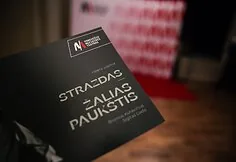






The beginning of the work’s history dates back to 1967, when poet Sigitas Geda wrote the poem “Strazdas”. Director J. Vaitkus, after reading S. Geda’s text, suggested to composer Bronius Kutavičius to undertake this project, and later the work was transferred to the theater stage. Thus was born an unusual oratorio, initially called a “sound drama,” which later became the opera-poem “Strazdas – the green bird”.
Read more Why is Tuesday the worst day to go to the gas station?
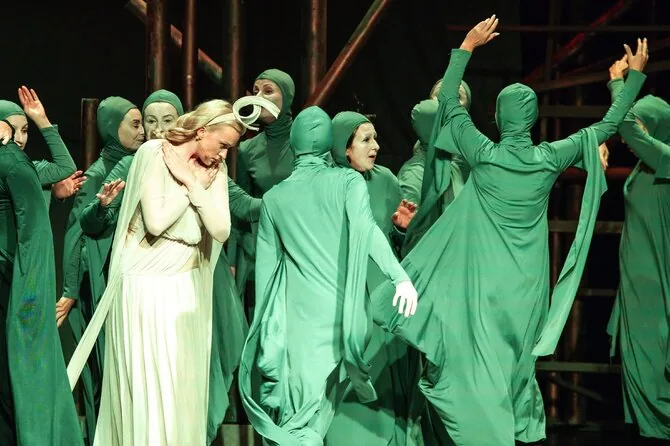
Its central figure is the peasant singer Antanas Strazdas-Drazdauskas, transformed in the performance into the Man-Bird character. Music, poetry, dance, folklore elements, and traditional hymns are used here to speak about the relationship between man and nature, the closeness of man and woman, the meaning of existence, history, and national identity.
War, historical memory, and a generation unfamiliar with oppression
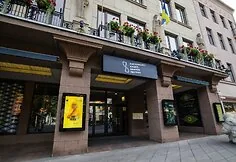
In 2023, the work was revived in the composer’s native Panevėžys and today speaks to a different generation – one that accepts independence as their life reality and knows the most painful periods of Lithuanian history not from personal experience. The music director and conductor of the performance, Dr. Imantas Jonas Šimkus, considers the preservation of historical memory one of the main reasons why such works must return to the stage.
“My grandmother says that people usually start wars when they forget the previous ones. When historical memory disappears. Those born after 1990 are increasingly distant from the especially painful events for Lithuania, so it is very important that the younger generation does not lose that historical memory and understands the great price paid for the life we live today,” says I.J. Šimkus.
According to the conductor, “Strazdas – the green bird” reminds us that freedom and an independent state are not given by default. Antanas Strazdas’s biography here becomes the basis for a much broader story about Lithuanian statehood.
“Strazdas here is a kind of personification of Lithuanian statehood. Lithuania experienced press bans, wars, censorship, various oppressions, yet it still rose, moved forward, and survived. One of the main ideas of the work is gratitude to the people who tried to preserve the native language and script, fought for our independence, and throughout the ages managed to withstand oppression,” says the conductor.
Between paganism and Christianity: B. Kutavičius’s musical codes
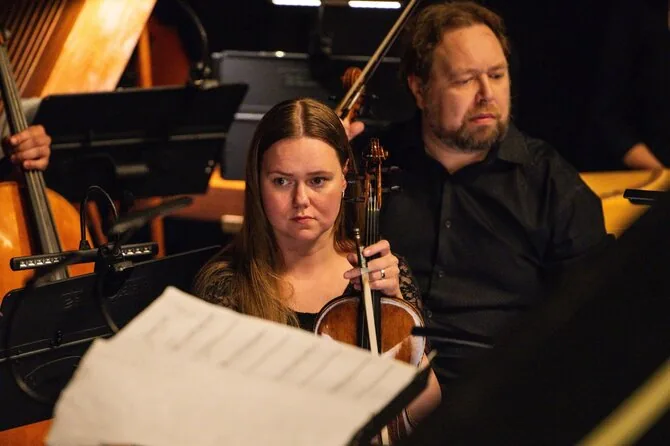
B. Kutavičius’s score presents many musical challenges for performers. It combines strings, organ, bells, and folk instruments, and I.J. Šimkus sees in this unusual combination a connection of different layers of Lithuanian culture.
“Folk instruments can be understood as an element of our historical experience, pagan culture, while the organ and bells symbolize Christian Lithuania. A multi-layered Lithuania merges here, and B. Kutavičius’s instrumentation is just as multi-layered,” explains the conductor.
A challenge for performers: when everything must work like clockwork
One of the key differences in the current version is that B. Kutavičius’s music is performed live. In the previous performance, sound recordings were used, but according to I.J. Šimkus, at that time such a decision was not only modern but also practical.
“Using recordings and cutting tapes was very modern at the time, but in my opinion, it was also a pragmatic decision. Having a live choir, folk instruments, and a string orchestra is expensive, and B. Kutavičius created a very complex polyrhythmic, even polymetric texture,” the conductor explains.
The current team adapted the material recorded in the score for live performance. “B. Kutavičius is a minimalist. There are not many notes, but each one is very thoughtful and every sound has its meaning. The recurring metro-rhythmic movement creates a meditative atmosphere, but it requires an exceptionally smooth performance – like the flow of a river. This is difficult for performers because everything must go precisely like clockwork,” says I.J. Šimkus.
This complex acoustic and visual challenge was masterfully accepted by the performance team. The current production, like its predecessor, was directed by J. Vaitkus, scenography by Arvydas Gudas, costumes by Kristina Kruopienytė, choreography by Inga Fontez-Sakurako. The role of Strazdas is played by Arminas Skirvainis, Woman-Bird by Salomėja Petronytė and Gunta Gelgotė. The performance features the Panevėžys Musical Theatre choir and orchestra as well as the Panevėžys Bronius Vaidutis Kutavičius Music School folk instrument ensemble.
According to the conductor, it is precisely the live sound that creates the true relationship between the audience and the performance.
“We can play a recording at home, but hearing an acoustic instrument live and all its overtones is a completely different experience. Live theater is especially important to me, so I am very glad that we managed to achieve exactly the acoustic sound,” concludes I.J. Šimkus.
Will travel around Lithuania
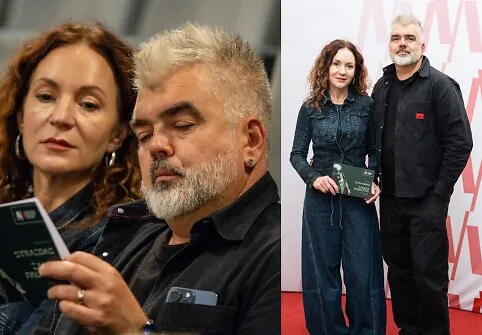
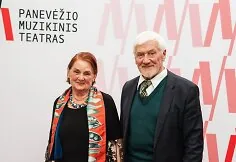
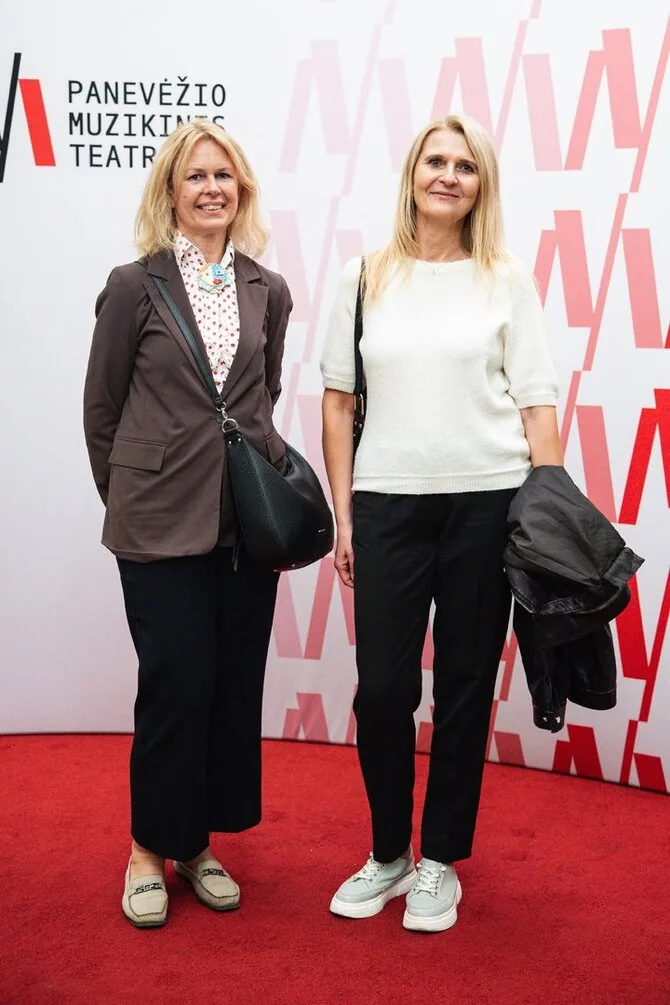
The performance made a strong impression on Music Academy lecturer Prof. Audronė Eitmanavičiūtė. She highlights not only the performance of B. Kutavičius’s complex music but also the work’s ability to maintain a sense of Lithuanian identity and historical memory.
“During the Soviet era, ‘Strazdas’ seen at the Kaunas Drama Theatre encouraged pride, patriotism, and a sense of Lithuanian identity. Now I see this work as our history, which is important to remember. And that feeling of Lithuanian identity has not disappeared – it returns when listening to old Lithuanian sutartinės,” says Prof. A. Eitmanavičiūtė.
According to her, she was also pleasantly surprised by the performers’ preparation: “B. Kutavičius’s music is very complex, so a huge amount of work was done here. The orchestra really sounded, the author’s characteristic palette of timbres was very clearly revealed, and the choir and soloist made a strong impression.”
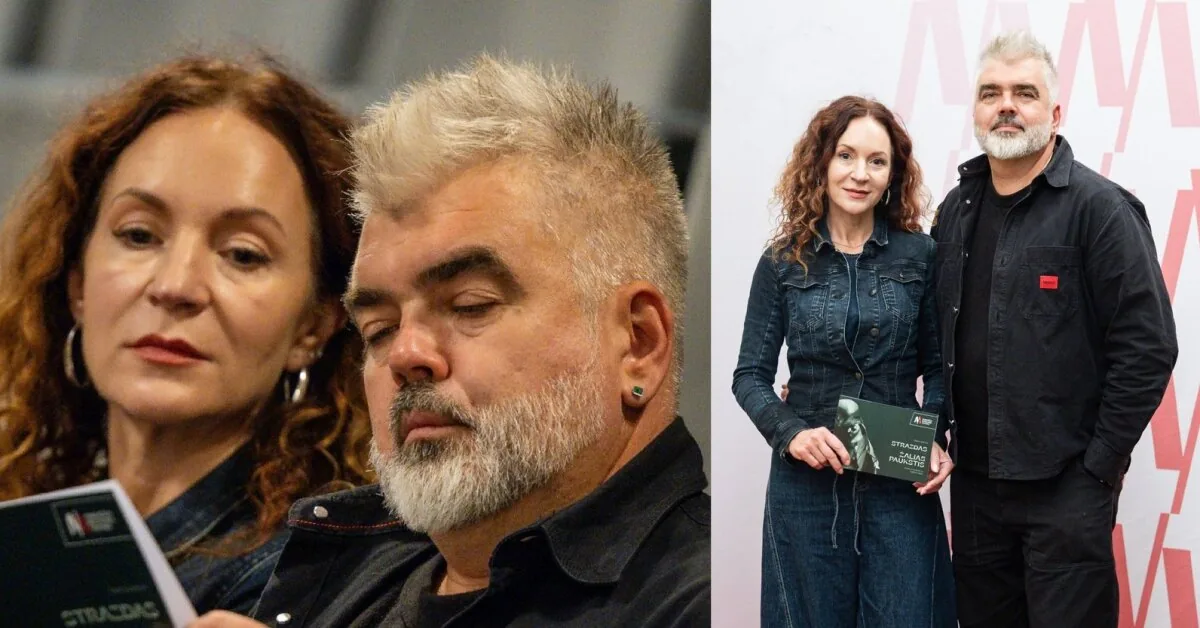
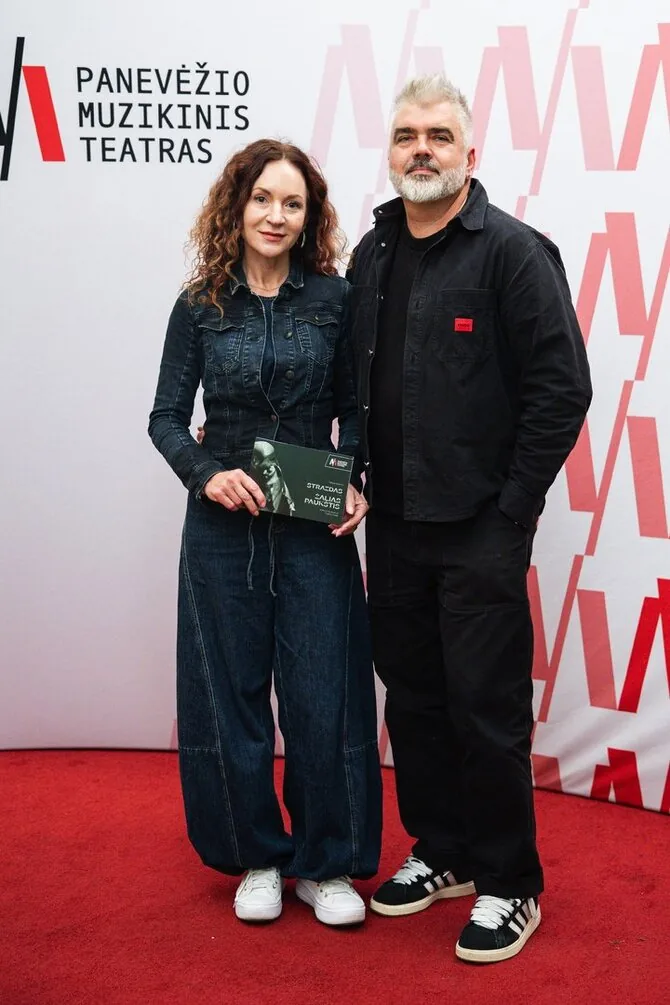
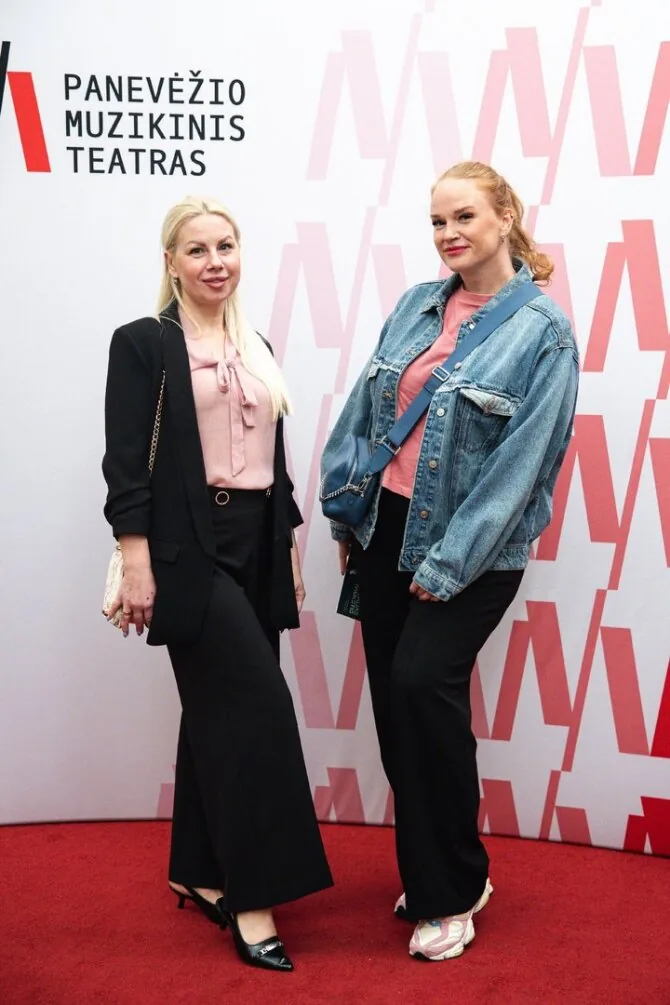
Singer Donata Virbilaitė admits that she watched the performance with a professional eye – paying much attention to the music, rhythm, conducting, and was especially impressed by the sound of the organ. But the greatest impression on her was the combination of different art forms and the idea that such works are important to preserve for future generations.
“I work with pop and popular music myself, so it was very interesting to touch classical music again, to hear such a combination of music, poetry, and theater. Watching the performance, I wondered if we are one of the last generations that naturally understands the language of such art and is used to seeking deeper meanings. I would very much like young people to discover such performances – maybe it would even be meaningful to include some of them in the recommended works lists for older school students. Not because popular culture or social networks are bad – I am part of this culture myself. I just wish that a person would be more versatile, get to know different art forms, not be afraid to analyze themselves and their life more deeply, and not lose connection with what is true and valuable,” says D. Virbilaitė.
Born four decades ago in Kaunas, Jonas Vaitkus’s “Strazdas” once acted as a silent spiritual resistance. Today, revived by the forces of the Panevėžys Musical Theatre, it sounds as a powerful reminder: freedom is not a given, and we can preserve it only by remembering our roots. This unique, live-performed music and poetry epic will still have the opportunity to be heard this fall by audiences in Alytus, Biržai, and Klaipėda.