







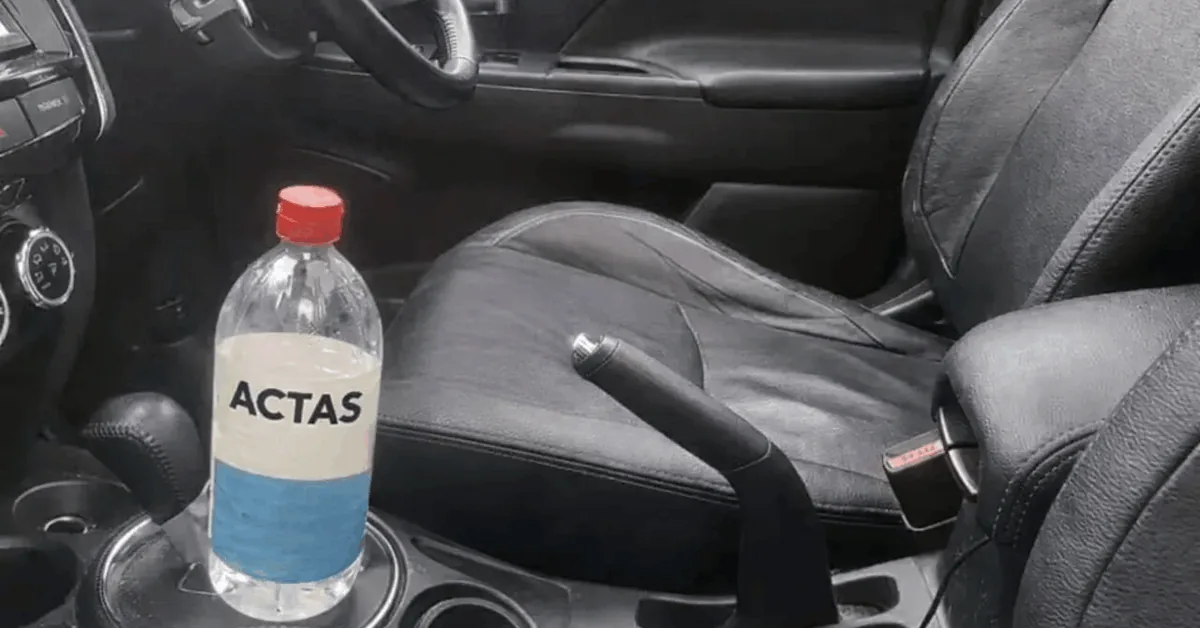
Simple white vinegar can effectively remove hard water stains, dirt, insect residues, bird droppings, tar, and the matte film that forms inside the car from the windshield and mirrors.
Read more «Mutual destruction would occur»: California governor spoke about what to expect in the elections
The key is acetic acid, which has fat-removing and disinfecting properties. Because of this, vinegar can help remove dirt covering car windows that haven’t been cleaned for a long time. Jalopnik writes about this.
However, the most important thing is that vinegar should not be poured undiluted onto the glass.
How to properly use vinegar for car windows
For cleaning, it is recommended to use a simple spray bottle rather than pouring vinegar directly onto a cloth or surface.
Regular food-grade vinegar has a concentration of about 5%, so it should be diluted with water in a 1:1 ratio before use.
Meanwhile, industrial vinegar with a 75% concentration should not be used – it is too aggressive and can damage surfaces.
Spray the prepared solution onto the glass and wipe it with a clean microfiber cloth. Then dry the surface again with a dry cloth to avoid any liquid residue.
Read more Smart technology, human errors: what shortens the lifespan of household appliances?
It is especially important to pay attention to areas where the solution may have gotten onto painted car body surfaces.
The biggest mistake – letting the vinegar dry
The greatest danger arises not when vinegar remains on the glass, but when it dries on the car’s paint and lacquer coating. The acid can damage it.
Therefore, the vinegar solution should not be used:
- in direct sunlight;
- when the car body is heated above 32 °C;
- on a car that has recently been waxed;
- on surfaces with ceramic protection.
Vinegar can damage both wax and ceramic protective layers.
Also, the solution should not be allowed to stay for long on chrome, rubber, or aluminum trim elements – they may lose color or be damaged.
So vinegar can be an inexpensive means for cleaning car windows, but the most important thing is to dilute it properly and not let the solution dry on other car surfaces.
Read more Opposition and ruling parties agree that Laura Matjošaitytė should resign from the VRK herself