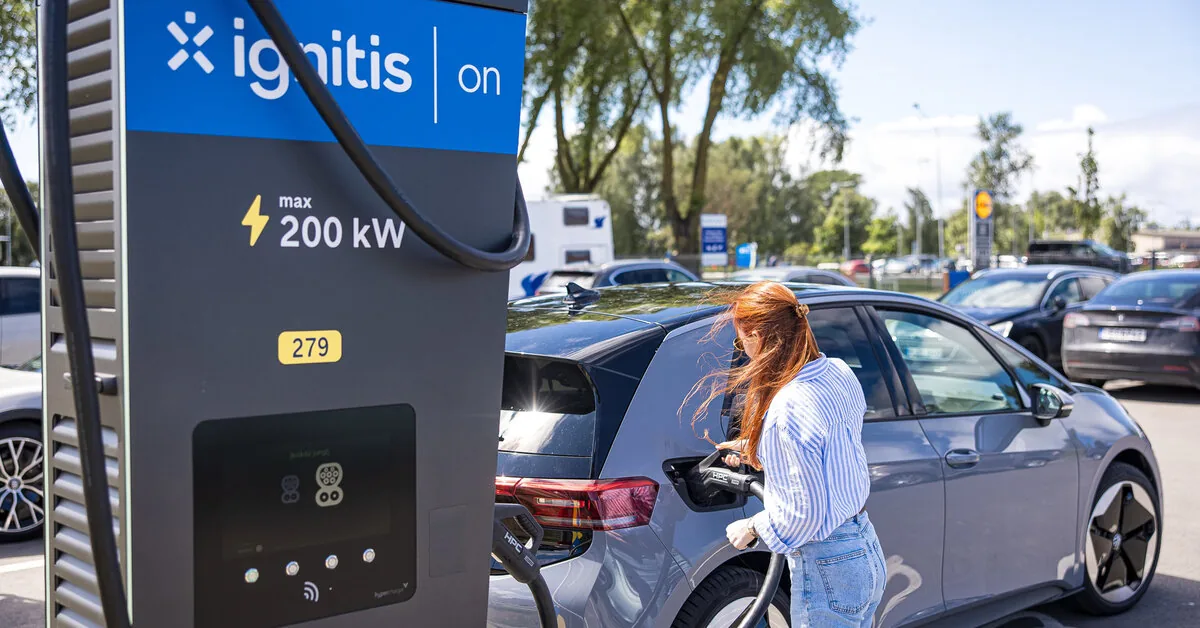
„The lowest rate per kilowatt-hour does not necessarily mean the lowest monthly expenses. It is important for the driver to evaluate all charges: how much energy they get at home, how much from the public network, and whether a subscription is worthwhile. Only by summing up the monthly expenses can charging methods be compared,“ says Eimantas Balta, head of the leading fast electric vehicle charging network „Ignitis ON“.
The final price is also affected by factors not shown by the station tariff: additional kilometers to reach it, waiting time, and actual charging speed. The three driver profiles below show how these choices are reflected in the monthly bill.
The same methodology reveals three different bills
All three illustrative drivers travel 1,500 km per month. The model assumes that the amount of energy drawn from the network or station and billed is 18 kWh/100 km, thus 270 kWh per month. Illustrative final prices are applied for the first two profiles: 0.20 Eur/kWh at home and 0.35 Eur/kWh in the public network.
Understand instantly
At the „Auto Expo Vilnius“ exhibition – presentation of new brands „Jaecoo“ and „Omoda“
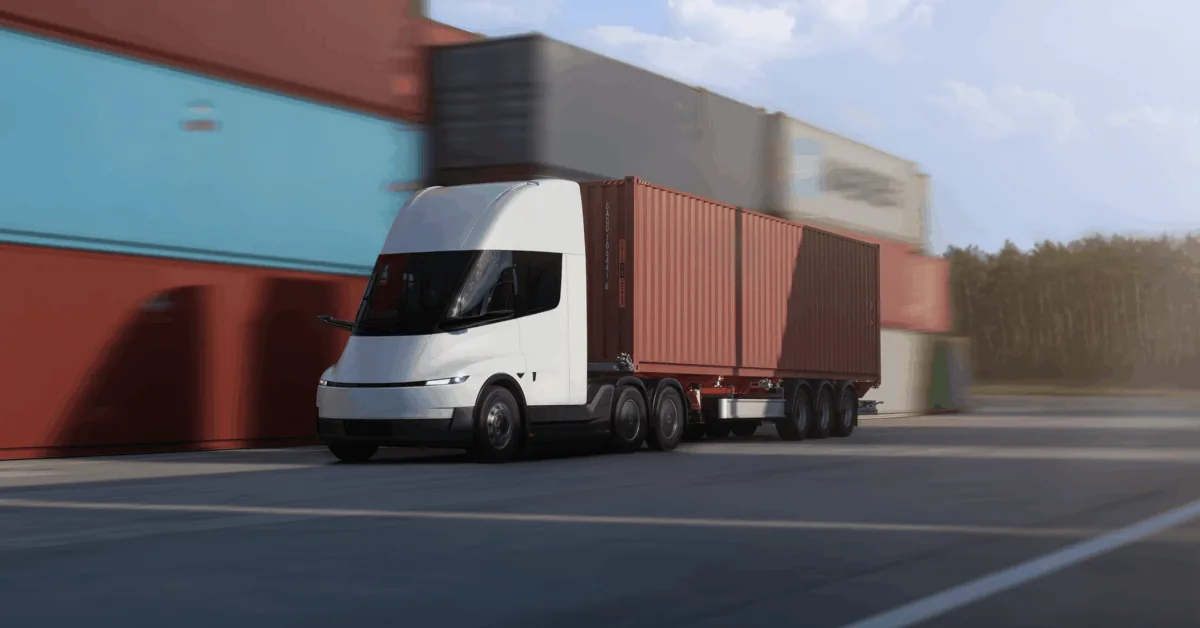
„Tesla Semi“ arrives in Europe: where will it go first?
The first driver gets 90% of the energy, or 243 kWh, at home, and 27 kWh from the public network. At home, the energy would cost 48.60 Eur, and in the public network – 9.45 Eur. The total monthly amount would be 58.05 Eur, or 3.87 Eur per hundred kilometers.
The most important factor for this driver is charging time. „EnergySmart“ – „Ignitis“ smart energy management app – can schedule the charging of a compatible car during more favorable 15-minute market price intervals and ensure the battery is charged by the set departure time. Possible savings using such a model are not included: 15-minute intervals are reflected in the bill only when choosing the „Smart – 15“ plan, and the benefit depends on price dynamics, compatibility, and settings.
The „Ignitis bONus“ program is designed for „Ignitis“ independent supply customers: for every kilowatt-hour charged at home under the program conditions, 3 cents are credited to the „Ignitis ON“ balance, regardless of charging time.
For 243 kWh, 7.29 Eur would be accumulated. Later, by topping up the „Ignitis ON“ balance with this amount and using it, the illustrative total expenses would decrease from 58.05 to 50.76 Eur.
„EnergySmart“ is used for smart charging at home, and „Ignitis ON“ – in the public network. By entering the personal „Ignitis ON“ account email address in the „bONus“ contract, both accounts are linked. The balance can be used at „Ignitis ON“ stations in Lithuania, Latvia, and Estonia.
In a mixed model, the price depends on the ratio of charging locations
The second driver gets 60% of the energy at home, and the rest from the public network. According to the chosen assumptions, all monthly charging would cost him 70.20 Eur, or 4.68 Eur/100 km.
This driver would accumulate 4.86 Eur for energy charged at home. By topping up the balance with this amount and later using it in the „Ignitis ON“ network, the illustrative total expenses would be 65.34 Eur, or 4.36 Eur/100 km. This profile shows why a single station tariff does not reveal all costs: only part of the monthly energy is purchased from the public network.
„Driver habits rarely limit to one charging location: for daily trips, the car can be charged at home, and for longer routes, the public network is needed. The more accurately a person knows this ratio, the easier it is to choose a charging plan that meets their needs,“ explains E. Balta.
The benefit of a subscription is shown by actual consumption
The third driver does not charge at home and gets the entire 270 kWh energy amount at „Ignitis ON“ ultra-fast charging (HPC) stations in Lithuania that meet the plan conditions. The „Fixed“ plan costs 9.99 Eur/month and offers a 0.35 Eur/kWh rate, so the total amount is 104.49 Eur.
The tariff alone is not enough in this model. At the end of August 2026, according to „Ignitis ON“ data, there were 872 stations operating in the Baltic countries network, of which 686 were fast charging stations. Drawing a 30 km radius zone around each station covers 98% of Lithuania’s territory. The app allows free reservation of a free HPC connector, and some 400 kW stations operate.
„It is most convenient for the driver when the charging station is on the way. If a few cents difference means detouring or waiting, a lower tariff does not necessarily compensate for the time lost. Therefore, when evaluating charging costs, it is important to consider not only the energy price but also the time allocated for the trip,“ summarizes E. Balta.