









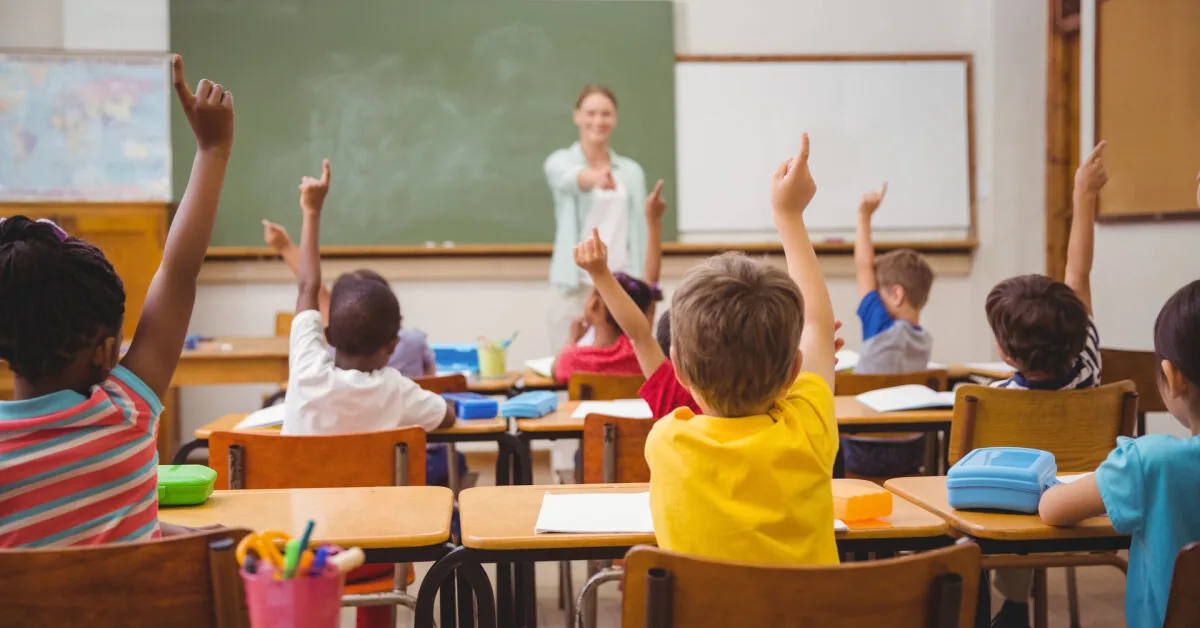
Currently, Asian countries dominate among the strongest education systems in the world. Among them are Singapore, Japan, and South Korea. In 2025, all three ranked among the world leaders in reading, mathematics, and science. PISA evaluates every three years not only what fifteen-year-olds know but also how they can apply that knowledge to solve real problems, according to a press release from “Education #1”.
Read more After calls to slow down AI development – technology stocks fall
And where does Lithuania stand in this context? Our students’ results are above the OECD countries’ average, but no long-term breakthrough is visible. Since 2022, based on the average results in reading, mathematics, and science, Lithuania has risen in Europe from 20th to 12th place, mostly because other countries’ results declined more. Meanwhile, Estonia has been among Europe’s education leaders for more than a decade and again ranked among the strongest systems worldwide in 2025. Lithuania’s gap with Estonia has hardly changed over three years – in all three areas, it still amounts to up to two years of learning.

“When Lithuanian students’ results remain similar for almost two decades, it is worth asking what allows other countries not only to achieve high results but also to maintain them for years. Although countries’ education systems differ, PISA allows us to see common principles among the strongest: high expectations for every child, strong teachers, and the ability to focus on what the student truly needs to learn,” says Laura Tilvytė, head of the organization “Education #1”.
High standards – for every child
In strong education systems, high expectations are not set only for the best-performing students. There is a strong general belief that a child’s abilities can grow – regardless of the environment they come from or the school they attend. The PISA study emphasizes that high and consistent expectations must be set for every student. It also shows that students who believe they can improve are more likely not to give up and put in more effort when learning becomes difficult.
In Lithuania, just over half of fifteen-year-olds believe they can develop their abilities, while in OECD countries, nearly 7 out of 10 students think so. Moreover, when faced with a more difficult task, 49% of Lithuanian students put in more effort, compared to 60% in OECD countries. Thus, in Lithuania, a smaller share of students believe they can improve, and when faced with a harder task, they put in more effort less often than their peers in OECD countries.
The difference is also visible among the highest-achieving students. Only 6% of fifteen-year-olds in Lithuania reach the highest PISA mathematics achievement levels, in Estonia – 13%, Japan – 22%, South Korea – 23%, and Singapore – 37%. High standards for every child mean that each must receive a solid foundation and the opportunity to strive for the highest results. This depends not only on school expectations but also on adult support.
“High standards should not mean just higher demands on the child. They work when the child feels that adults believe in their abilities and are interested in their learning. OECD data show that even a simple parental question ‘How are you doing at school?’ is associated with about 14 points higher science results – about 0.7 years of schooling difference,” says L. Tilvytė.
Less, but deeper
The second principle of strong education systems is fewer topics but deeper understanding. PISA recommends choosing depth over breadth: focusing on a smaller number of core topics and teaching them so that students not only memorize but can also apply knowledge in new situations.
The study shows that it is important not only what students have to learn but also how they work with that knowledge in class. OECD emphasizes tasks that require not only recalling an answer but also explaining it, connecting several pieces of knowledge, or applying them in a new situation. Such learning in the study is associated with deeper understanding and greater student engagement.
According to L. Tilvytė, shortening curricula alone is not enough in Lithuania.
“Curricula must be of such scope that the teacher has time not only to present the topic but also to help children truly understand it. If the main goal becomes covering as many topics as possible, there simply is no time for deeper learning. Therefore, curricula need fewer topics and more time to understand, consolidate, and apply the most important knowledge,” says L. Tilvytė.
A strong teacher – not just good subject knowledge
The third common feature of strong systems is teacher professionalism. OECD emphasizes that knowing the subject well is not enough. A teacher must be able to clearly explain complex matters, manage the classroom, maintain students’ attention and motivation, and notice when a child needs additional help.
OECD data show that students who feel more teacher attention and support more often achieve better science results. They also have a more positive attitude toward learning and feel more strongly part of the school community.
In Lithuania, perceived teacher support has significantly decreased over a decade. The share of students saying that their science teacher is interested in each of their learning dropped by 15 percentage points from 2015 to 2025 – from 63% to 48%. Those who said the teacher explains until students understand decreased by 13 percentage points – from 70% to 57%.
Based on the data, L. Tilvytė says it is important to assess not only whether the teacher notices a child’s learning gaps but also whether the system provides opportunities to respond to them in time.
“We need to understand why perceived teacher support has decreased over a decade and look for ways to give teachers more opportunities to help children in time. A unified student progress monitoring system can help here, but data alone are not enough – the teacher must have time and tools to respond to them,” says Laura Tilvytė, head of the organization “Education #1”.
Read more Mufti asks the authorities to ensure the safety of Kaunas Muslims


