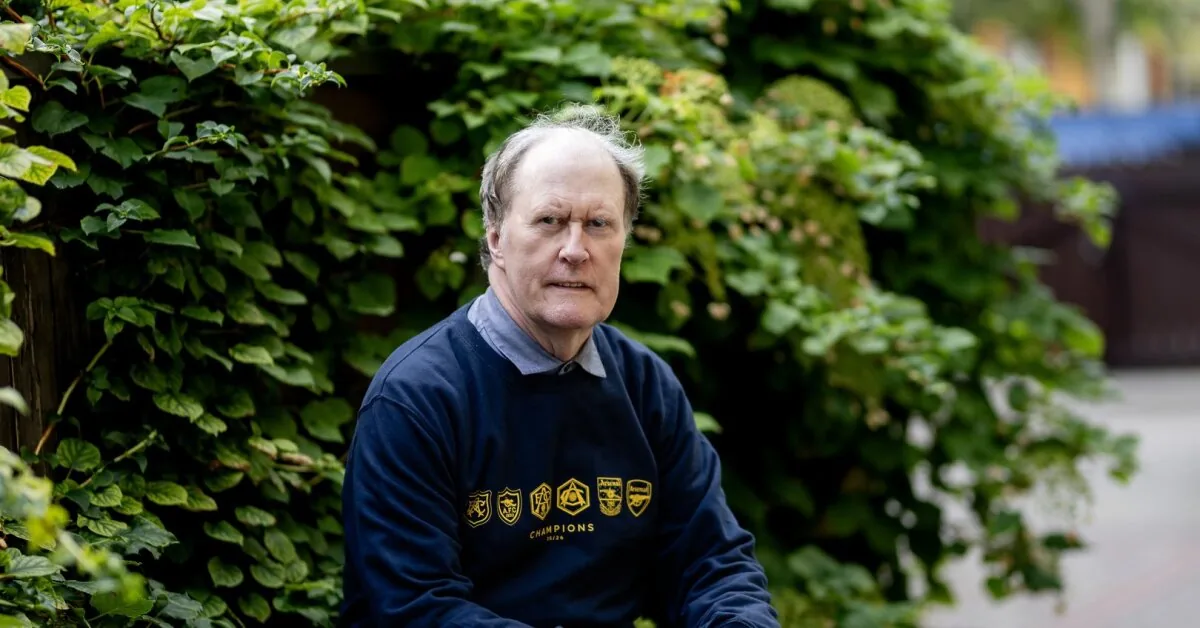










Professor Dr. Ramunė Kasperė from the Faculty of Social Sciences, Humanities and Arts at Kaunas University of Technology (KTU SHMMF), together with colleagues, conducted a study in 2026 – surveying 200 respondents of various ages about what, how much, and in which languages they read, according to a KTU press release.
Read more Virginijus Šikšnius awarded the Order of the Rising Sun for strengthening Lithuania-Japan relations
“It turned out that respondents aged 30–49 spend the most time reading. For all reading activities studied, they devote on average more than 15 hours per week reading in Lithuanian alone. In the youth group up to 29 years old, the total reading time in Lithuanian is about 9 hours, and in the 50–59 age group – almost 10 hours,” says R. Kasperė.
However, a more interesting picture, according to her, emerges when looking not at the total reading time but at the content read and the source of reading. Respondents up to 29 years old indicated that they spend most of their time reading Lithuanian content on the internet – about 3 hours per week. In the 30–39 and 40–49 age groups, the volume of reading emails increases significantly. Respondents aged 30–49 devote 3.5–4 hours per week to email reading in Lithuanian alone.
“This suggests that the reading volume of middle-aged people is strongly shaped by professional and everyday digital communication,” notes the KTU researcher.
We read not only books
According to R. Kasperė, it is also important that reading in English is not just a youth phenomenon. Respondents up to 29 years old devote about 7.5 hours per week to all studied reading activities in English, 30–39 years old – about 8.5 hours, and 40–49 years old – almost 8 hours.
“Different generations differ not only in the amount of reading but also in the content read. Younger people’s repertoire prominently features internet content, academic texts, and reading in English, while for people aged 30–49, alongside internet content, work-related digital communication occupies a very large place in their reading,” she shares.
The book has not disappeared but has become one of many texts competing for the same person’s time.
According to the KTU researcher, modern reading consists of much more than books. Online content and email are among the largest reading categories in almost all age groups.
“The book has not disappeared but has become one of many texts competing for the same person’s time. Today, a person can read a lot, but a large part of the content they read consists not of books or long articles but of work communication and information on the internet. In the reading repertoire of more educated people, academic literature also occupies a significant part,” she notes.
Reading does not necessarily mean understanding
The KTU researcher notes that the real difference between younger and older people’s reading habits may lie not in the ability to read complex texts but in the sources of reading.
“Younger people more often encounter digital text, where information constantly competes with links, messages, images, and other content,” she says. “In other words, compared to younger readers, middle-aged and older people spend somewhat more time reading outside the electronic space.”
Therefore, according to R. Kasperė, today’s problem may not only be the insufficient amount of reading. A much more important question is whether we read consistently and deeply.
“We can talk about a certain reading illusion: a person can read many emails, headlines, internet texts, messages, and posts in a day and feel that they have processed a lot of information. However, the amount of text read does not yet show how much information the person understood, remembered, or critically evaluated,” she notes.
Algorithms are changing reading
Analysis of the study data shows that internet text is one of the main forms of modern reading in all age groups. However, according to the KTU researcher, it is important not to forget that internet text can be very diverse – from a few sentences in a social media post or comment to a long news article, scientific publication, or complex analytical text. Therefore, the mere fact that we read on a screen does not yet show whether we read superficially or deeply. Much more important is what content we choose and how we read it.
“Social media reading changes reading by greatly shortening the time during which content must capture our attention. If the first sentences do not interest us, it costs the reader almost nothing to move on to other content. This trains the ability to quickly assess the relevance of content and select information. This is not inherently bad. The problem arises when we transfer this same reading pace to texts that require patience and uninterrupted attention to understand,” she says.
Read more The outcome of the Swedish elections is still unclear, far-right parties are losing ground
On social networks, a person must very quickly combine text, images, videos, comments, links, and context. This is not a completely primitive activity – it requires multimodal information processing. However, platform logic usually encourages short and quickly comprehensible content. A long analytical text works oppositely – it requires staying with a thought for some time even when it is not immediately clear or pleasant.
“One could say that short social media content reading is a sprint, while reading a book or a long analytical text is an endurance race. Both are ways of reading, but they train not quite the same skills,” shares R. Kasperė.
She adds that algorithms even change the sequence of choice itself. Previously, a person first chose a newspaper, magazine, book, or website, and then selected text within it. In the social platform environment, it is often the opposite: the algorithm first selects possible texts for us, and only then do we choose from what is already shown.
“This does not mean that a person loses freedom of choice. However, we must understand that the field of choice is not neutral. Modern reading literacy should mean not only the ability to assess whether a text is reliable but also to understand why exactly it was shown,” notes the KTU researcher.
What does short content do to our attention?
R. Kasperė notes that short content itself does not ruin us, but it trains a different mode of attention – the ability to quickly assess whether content is interesting and be ready to immediately move on to the next stimulus.
“For example, in an eye-tracking study conducted by foreign scientists, it was found that students had more difficulty maintaining attention when reading longer news texts after browsing the TikTok app,” she says. “However, it would be premature to say that browsing social networks has already irreversibly changed our ability to read deeply.”
We risk less and less training the ability to not switch and maintain attention on one thought for longer.
Studies published in 2026 by foreign scientists link intensive viewing of short videos with attention and memory difficulties, but long-term effects have not yet been proven. Therefore, according to the KTU researcher, we do not necessarily lose the ability to read deeply, but we risk less and less training the ability to not switch and maintain attention on one thought for longer.
“Social media should not be demonized. The digital environment trains the ability to quickly search for and select information, move between different sources, and combine textual and visual information. It also greatly expands the variety of accessible texts and languages,” she explains.
This is also shown by the study data. Respondents devote more than 7–8 hours per week to different reading activities in English alone. Younger people read not only internet content in English – their repertoire also includes academic texts, fiction, and non-fiction literature. Thus, technology can expand a person’s informational and cultural field.
How will we read in the future?
According to the KTU researcher, it is likely that in the future people will read no less, but reading itself will become even more hybrid.
“It reminds me of being in Times Square in New York: there are so many bright, interesting things around that the hardest thing is not to find something to look at but to select what is really worth focusing on. Future reading may look similar – text will increasingly intertwine with sound, images, videos, interactive elements, and artificial intelligence (AI),” she says.
A person can already start reading a text, listen to part of it, ask AI to explain a difficult part or provide a summary. But the easier it is to get a quick answer, the more valuable the ability to maintain attention and follow the argument consistently will become.
“Foreign scientists’ studies are quite optimistic in this regard. The screen itself is not doomed to be a worse reading medium. Therefore, in the future, in my opinion, the most important thing will not be whether we read on paper or on a screen, but what reading behavior technologies encourage. If they increasingly compete for every second of our attention, the ability to stay with one complex text for half an hour or an hour may become one of the most valuable cognitive competencies of the future,” reflects R. Kasperė.
Read more The only evening will feature the most successful Vilnius City Opera performance «The Troubadour»