Palliative care is not just nursing
According to Alvydas Česas, head of the Oncology and Hematology Clinic at KUL, the new day hospital fills an important link in the patient care pathway. Palliative care in modern medicine is not understood only as assistance in the final stage of illness – it can and should be integrated much earlier, alongside active disease treatment.
Read more Minister: all Baltic countries must check the origin of grain transported from Russia and Belarus
“Palliative care is not just nursing or assistance to a person at the end of life. It is specialized, multi-component medical care that a patient may need at various stages of the disease. Its goal is to control pain and other symptoms, help avoid complications, and preserve the person’s mobility, independence, and quality of life for as long as possible,” emphasizes Prof. Dr. A. Česas.

All necessary help – in one place
In the palliative care day hospital, patients will be cared for by a multidisciplinary team of specialists. Doctors, nurses and their assistants, physiotherapists, psychologists, social workers will work here, and if necessary, patients will be consulted by oncologists, pain medicine specialists, and other experts.
Patients will receive infusion therapy, medication will be adjusted, pain relief will be applied, complex and long-healing wounds and stomas will be cared for, psychological consultations and physiotherapy services will be provided. An individualized care plan will be created based on the patient’s needs.
Although the majority – more than 90% – of day hospital patients are expected to be people with oncological diseases, help will be provided not only to them. Services will also be available to patients with other severe chronic diseases who require specialized palliative care.
Arrive in the morning, return home in the evening
One of the most important principles of the new hospital is to provide the necessary care to the patient without separating them from their usual living environment longer than necessary.
This will not be a 24-hour hospital. The patient will arrive at the hospital in the morning, receive the prescribed procedures and specialist consultations, and be able to return home the same day.
“The person will not need to be admitted to the hospital and be separated from their loved ones, home, or even pets for a long time. They will be able to receive the necessary medical and other professional help and return to their environment in the evening. This is especially important for patients undergoing long-term treatment, for whom the hospital already becomes a large part of their daily life,” notes the head of the KUL Oncology and Hematology Clinic.
For patients who have difficulty coming to the hospital independently or have no relatives able to bring them, transportation to and from the day hospital is planned.
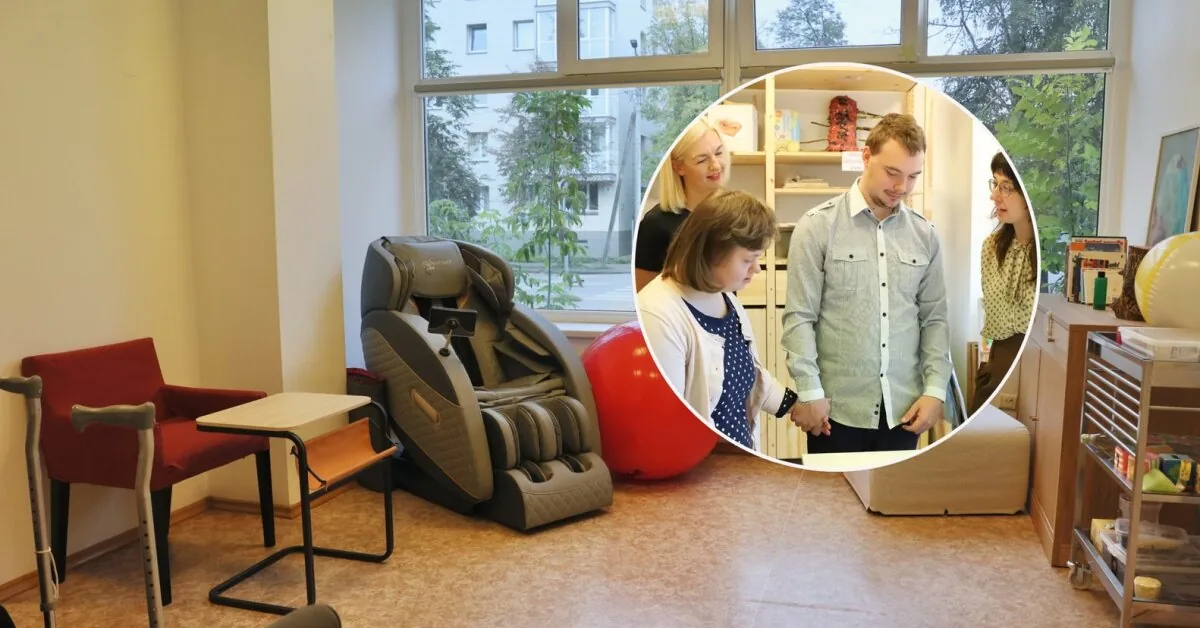
The hospital has 12 beds, but most procedures will be performed in special functional recliner chairs. Beds will be allocated to patients who cannot sit due to their health condition or pain.
Care tailored to the patient
How many and what kind of services a patient will need depends on their individual condition. One may need several procedures per week, another periodic psychological consultations, physiotherapy, or pain control.
Read more The 25th «Rotariada» in Palanga brought together more than 2 thousand participants
Referrals for palliative care services can be issued by treating specialists who have assessed that, alongside the main treatment, the person needs additional comprehensive care.
“The patient or their relatives will not have to decide on their own where and what kind of help to seek. The treating doctor, seeing the need, will refer the patient to the day hospital,” explains A. Česas.
The new hospital will be closely integrated into the system of other services provided at the KUL Oncology and Hematology Clinic. For example, a patient coming from another city after radiation therapy who experiences more pronounced adverse reactions will be able to receive help at the day hospital – pain relief, infusion therapy, or other necessary assistance can be provided there.
“It is a kind of safe stop on the patient’s treatment path. A person who feels worse after a procedure does not need to immediately go home or seek help elsewhere. We have the opportunity to monitor them, help manage symptoms, and ensure that the treatment path is as safe as possible,” says Prof. Dr. A. Česas.
An important link in the oncological patient’s journey
“The opening of the palliative care day hospital in our institution complements the comprehensive oncology service system being developed in the hospital – from diagnostics and active cancer treatment to assistance in managing symptoms and complications caused by the disease or treatment,” says KUL General Director Prof. Dr. Audrius Šimaitis.
The head of the Association for Assistance to Oncology Patients (POLA), Neringa Čiakienė, says that palliative care is one of the most complex but also very important stages in the oncological patient’s journey – it is help for a person when it is especially important to manage not only disease symptoms but also to preserve the best possible quality of life, dignity, and a sense of security for them and their loved ones.
“A specialized palliative care center should concentrate competencies for cases when patient needs become complex and multifaceted: when difficult-to-control symptoms need to be managed, specific short-term interventions performed, a clear plan for further symptom management created, or other treatment institutions consulted. Looking at the whole system, basic palliative care should be available at all oncology care levels, continuous care as close to the person’s home as possible, and the most complex cases should have a strong tertiary competence level in specialized cancer centers. This is exactly the role we wish to develop for this center – strengthening the entire palliative care system in the Klaipėda region,” says the head of POLA.
Specialized services at the new KUL Palliative Care Day Hospital will be provided not only to patients from Klaipėda city but also from the entire Western Lithuania region.
The project is funded by the European Union under the Recovery and Resilience Facility – “NextGenerationEU.” The project value is more than 772 thousand euros. With these funds, a simple renovation of the 2nd floor of the “Kopos” building (Liepojos St. 49, Klaipėda) was carried out, and the premises adapted for day center activities; medical and technical equipment and furniture ensuring a safe, comfortable, and modern environment for patients and staff were purchased; an electric vehicle adapted for transporting persons with mobility impairments to and from the day center was acquired.
Read more From the Church – the first steps towards investigating sexual abuse