This time – all attention to German producers who are looking for works for the upcoming Lithuanian Year in Germany program. The platform’s program was composed by representatives of the Lithuanian Dance Information Center (LŠIC), “Operomania,” and the Lithuanian Theatre Center (LTC) together with the head of the Lithuanian Year in Germany cultural program, Rita Valiukonyte.
Read more Diplomacy chief optimistic about relations with China but says deadlines complicate the process
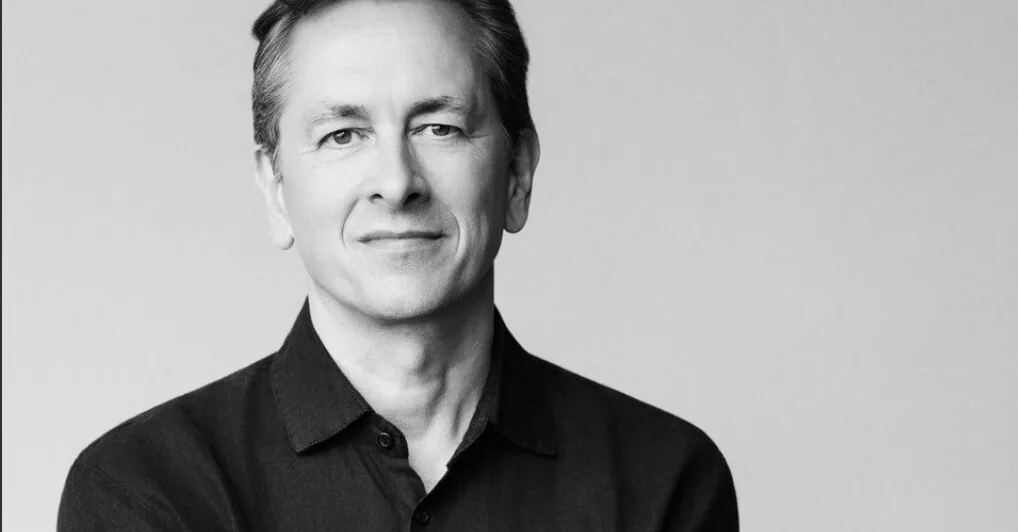
Two of the four curators – “Operomania” producer Ana Ablamonova and LTC producer Vidas Bizunevičius – talk about the selected performances, the most important criteria, and try to predict which Lithuanian artists’ works would appeal to the German audience. More than 50 German performing arts curators, festival, theater, and other cultural organization representatives, producers, and experts are expected in Vilnius.
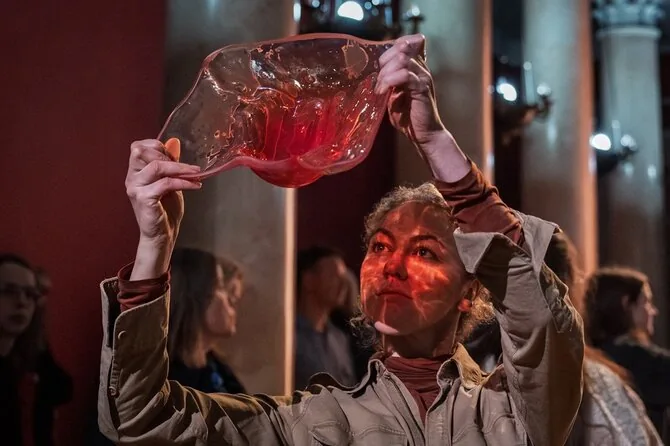
All works presented on the platform are invited to be seen by “Sirenos” viewers from September 23 to 26.
– This year’s “Sirenos” festival theme is “Theatre is an escape.” Is theatre still an escape for you?
Ana: We are not typical theatre-goers who go to the theatre to escape from something. At least for me, theatre is a run – a marathon, a spinning wheel where you try to navigate between the pursuit of creating good art, discovering interesting artists, catching new trends, and keeping up with the rhythm of social life and market laws.
Vidas: For me, theatre is also not an escape. Escape, especially in the current time, is associated with fear, lack of choice, an attempt to avoid inevitable things. But I would say that theatre, on the contrary, is a confrontation with inevitability, a place of courage. I would never want to attribute sluggishness or hiding traits to theatre or performing arts. In theatre, audiences can face the most important topics, even uncomfortable ones. Still, I find refreshment and refuge in theatre.
Ana: I would add that I feel that the recently sensitized society encourages very careful word choice, being extremely correct, and often even to omit something very important just not to offend or provoke an aggressive attack from those with opposing views. Such discomfort and alienation in real life encourage seeing theatre, performing arts, and arts in the true sense as a territory of escape from this reality. Creativity becomes almost the last safer space, a bastion where one can speak more boldly and openly about important and sensitive topics.
Creativity becomes almost the last safer space, a bastion where one can speak more boldly and openly about important and sensitive topics.
– You selected performances for the Lithuanian theatre platform that could travel to Germany in 2027 and represent the Lithuanian performing arts field. What were the most important criteria when choosing the works?
Ana: Having considerable international distribution experience and understanding how the internationalization of performing arts works, we set export potential as a priority criterion. In other words, we thought not only about which works seem interesting to us but also about how they could work in another cultural context – in this case, Germany.
It was important for us not only to export already created works but also to create conditions for new connections, possible cooperation, and joint activities of Lithuanian and German creators and organizations. Considering this, we chose works, invited artists, and arranged the platform program based on different networking formats.
Essentially, we relied on our previous successful cooperation experience preparing the first platform and the Lithuanian season in France. Although this year the main focus is Germany, as always, guests from other countries will also visit “Sirenos.”

Vidas: We also relied on the goals of the Lithuanian Culture Institute (LKI) organizing the Lithuanian season in Germany. Since this platform is designed to help the season happen and initiate cooperation, we looked at how to connect the Lithuanian cultural field with the German field. The German theatre market is quite hermetic – they create a lot of performances themselves, so it’s hard to surprise them. We wanted to present the best sides of Lithuanian theatre, experience, works, and lay the foundation for possible cooperation. And as Ana said – we have long worked internationally, already know what they like, what they have seen, and try to match that with what Lithuania can offer. Therefore, we wanted to show what is truly strong.
The German theatre market is quite hermetic – they create a lot of performances themselves, so it’s hard to surprise them.
– Still, not only theatre professionals from Germany but also Lithuanian viewers will attend these performances.
Vidas: It is important for viewers to know that this platform is intended to build bridges for the professional field. We do not represent a single artist – we try to connect as many points as possible between different cultures and help lay the foundation for partnerships.
Ana: When forming the program, we really primarily focus on professional visitors, but that does not mean the works are not suitable for Lithuanian theatre lovers. The Lithuanian performing arts platform program is quite diverse. It is no coincidence that we initiated cooperation between our organizations – wanting to present a broader spectrum of performing arts, covering drama theatre, dance, contemporary opera, and so-called interdisciplinary art works. Each of these fields has its audience, and when works end up in such a common pot, there is an opportunity for these audiences to meet, exchange, and expand. You just need to get acquainted with the program and step more boldly into the unknown of a yet undiscovered field. And if that happens, it would be another important achievement of this platform.
– Could you reveal some lesser-known fact about your selected works that viewers might not know?
Vidas: For example, speaking about Justinas Vinciūnas’s performance “Obstacle” – I was very surprised that it was created with a good, simple provocation that lasts throughout the performance. It is clear that the person really thinks about their creation. Justinas’s conceived provocation surprised me – it works perfectly in the performance. And being surprised and affected in the theatre is a gift.
Read more Unusual problem: the most popular artificial intelligence chatbots malfunctioned at the same time

Speaking about Laura Kutkaitė – I am amazed by her sincerity in creation. She truly cares about the things she creates about. She does not stage performances just to tick a box directing social, educational theatre; she immerses herself fully and passionately in her performances. It reminds me of the performances I grew up with. When there were legendary performances by O. Koršunovas, E. Nekrošius, or G. Varnas – it seemed like people took their experiences and wrote with blood. I feel the same in Laura’s performances.
Speaking about the “Celebration” directed by Kamilė Gudmonaitė – it is one of the best art works I have seen involving people with disabilities.
The ensemble’s work in the performance “Minor Detail” and how precisely the immersive work was created also made a big impression.
Ana: My first choice was Karolis Kaupinis’s work “Radvila Darius, Vytautas,” based on archival Lithuanian television documentaries from the period of the Soviet Union’s collapse. The work, ironically looking at the revolving cycle of contemporary problems through the prism of history, seems to me to be very understandable to a society that has experienced the East and West Germany experience.
I really wanted to include the work “Led” by Mantas Jančiauskas and Rimantas Ribačiauskas, which takes place in prisons, but due to legal and logistical obstacles, it has not been possible so far. Another choice is the debut work “Sporos” by the visual art duo “Pakui Hardware,” analyzing the challenges of human mental health in the era of artificial intelligence possibilities and seeking the relationship between technological progress, the human need to care for oneself, and connection with nature.
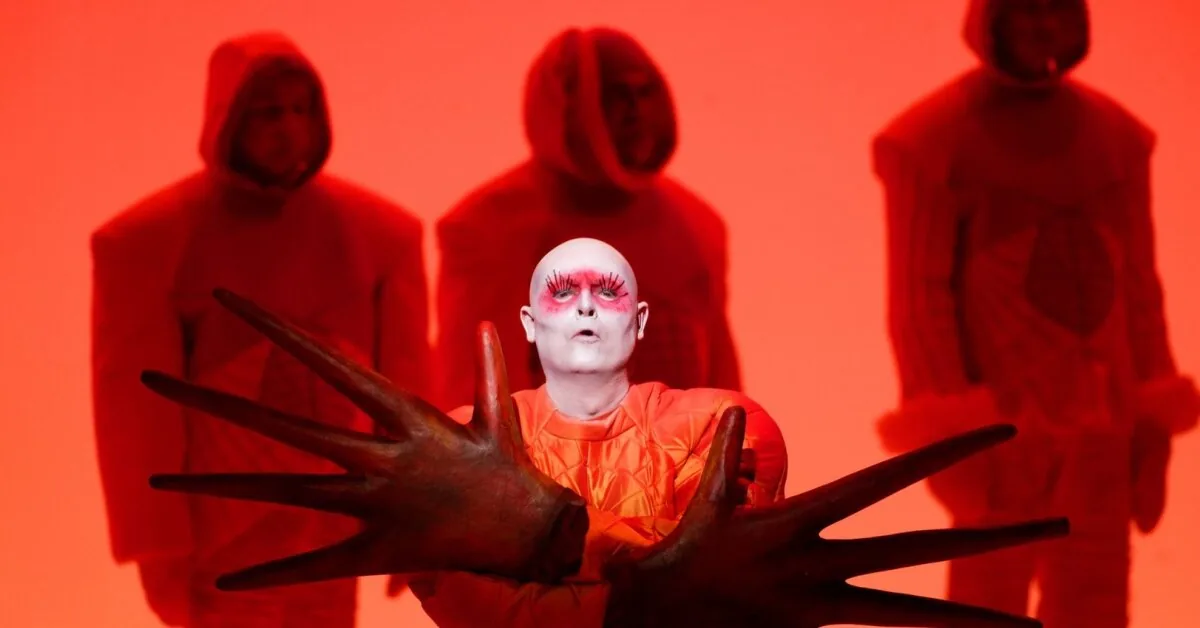
Overall, when forming the platform program, my colleagues and I shared performing arts directions from which we had to bring our proposals. My coverage was contemporary opera and so-called interdisciplinary art – a field in which I myself am actively involved as a producer, so there were many doubts about whether to take on this curatorial activity at all, and once undertaken – what to offer and how. Still, I dared to choose what seems very important to present right now and specifically for this dominant German context.
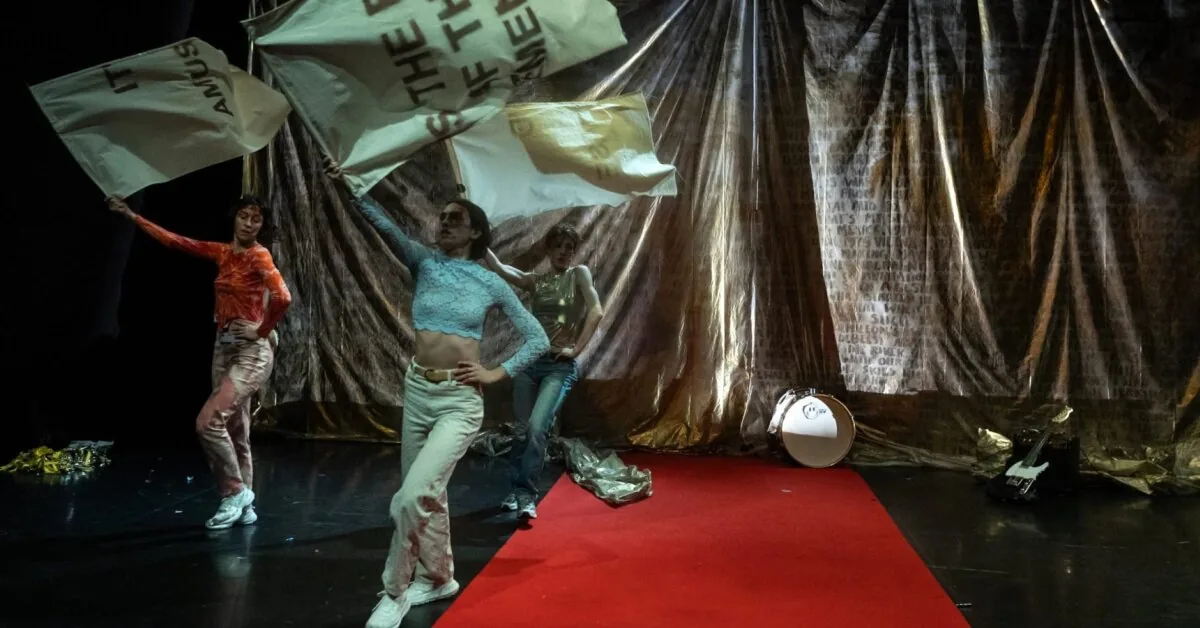
Vidas: Speaking about dance – after a European triumph, Agnietė Lisičkinaitė and Igoris Šugalevas return home with the performance “Clap & Slap.” They have toured many festivals and will now show the performance again in Vilnius. I have not seen the other two dance performances selected by Gintarė Masteikaitė – head of the Lithuanian Dance Information Center – but Gintarė certainly chooses works that are the best from a professional point of view. I want to emphasize that there is no democracy played in this platform – we sincerely try to choose works that from our accumulated experience seem the best and most suitable to present in Germany.
Ana: And when we arranged the program, we saw that there are quite a few female creators in it. This prompted us to remember Lina Lapelytė’s performance “Ladies,” performed by four kanklės players who have played for many years in the ensemble “Lithuania.” This performance is one of my favorite works by Lina. So we invited Lina with “Ladies” to open the Lithuanian performing arts platform. This work is rarely shown live – it will be a beautiful gift for festival visitors. Of course, Lina is currently a highly sought-after creator worldwide, so her participation strengthens the platform’s appeal. We are grateful to Lina for agreeing to join.
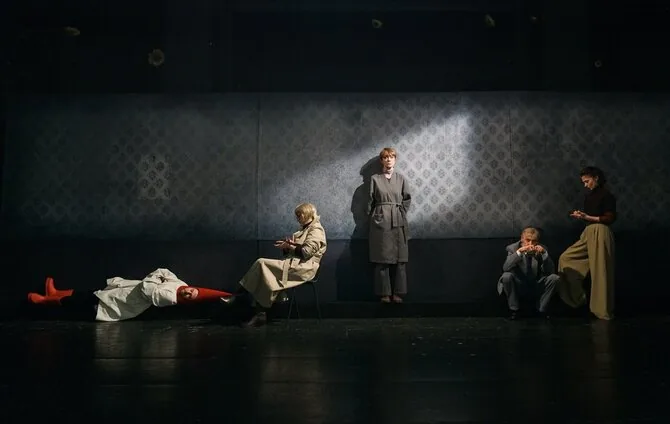
Vidas: It can be said that for all participants of the performing arts platform – both independent troupes and institutions – their participation is beneficial because both “Clap & Slap” and Lina Lapelytė’s work act as well-known names attracting foreign guests to come – whether they have already seen those works or not.
Of course, other artists may be angry about this and ask: “They are already well-known, why did you choose them?” But I think it is beneficial for everyone to bask in their recognition rays or draw energy from it.
Ana: We know how this system works, so we have to adapt a bit and play by the rules of this game.
Vidas: About “Sporos,” I want to add – as I said, it is hard for me to be surprised in my own country, especially after seeing everything abroad. I remember how collegially and with white, red, and black envy, I envied Ana for producing this work with such artists; during the performance, I thought – I’m in heaven. It was simply a wonderful work, one of the season’s thunderclaps. It was incredibly joyful for our entire performing arts field that such an intimate, brave performance was born, playing with community and ethnography. Moreover, it is great that it can tour abroad, be reworked, and appropriately adapted in different countries.
Ana: Indeed, this was confirmed by the experience of presenting “Sporos” at the Performa biennial in New York. Despite the fact that the work involves a fairly large choir, the work can be transferred to another context, each time involving local communities. And that makes it more interesting. Working on this project, I was very interested in exploring how to create a completely organic environment for non-professionals in a professional performing arts work. We talk a lot about community involvement, but often it is associated either with education or amateur art. But how to make a highest-quality professional performing arts work in which a non-professional community organically integrates and finds its place as a professional non-professional?
They would do what professional performers could not. Of course, each member of the creative team had their interests and motivations. But for me, community involvement and creating the right environment for them in professional art seems a very interesting and promising direction in performing arts.
– You said you know the German market. What, in your opinion, is the German viewer like?
Ana: It is hard to describe in a few words. We can sense and predict which topics would be relevant and understandable in Germany. On the other hand, it would not make sense to go to Germany just to cater to usual German tastes and expectations. The general aim of forming the program was to select quality works that would be relevant, represent Lithuania and its important topics, be interesting, well-made, and capable of surprising. We wanted them to have unique, “gripping” distinctiveness. We aimed to create a program that would be relevant, inventive, and represent the contemporary Lithuanian identity.
Vidas: The German viewer has definitely seen a lot. One theatre there creates 40 performances per season. You can’t really surprise with new formats, rather with your uniqueness and the silver lining woven into the works. Thinking about this, we looked for works with our cultural authenticity and, of course, performances about people thinking here and now. We want to create visibility for future generations, so the program was formed considering that as well. I think the German viewer is not afraid to hear things straightforwardly or provocatively.
Ten Lithuanian performances in the Lithuanian performing arts platform will be presented from September 23-26. More about the program: www.sirenos.lt The platform is organized in cooperation with the Lithuanian Culture Institute and the Goethe Institute.
Read more “Maxima group” paid out 101 million euros in dividends this year