The Lithuanian Hydrometeorological Service (LHMT) shares more than one rule observed by elders, according to which attempts were made to predict what autumn and even the coming winter would be like.
Read more Shot in the stomach and head: In Russia – retribution for the strategic aviation general
Thunder in September – a sign that there will be no shortage of snow in winter?
One of the elders’ observations states: “September thunder predicts a lot of snow in winter.” Another similar saying claims that a sunny September with thunder also predicts a lot of snow in winter.
Thus, thunderstorms, which are no longer as common in September as in summer, were once considered a sign that winter could be generous with snow.
However, such observations should be viewed as folk experience accumulated by our ancestors, not as an accurate meteorological forecast.
Spiderwebs lying on the ground – a sign of good weather
In September, another typical autumn sight can be observed – spiderwebs stretched across the grass or ground. According to the elders, spiderwebs covering the ground predict good weather.

And if there are no clouds in the sky in the evenings, it was also considered a favorable sign: if the clouds disappear towards evening, the weather can be dry and clear.
Fog also had its meaning. If it descended and stayed close to the ground, good weather was expected.
Cranes can “tell” about winter
One of the most interesting elder weather predictions is related to cranes. It was believed that their departure time and flight height could reveal what winter would be like.
Read more The court severely punished Count Liutkevičius for antisemitic attacks: spat on rabbis
If cranes fly away before St. Michael’s Day, September 29th, Christmas is said to be warm.
Even more interesting – the flight of the birds themselves was observed. According to folk wisdom:
- if cranes fly low – a warm winter was expected;
- if they fly high – winter should be cold;
- if they fly low, fast and without crying – this was considered a sign of rapidly approaching bad weather.
Bushes full of berries and nuts – not just a good harvest?
In autumn, nature itself was said to reveal what kind of weather could be expected in the future.
If viburnum and rowan are full of berries, and there are many nuts on hazelnut bushes, autumn will be wet, and winter – cold.
Elders also paid attention to forest and garden inhabitants. They would say: “A woodpecker tasted an apple – it predicted a harsh winter.” And if worms start to gnaw apples, it is said to be a sign that a deep winter awaits.
Golden maples – another warning
In September, nature gradually changes colors, and the first yellowing and reddening trees become a true symbol of autumn for many. However, in the eyes of the elders, some changes could also mean approaching cold.
“Maples adorned themselves with gold – expect frosts and bad weather in a month,” states one of the observations.
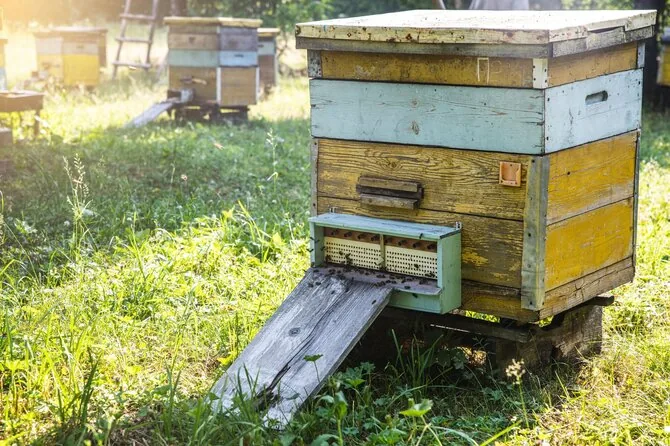
At that time, bees were observed not only for honey. If they left the hive entrances open, according to the elders, it meant that winter would be cold.
And what does September itself mean?
Perhaps the simplest of all elder observations sounds like this: “What the weather is like in September, so it will be in October.”
It was also said: “A sunny September prepares bread for the next year.” So beautiful, sunny September days were once considered not only a pleasant sign of the beginning of autumn, but also a favorable prophecy for agriculture in the coming year.
Read more Presidential advisor: the situation regarding residents left without electricity is critical