Lower sales were due to lower new supply – 13 pre-sales were recorded in August, compared to 132 in July.
Read more When the JAV Secretary of Energy arrived in Caracas, Washington defended the oil deal
“Compared to the last few months, the share of economy-class housing sales has decreased, while the middle-class segment has increased. Several assumptions can be made. The decrease in economy-class sales may have been caused by lower investment housing sales, while in the middle-class segment, slightly more first-time homebuyers may have shopped, having received indications about changes in first-time home financing conditions, regardless of what they were,” says Tomas Sovijus Kvainickas, head of investments and analysis at the Inreal group.
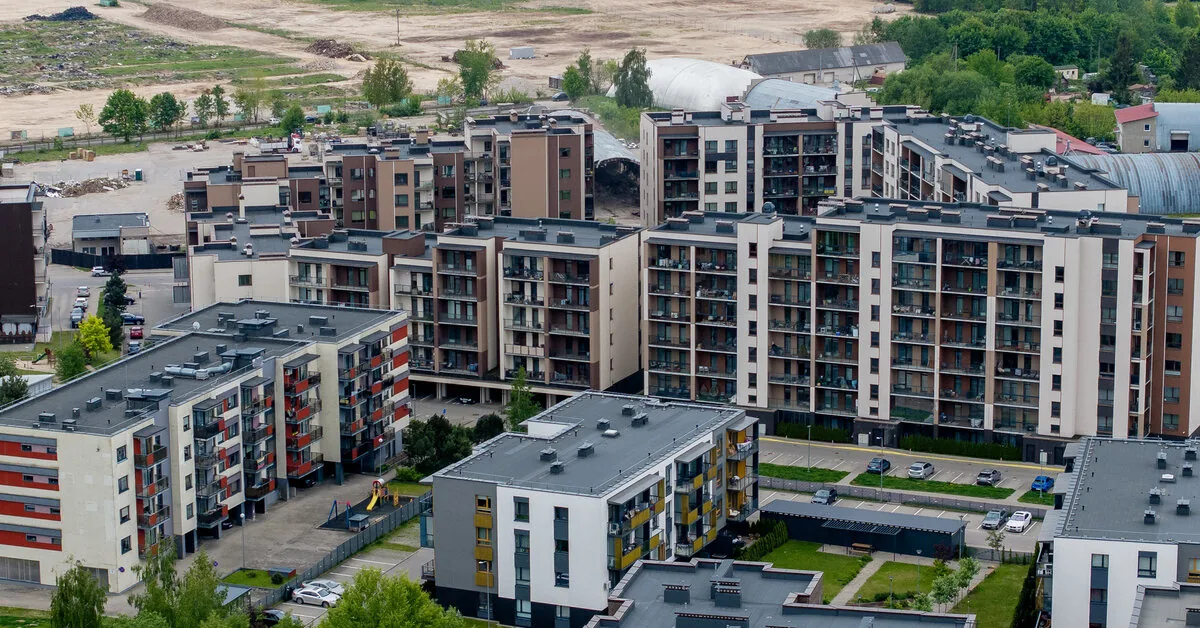
In August, Inreal’s primary Vilnius housing market observations were supplemented by 256 new objects – three times less than in July (780), but almost twice as many as in August last year (133). The supply quantity decreased by 3% over the month, from 6,911 to 6,708 units, but the amount of housing in supply still remains about 22% higher than at the same time last year (5,509).
Over the last twelve months, about 100 more apartments were offered to the market each month than were sold, so the primary market balance indicator increased from 0.98 to 1.20 over the year. The market remains balanced, but the supply and demand ratio differs in individual segments. The largest supply is concentrated in the economy class, where buyers can choose from about half of all housing.
In August, an exceptionally high number of price corrections were recorded: prices were increased 409 times and decreased 374 times.
“August stood out for the scale of price corrections – prices were not only increased but also quite actively decreased. This is the second consecutive month where we see significant movement in both directions. However, the annual price growth remains significant – about 9% in the economy segment and about 14% in the middle segment,” says T.S. Kvainickas.
Considering structural supply changes, economy-class housing cost 3,407 Eur/sq.m (no change), middle-class – 4,713 Eur/sq.m (-1%), prestige class – 7,628 Eur/sq.m (no change), lofts – 3,565 Eur/sq.m (-2%), townhouses – 2,430 Eur/sq.m (+2%). Annual price growth in the economy segment was about 9%, in the middle segment about 14%.
Read more “Civinity” and “Sail Invest” acquired the building administrator “Admeo” for 4.3 million euros
In Kaunas city, 148 housing sales were recorded in August (158 new agreements, 10 returns) – about 80% more than in July (81, 93, 12) or in August last year (82, 84, 2). Supply observations were supplemented by 268 new objects – twice as many as in the same period last year (119). The supply quantity increased to 2,151 units, but only 1,351 of them are available. Supply this year is one and a half times larger than at the same time last year.
“The Kaunas market currently shows a very clear demand potential. Supply is growing, but its increase is not excessive – it basically meets buyers’ needs. Continued price growth and active sales indicate that the demand for new housing in Kaunas is becoming sustainable,” says T.S. Kvainickas.
According to him, this is also evidenced by the continued price growth. Prices were increased 111 times and decreased 2 times over the month. The market balance indicator in Kaunas increased from 1.54 to 1.56, but it is distorted by a large amount of reserved housing.
In Klaipėda’s primary housing market, 29 total sales were registered in August (30 new agreements, 1 return) – essentially the same as in July (28, 30, 2), but much less than last year, when long-term sales fell in August (153, 157, 4). Supply observations included 42 new objects, and the total amount of housing in supply increased to 1,079 units, of which 622 are available.
“Over the year, the supply quantity, like in Kaunas, increased one and a half times, with developers showing greater interest in the port city’s potential. It is likely that the realization of supply will take some time, so slower supply growth is possible in the medium term,” says T.S. Kvainickas.
No significant price changes were recorded: prices were increased 2 times and decreased 4 times. The large supply quantity means that the market balance indicator (2.47) shows a buyer’s market. Even excluding the impact of reserved housing, buyers at least hypothetically have greater opportunities to negotiate, especially compared to other major cities.
Read more In Germany – new suspected sabotage: damaged power grids and explosion at the station