“One topic kept coming back – how much space is left today, when more and more decisions can be entrusted to technology, for humans, their experience, intuition, and imperfection. To be honest, I never thought I would discuss this,” says the interlocutor.
Read more «Could not get out herself»: painful accident on the last summer evening
Chose authenticity
According to V. Kaniušonis, today to create a beautiful image you don’t necessarily need a photographer, model, actor, makeup artist, or even a real location – a few sentences to artificial intelligence are enough and a flawless interior, a perfect person, and a moment that never existed in reality can appear on the screen.
“However, I have no doubt that a person needs a person – something alive and perhaps not always perfect,” he says.
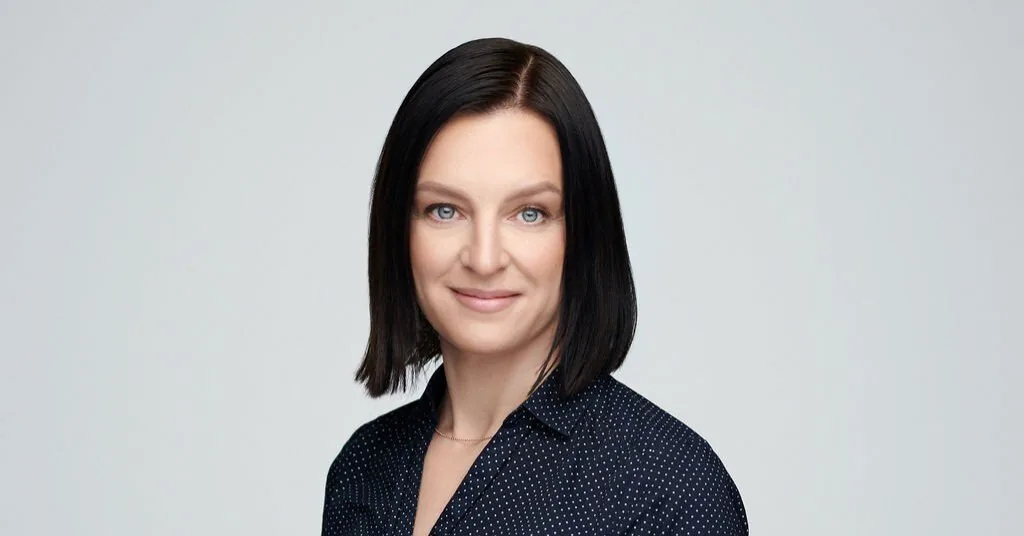
It was precisely the capturing of real human emotions, rather than using generated images, that inspired the photoshoot involving a team of ten people. The heroes of it were not only V. Kaniušonis but also Rosita Kuliušienė, who models in her free time.
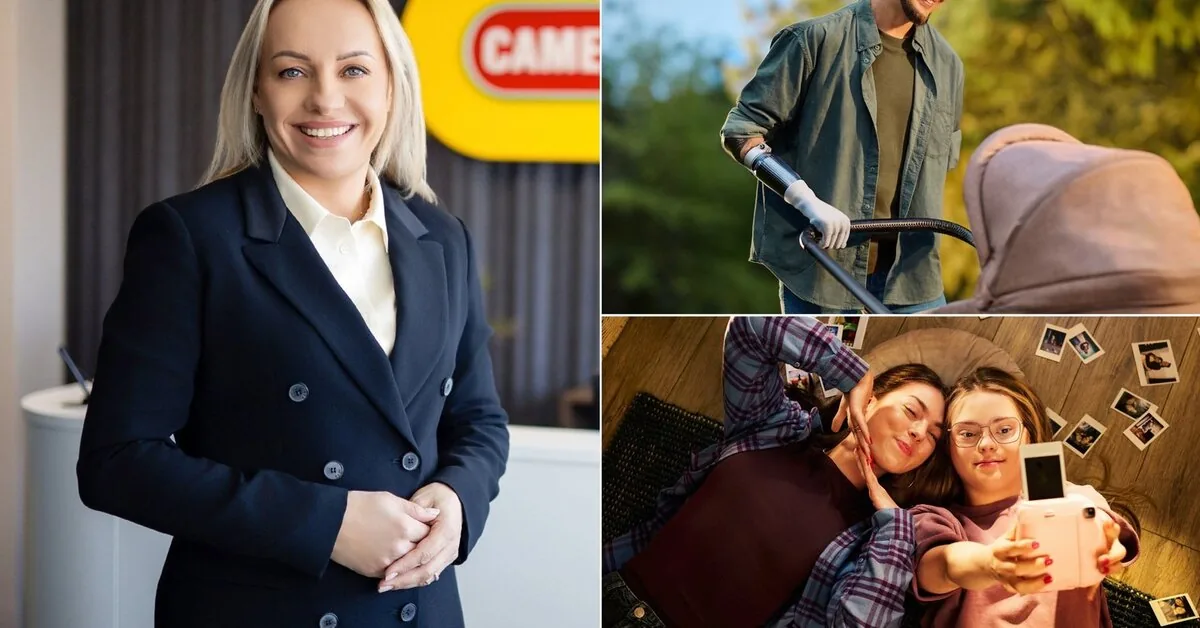
“And, it turns out, in the AI era such a choice itself becomes a statement,” says Rasa Vileikytė, Head of Real Estate Development at the “Home Ideas Center” (NIC), who initiated the creative project.

She does not hide that organizing a professional photoshoot with actors, a whole creative team, and specially created looks is much more difficult today than using AI-generated images. However, according to her, when applying AI-created images for large-format printing, technical limitations are still encountered, so it is not always possible to achieve the desired quality. But in this case, the decision was influenced not only by technical aspects.
“A live photoshoot has what you cannot generate with one click – people, their emotions, and interaction. Getting to know the actors, the work of the creative team, and the whole process, which also involved NIC salon employees, created another interesting, different workday for us,” says R. Vileikytė.
“When there is too much artificiality, you want life”
V. Kaniušonis admits he hardly uses artificial intelligence in everyday life yet. However, he observes the changes driven by technology and is in no hurry to bury the future of art because of them.
He says he sees more and more AI-created images and videos, including works based on historical, legendary, or biblical motifs.
“The images are impressive, people’s faces are beautiful, emotions seem convincing at first glance. But something is still missing in them. There is a kind of incomplete authenticity. And when there is too much artificiality around, you start to long for something you can touch,” reflects V. Kaniušonis.

For the actor, this discussion is not new. The end of theater has been predicted many times: cinema appeared, television, later the internet, but people still choose to go to theaters.
“Live connection does not disappear anywhere. I think it has always been important to humans – probably since the Stone Age,” says the interlocutor.
Therefore, in his opinion, AI will not easily push humans out of creativity. “You can create a non-existent perfect model, dress it in non-existent clothes, and place it in non-existent houses. But a person brings to the frame what you cannot program into an algorithm – their experience,” the actor is sure.
R. Vileikytė agreed. “From the very beginning, we wanted a live photoshoot. Of course, it is much more complicated, but the result has life and at the same time allows you to see NIC spaces and the products in them in a completely different way,” the interlocutor says.
Read more In New York’s Times Square, a knife-wielding attacker killed one person and injured another
Who is responsible for this?
R. Kuliušienė looks at authenticity similarly. The woman who has posed in front of the camera many times does not chase sterile perfection even when her daughter, a photographer, takes pictures. She asks for one thing – not to overdo editing.
For R. Kuliušienė, it is important to recognize herself in the photo, not her “improved” version. Because a real shot has what cannot be measured in pixels – the person in it takes responsibility for what they convey about themselves.

“Here one of the most interesting contrasts between AI and authentic content emerges. A generated person can be more beautiful, younger, more stylish, their environment – flawless. Psychologically, such an image can even work ‘tastier’.
But AI precisely executes the task given to it – behind the generated person there is no personal reputation or responsibility. The viewer evaluates a real person very differently: they identify with what the person says, shows, or recommends, and with their face they seem to take responsibility for the message conveyed. It is this connection between the person, their experience, and the visible image that creates trustworthiness,” the interlocutor notes.
According to her, a live photoshoot includes fatigue, laughter, failed shots, the photographer’s reaction, the person’s gaze, and the choice of how they want to be seen. The final result may not be mathematically perfect, but it has an author and a hero.
Research has shown that seven out of ten users say they feel that AI-created ads “lack something,” and just as many are convinced that a time will come when without special labeling we will no longer be able to distinguish whether we are looking at a real person or an AI creation. “This year’s marketing research shows an interesting trend: as technology rapidly creates perfect images, value is gained by what it cannot easily copy yet – human imperfection, emotion, and authenticity,” says R. Vileikytė.
When the phone says “turn”
V. Kaniušonis talks about the value of relationships by telling about his four-decade-long marriage with his wife Asta: the actor said he cannot even imagine it being otherwise. Over so many years there has been everything – conversations, disagreements, everyday life, and shared experiences, but it is precisely from these that a real connection is made. “Time flies fast. Years just pass, look, already 40 years and still with the same person,” the actor said then.
Perhaps, according to him, here lies the boundary that artificial intelligence cannot cross yet: it can create the perfect interlocutor, adapt to a person’s expectations, and avoid many awkward situations, but it cannot replace the shared history of two people – years during which they have to not only agree but also argue, yield, forgive, change, and repeatedly choose to be together.
V. Kaniušonis is convinced that the current stage of global changes is interesting because people still have to learn to use technology and not forget logical thinking.

“For example, in Iceland, road maintenance workers say they often have to go pick up rented cars from all kinds of dangerous places. Tourists drive according to Google Maps or use an AI-generated route and turn where the phone tells them, even though… there is clearly no road there,” the actor says.
According to him, the problem begins when the screen is trusted more than what is seen through the car window.
“The reality that he sees with his own eyes in front of him becomes somehow less important. So, no matter what technologies we have, we still need to think with our own heads,” says V. Kaniušonis.
Read more A large sinkhole has opened in the Pasvalys district