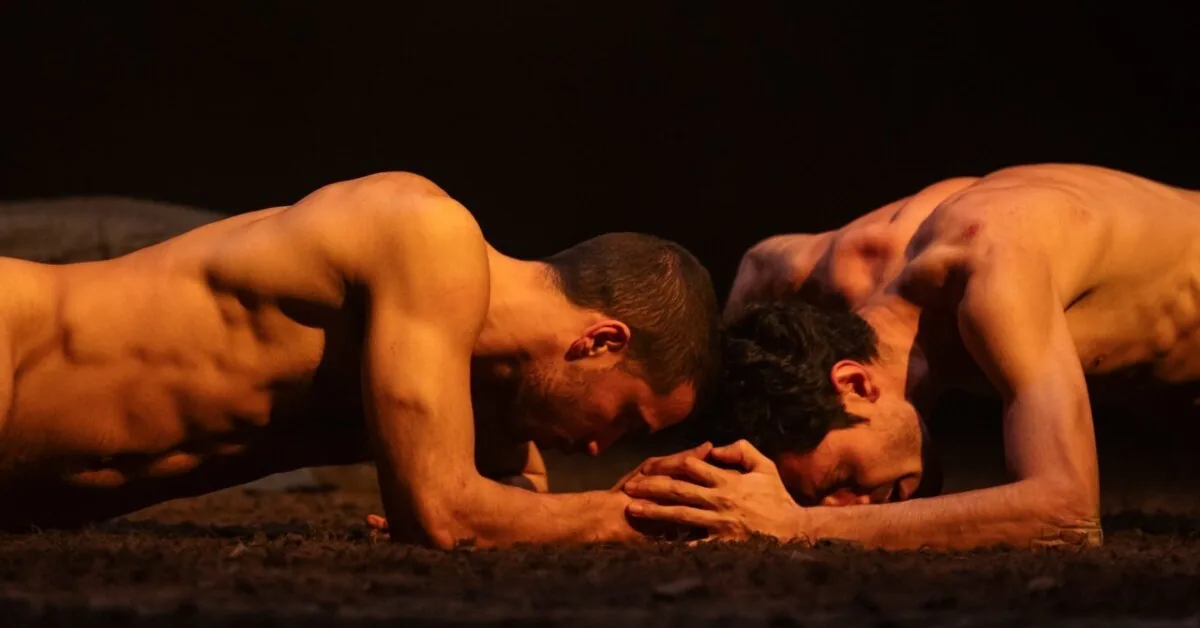
This year’s program features three plays by Greek directors (one of them is a play by Mario Banushi, who recently won the Silver Lion at the Venice Biennale), as well as a free work by a Ukrainian artist in open spaces in Vilnius and many events dedicated to theater professionals for festival visitors.
Read more Volodymyr Zelensky: September can change a lot
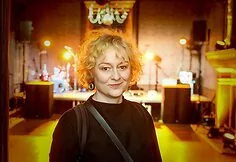
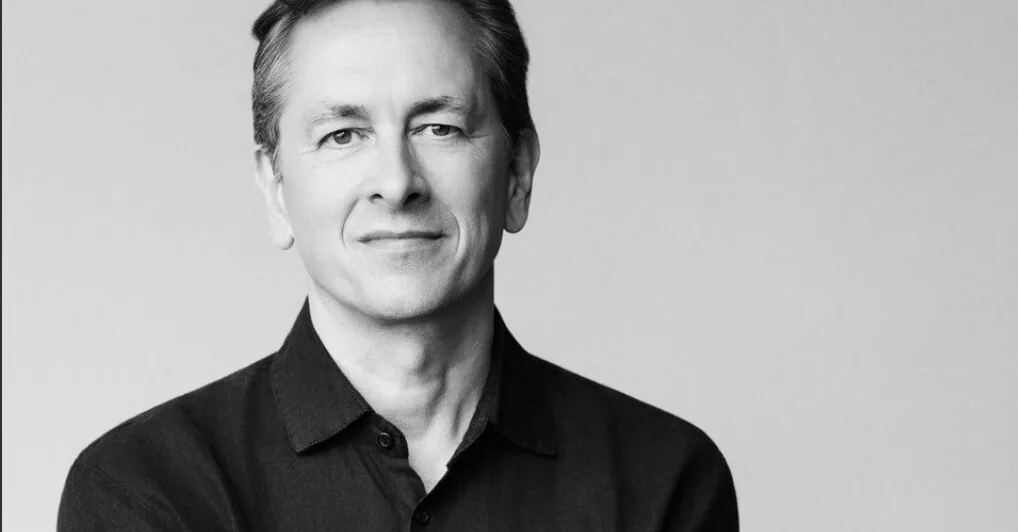
As the “Sirenos” approach, the festival’s artistic director Kristė Agota Savė shares in an interview what she herself tries to escape from into theater, what fascinated her about director Mario Banushi’s work, how Greek theater differs from Lithuanian theater, and which foreign delegations are expected at the festival.
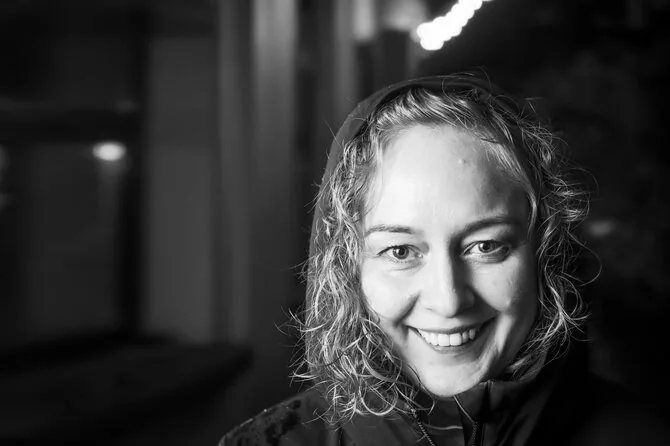
– This year’s “Sirenos” festival theme is “Theater is an escape.” What do you personally escape into theater from?
– Oh, from a lot of things. When I was writing the three-year “Sirenos” festival program and thinking about theater as an escape, I wanted to include artists who create unique worlds, their own reality, where viewers can feel as if they are in another micro-universe.
But at the same time, probably both my personal life and the surrounding geopolitical reality are sharp and complicated, so sometimes I want to come to the theater to not think about what is happening in reality, or to have my thoughts revolve around universal and fundamental things, not about the bomb that exploded last night.
And the third thing is that sometimes when I am in the theater, I think about what a luxury it is, what a wonderful thing it is to work in theater, when, for example, you are grieving, sad, and you come into an environment where a rehearsal or performance is happening, you can immerse yourself in that stage reality and thus come to terms with your emotions.
That is a rare thing. People seek that escape, liberation in therapists’ offices and various activities. But for me, theater is one of the places where the lights dim, and together with other viewers we dive into a collective experience, but at the same time – each into a personal experience.
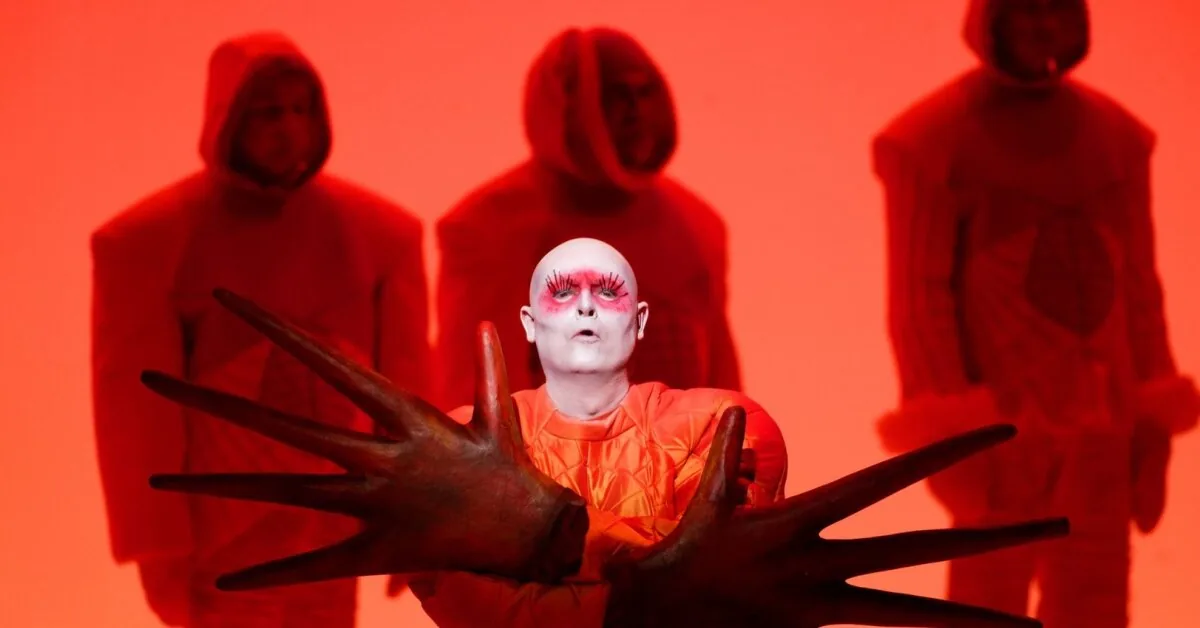
– This year’s festival highlight is director Mario Banushi’s work “Mami,” who won the Silver Lion at the Venice Biennale in June. However, you invited him and noticed his work even before this important award. What did you like about Banushi’s works?
– In 2022, after a long break, the first Greek theater showcase took place in Athens, organized by Onassis Stegi and the National Theatre of Athens, the two largest stage art organizations in the country. There I saw Banushi’s first work “Goodbye Lindita.”
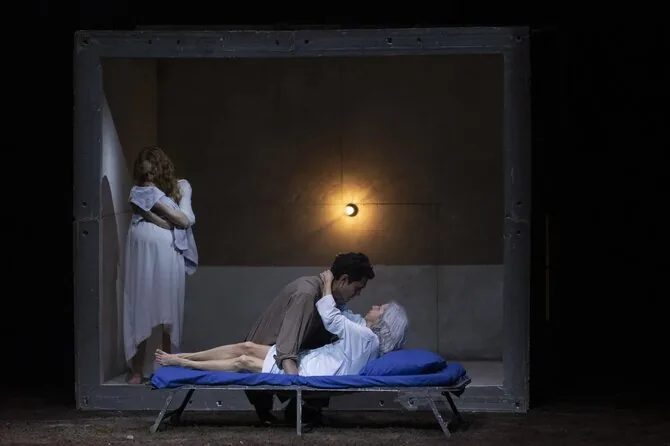
He impressed me a lot because even then I saw Banushi’s unique, very visual thinking and that Balkan essence – Mario is originally from Albania, later moved to Greece, and has had many difficulties in his life.
Since it is very difficult for young creators in Greece to get funding for their first productions, he created the play with his own funds, showed it in a friend’s house, invited some viewers and a few producers and theater representatives there.
Banushi’s debut work “Goodbye Lindita” made a huge impression on the heads of the experimental stage of the National Theatre of Athens, and later it was re-staged and moved to the National Theatre’s experimental stage.
“Mami” is his fourth play and it has already been included on one of the main stages of the prestigious Avignon Festival, which is very rare for such a young creator just starting his career. Then came the Venice recognition. So a very rapid career rise. Mario Banushi’s career start is indeed very impressive.
– And what did you like specifically about the play “Mami”?
– I saw this play twice – at its premiere in Greece in February 2025 (I was participating in a residency in Athens at that time) and then at the Avignon Festival in July. First of all, it is very visual theater, very poetic. I think the Balkans are somewhat close to Eastern Central Europe by nature, with a unique rural culture, so there are many symbols in the play that our region understands.
I think the Balkans are somewhat close to Eastern Central Europe by nature, with a unique rural culture, so there are many symbols in the play that our region understands.
Still, it is not a play based on a conventional narrative, although there are many stories in it, each person can interpret them differently. I think the play is very beautiful and sensitive. To me, it is metaphorical, telling about the endless cycle of emotions, feelings, love of parents for children and children for parents, the cycle of life, beginning and end.
One of the most memorable moments of this play for me is when a son takes care of his old mother, carries her in his arms like a baby, as she carried him in infancy. And these scenes are shown almost side by side in the play. You don’t see that in life, and when it is so clearly juxtaposed on stage – recurring motifs in our lives become obvious. Maybe it touched me very sensitively because I am currently taking care of my elderly parents and see what difficult trials await both parents and children in old age.
One of the most memorable moments of this play for me is when a son takes care of his old mother, carries her in his arms like a baby, as she carried him in infancy.
– Two more Greek plays will be presented at the “Sirenos” festival. Can you tell us a bit more about them?
– As I mentioned, I was in a residency in Greece at the time of Banushi’s premiere – February 2025. My goal during the residency was to analyze how contemporary Greek stage artists reflect themes of the end of the world, as this is the recent three-year concept of “Sirenos.” So based on that theme, I selected three plays because, in my opinion, they offer different keys to this theme.
I even told some of these creators that their work would be included in a festival whose theme explores premonitions of the end of the world. Not all agreed, not everyone feels the same – there were very interesting discussions.
So “Mami” probably hits the universal perception the most; it is oriented towards eternity, towards things that change but also remain.
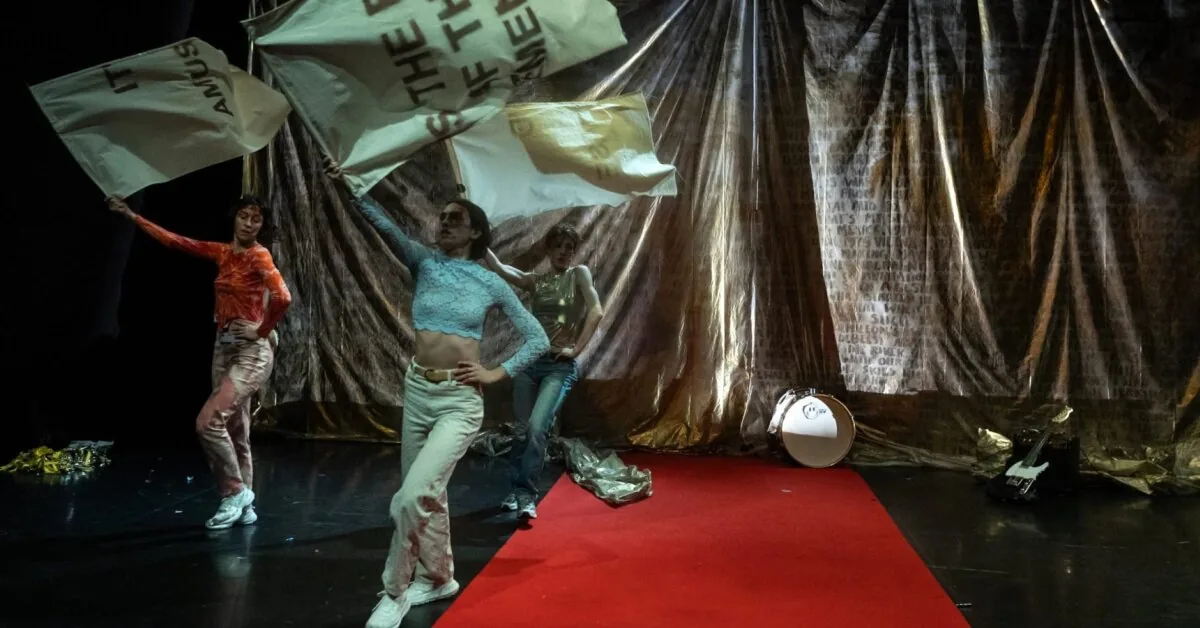
The other work, “It’s the End of the Amusement Phase,” is a dance performance about Western society, our civilization’s slide into the abyss, into ruin. It was created by Chara Kotsali, one of the most prominent and interesting choreographers in Greece. She is also a composer and percussionist. The creators of the performance say: “the era of entertainment is over,” now we have to pull ourselves together and seriously think about what to do to preserve the Earth and humanity.
However, it is definitely not a didactic play; it contains a lot of healthy anger and rage.
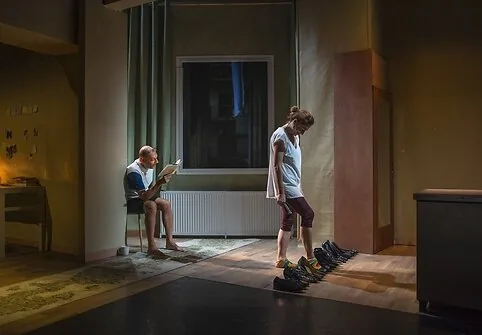
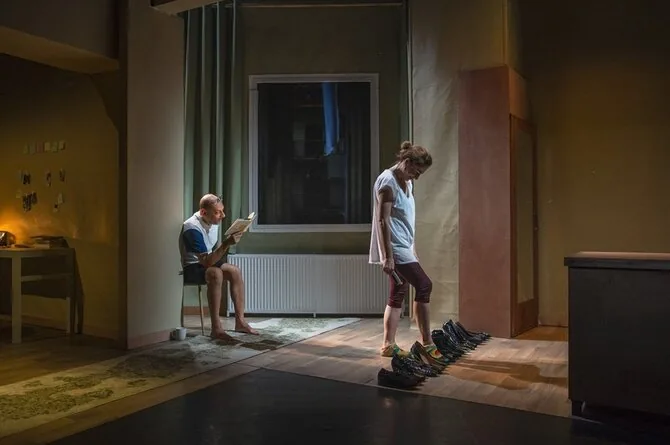
The third play is presented by Dimitris Karantzas – probably the oldest of these creators, but still considered part of the young generation. His play “Namas” features two actors, but the rules of action on stage are different from what we are used to.
Read more A new twist in the life of actress Vitalija Mockevičiūtė
And the entire narrative, which I don’t want to reveal too much, revolves around home, the life of two people, and contrasts with what happens outside the walls of the house. At the center of the stage is a window to the world. Through it, we see what is happening in the world today and can ponder the end of the world: is it coming or not.
Now we have to pull ourselves together and seriously think about what to do to preserve the Earth and humanity.
– While in residency in Greece, did you notice any common traits unique to the country’s theater? After all, Greece is the cradle of theater.
– Every European country has certain peculiarities in theater. Greeks are no exception. I might see similarities across the entire southern region (Greece, Italy, Spain, etc.) where there is definitely no shortage of very physical, visual theater.
For example, the Portuguese have a lot of physicality and body on stage, even body harm. Greeks, I think, are similar. It’s no coincidence that their most famous creator now is choreographer and dancer Dimitris Papaioannou. But there is also a whole range of other very prominent creators who often visit the “New Baltic Dance” festival.
The drama theater created by the younger generation in Greece, I would say, is not so strong; I mean text-based productions, at least I haven’t seen many interesting dramatic works.
But there is a strong and interesting theater between dance and drama, borrowing features from both fields. Therefore, it is often difficult to assign a specific play to a particular field, but it is interesting to analyze and discover contemporary Greek theater.
By the way, all three of these works are produced by the Onassis Stegi organization, which some say is richer than the Greek Ministry of Culture. They select the most interesting, prominent artists and support their path. So these three plays do not precisely reflect the entire situation in Greece, but rather the direction of one organization.
– There will also be dance in the Lithuanian program of “Sirenos,” right? What Lithuanian stage art works will be shown at the festival?
– A couple of years ago, when preparing the Lithuanian season in France together with the Dance Information Center and “Operomania,” we proposed to the Cultural Institute to create a joint stage arts showcase to which we could invite French producers to see our works live – the French knew very little about Lithuanian culture.
Thus, in 2024, during the first platform, we managed to activate quite a few projects and tours, and exchanges with France began.
And now, preparing for the Lithuanian season in Germany, the same idea naturally arose again. So again, together with the same partners, plus the Cultural Institute and Goethe Institute, we are presenting a new showcase this year, which will include not only theater but also dance and new opera.
– I heard you are preparing to host many foreign guests. “Sirenos” always attracts many foreign experts, but will there be more than usual this year?
– Yes, we expect about 30 theater producers from Germany and about the same number of regular “Sirenos” guests from other countries. There will again be many networking events, pitching sessions, and discussions.
There will also be two groups from countries very important to the festival ecosystem. One group is from Ukraine – we are organizing a special learning visit for young producers from that country – they will watch festival performances, participate in creative workshops and seminars.
And for the first time in the festival’s history, we will host an eight-person delegation from the USA. They come from different major American stage organizations with the aim of seeking partners for joint projects. They already develop such cooperation in Poland, Bulgaria, and now Lithuania has come into the American spotlight.
– Can you tell us more about the Ukrainian play, which will be shown free of charge to Vilnius residents, and whose photos look impressive? Is it something that has never been seen in the city’s spaces before?
– The play is called “Traps,” it will take place on October 1 at 6 p.m. near the MO Museum. We think there will be a large flow of people traveling from work at that time. So they will encounter the play both expectedly and unexpectedly. It is also hard to classify because the author is a dancer and choreographer, but there is no dance in this work. I would call it an architectural poem.
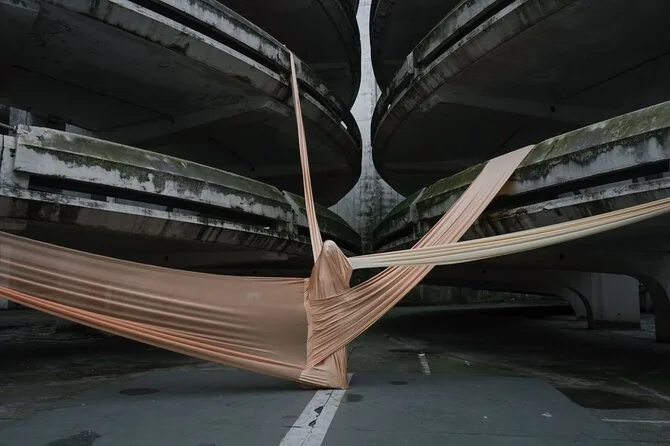
It is very important for our festival to support Ukraine; we cooperate with the Ukrainian Institute. We have been cooperating with producers for several years, showing Ukrainian plays, so this work is a very important gesture for us. After “Traps,” there will be a discussion – at the MO Museum, Lithuanians and Ukrainians will talk about theater, the stage, and protests. So I warmly invite everyone to participate in that conversation.
It is very important for our festival to support Ukraine; we cooperate with the Ukrainian Institute.
– And what are the goals of the Ukrainian producers’ learning visit?
– As I said, we have been cooperating with the Ukrainian Institute for several years, and now we decided it would be great not only to show a play but to start a cooperation project. And in my opinion, this works best when producers with many ideas and working with various artists come to visit.
We invited young professionals because we can introduce them to their peers in Lithuania, organize many joint activities, introduce them to theater organizations, and so on. And, of course, they will watch performances, communicate with foreign guests, including the Americans, and expand their network.
I think it is very important that the “Sirenos” festival hosts so many events for professionals – networking and education. This year the focus is on Germans, Americans, and Greeks. There will be a special meeting with representatives of Onassis Stegi; cooperation with them opens many opportunities for artists.
The Vilnius International Theatre Festival “Sirenos” will take place from September 23 to October 8 in various spaces in Vilnius. The festival is funded by the Lithuanian Council for Culture, supported by the Vilnius City Municipality, and organized by the Lithuanian Theatre Centre. The full program can be found at www.sirenos.lt
Read more Not just sports: 91-year-old «Mary Poppins» star revealed what helps preserve youth and energy