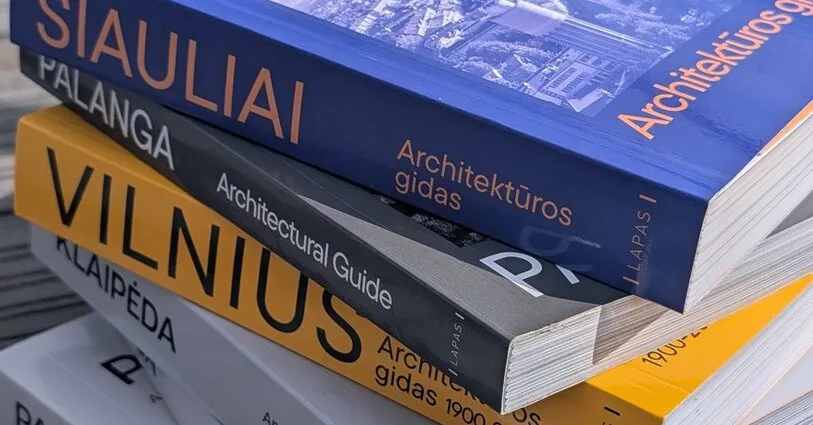
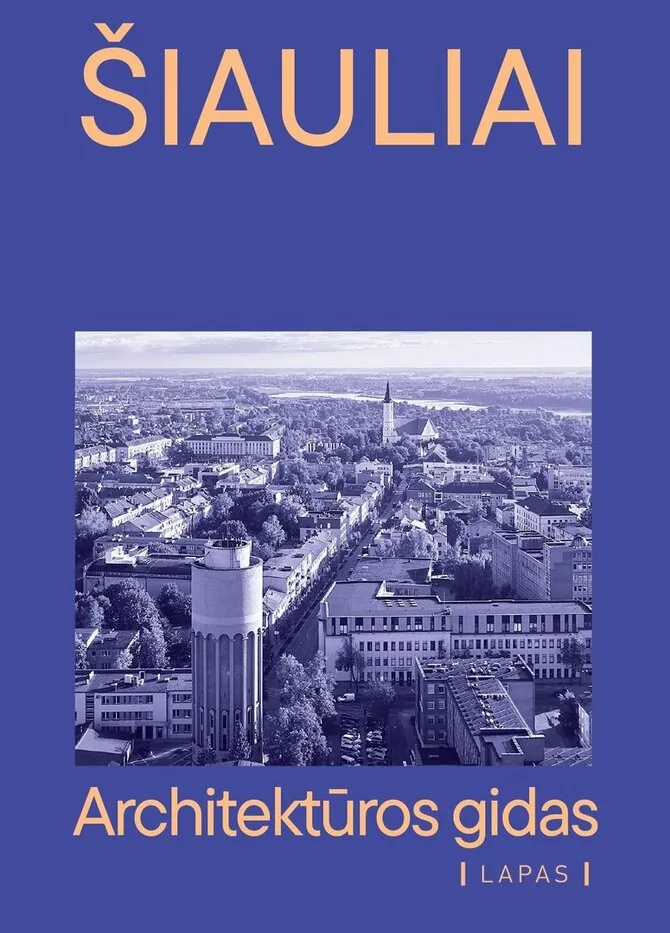
Šiauliai is the fourth largest city in Lithuania and a multi-layered architectural center that has undergone radical changes over the past century. In the 19th century, the city became an important industrial center, but it suffered great shocks during both world wars and lost almost its entire historic old town. Despite the losses, Šiauliai managed not only to recover but also to form a distinctive architectural character.
Read more Tragedy in Cyprus: ferry carrying 267 passengers capsized and sank

“Preparing for the open architecture festival ‘Buildings Speak. Šiauliai,’ we asked ourselves and the architects working in the city: what is the architectural identity of Šiauliai? Does the city, which almost lost its old town during the world wars, have anything to be proud of? Does it have a unique spirit that we wouldn’t find in other Lithuanian cities? Some answers emerged during the festival, and even more are presented in this architecture guide,” say the editors Aušra Černauskienė and Vita Soltonaitė-Puslienė in the foreword of the publication.
Architecture overshadowed by major cities
In the narrative of Lithuanian architectural history, most attention traditionally goes to Vilnius, Kaunas, and Klaipėda. The architecture of smaller cities often remains on the margins of broader studies, and some of their buildings, public spaces, and urban solutions are still not thoroughly documented or evaluated.
Although interwar architecture in Šiauliai has received increasing attention in recent years, the city’s development during the Soviet era and independent Lithuania remains poorly researched. The new guide aims to fill this gap and show that the architectural history of Šiauliai is not a provincial repetition of the stories of major cities but a distinctive testimony to Lithuania’s modernization, industry, war, Soviet urbanization, and independence period changes.
The publication presents the city’s history and architectural development from the 18th century to the present day. The guide describes 212 objects, includes introductory texts by eight authors, numerous archival and contemporary photographs, building drawings, urban schemes, and six maps.
From industrial heritage to military architecture
Šiauliai’s identity is inseparable from industry. The city developed leather, beer, television, candy, and bicycle production, so factories, workshops, and administrative buildings tell not only the story of architecture but also the city’s economic and social development.
The guide features diverse objects such as the Birutė candy factory, industrial company complexes, workers’ residential districts, and city infrastructure buildings. They testify to a time when rapidly growing industry changed not only the city’s skyline but also the daily lives of Šiauliai’s residents.
A separate layer of Šiauliai’s history is military architecture. The constant sound of airplanes in the city’s sky reminds of the long-standing military airport and military town here. The guide describes the Zokniai aviation base airfield, aircraft assembly hangar, and other objects revealing Šiauliai’s development as a strategic military aviation center.
Southern district and the capital of Lithuanian postmodernism
A prominent, though still controversially viewed, layer of Šiauliai’s architecture is the Soviet-era urban legacy. Its symbol became the Southern district – a huge residential area that gradually turned into not only an architectural and urban phenomenon but also a unique sign of Šiauliai identity.
However, Šiauliai stands out not only for its mass residential construction legacy. The city is often called the capital of Lithuanian postmodern architecture. Here, a distinctive concentration of late 20th-century architecture formed, reflecting a time when the newly opened financial possibilities of clients, individual desires, and architects’ creative freedom became the driving force of new, sometimes ironic or even slightly cynical architecture.
The guide invites a fresh look at the city’s public spaces – one of Lithuania’s first pedestrian streets, Šiauliai Boulevard, the Sundial Square, Aušros Alley, and other objects shaping the city center.
Read more Six decades so that everyone can read: Lithuanian Audio-Sensory Library celebrates anniversary
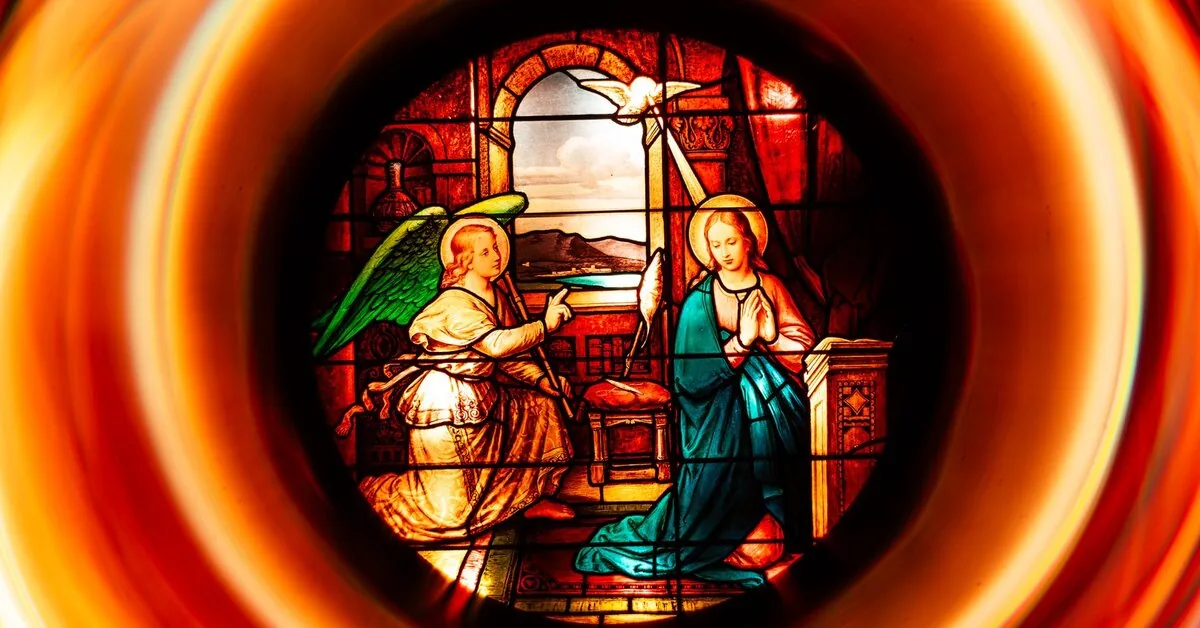
Šiauliai’s architecture is closely connected with applied arts. Stained glass, frescoes, sculptures, and other artworks complement the interiors, facades, and public spaces of many buildings, so the city reveals itself as a unity of architecture and art.
Not just a guide, but a repository of the city’s memory
“Šiauliai. Architecture Guide” presents not only surviving and currently visited objects. The publication also documents buildings and public spaces that no longer exist in the city or whose original form has significantly changed. Thus, the guide becomes a repository of the city’s memory, helping to preserve vanishing architectural stories.
This perspective is especially important for a city whose historical structure has been repeatedly disrupted by wars, occupations, industrial development, and urban transformations. The publication allows seeing not only what stands in Šiauliai today but also what shaped the city at different stages of its development.
“Šiauliai has its historic center, Aušros Alley with valuable interwar architecture, the famous Southern district, buildings breathing postmodern ideas, and unique public spaces. We believe this guide will encourage further research into the city’s architecture and help better reveal its value in the context of other Lithuanian cities,” write the editors.
More than 20 years of telling Lithuanian cities’ stories
“Šiauliai. Architecture Guide” complements the series of Lithuanian city architecture guides developed by the LAPAS publishing house for more than two decades. The series began in 2005 with the first guide to Vilnius modern architecture. Later, guides for Kaunas, Neringa, Palanga, Klaipėda, and updated Vilnius guides were published.
Over more than 20 years, this series has become not only architectural documentation for professionals but also a way for a broader audience to get to know city history, learn to notice architecture from different periods, and understand it as part of everyday culture.
Each publication in the series reveals a less familiar layer of the city. The Šiauliai guide adds to this story a city where industry and aviation meet, interwar modernization and Soviet urbanism, applied arts, and postmodern experiments.
The new publication invites you to take a journey through Šiauliai – to wander, explore, and discover the city’s speaking buildings. Because, as the guide’s editors proclaim, Šiauliai has a distinctive character. Šiauliai is tough.
Book editors: Aušra Černauskienė and Vita Soltonaitė-Puslienė. Text authors: Dalia Traškinaitė, Aušra Černauskienė, Vilija Ulinskytė-Balzienė, Jovita Vilimaitienė, Vita Soltonaitė-Puslienė, Martynas Mankus, Marija Drėmaitė, Vigmantas Butkus.
More information – here.