„The remains found in Vievis are expected to be handed over to VU specialists in September. Standard anthropological studies will be carried out to determine sex, age, diseases and injuries, height, and samples will be taken for possible further identification studies,“ said Professor Rimantas Jankauskas of the VU Faculty of Medicine to BNS.
According to him, if necessary and financially feasible, genetic tests may also be performed.
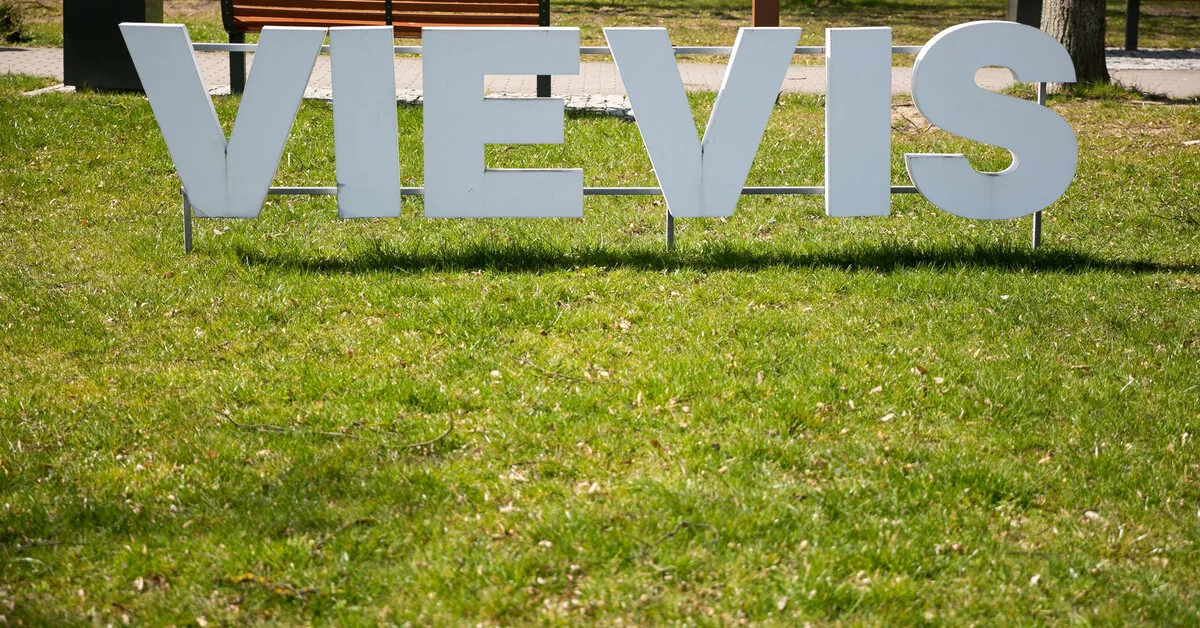
As BNS wrote, the remains of Soviet soldiers were exhumed last week from the center of Vievis city in the Elektrėnai municipality.
The exhumed remains are currently being prepared to be handed over to specialists from the Department of Anatomy, Histology and Anthropology at the Faculty of Medicine of Vilnius University.
After their examinations, the remains will be reburied in the Orthodox cemetery of Vievis city.
According to the professor, no additional recommendations regarding the reburial of the remains are planned after the examinations, unless “very unexpected facts” emerge.
BNS wrote that Soviet soldiers were buried in the center of Vievis, near St. Anne’s Church. Previously, a monument to Soviet soldiers stood at this location and an eternal flame burned.
As early as December 2024, Arūnas Bubnys, director of the Lithuanian Genocide and Resistance Research Center, indicated that the burial site of Soviet soldiers in Vievis must be removed in accordance with the requirements of the 1949 Geneva Convention Additional Protocol on the Protection of Victims of International Armed Conflicts.
Read more Koulibaly became a victim of the «new» rule: earned a frustrating penalty
At the request of the mayor of Elektrėnai, the so-called Desovietization Commission, which evaluated the burial of the soldiers, recognized it as violating the legal prohibition on promoting totalitarian, authoritarian regimes and their ideologies in public places.
According to the commission, this burial site is a place for the establishment and dissemination of the myth of the Great Patriotic War propagated by the Soviet Union and Russia, and the burials there are secondary, made by relocating remains from primary burial sites in the surrounding area.
This year, the remains of Soviet soldiers were also exhumed from the center of Šiauliai city. The Russian Ministry of Foreign Affairs protested both cases, accusing Lithuania of desecrating the remains.
Vilnius calls these accusations from Moscow false and absurd, and the country’s Ministry of Foreign Affairs emphasizes that Russia deliberately distorts the real situation in an attempt to justify its own legal actions against Lithuania.
The ban on promoting totalitarian, authoritarian regimes and their ideologies came into effect in the country in May 2023. According to it, symbols of totalitarianism and authoritarianism – monuments, names of streets, squares, and other public objects, and other symbols – must be removed from public spaces.
Read more Švėkšna decorated with a new mosaic: telling the story of the town’s Jews