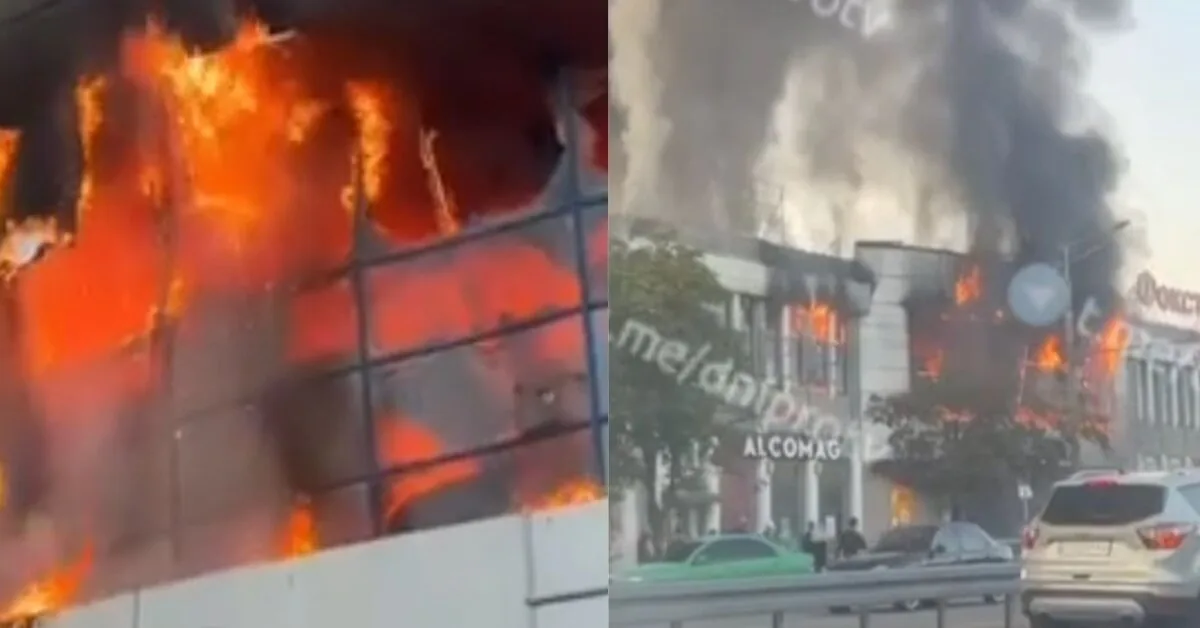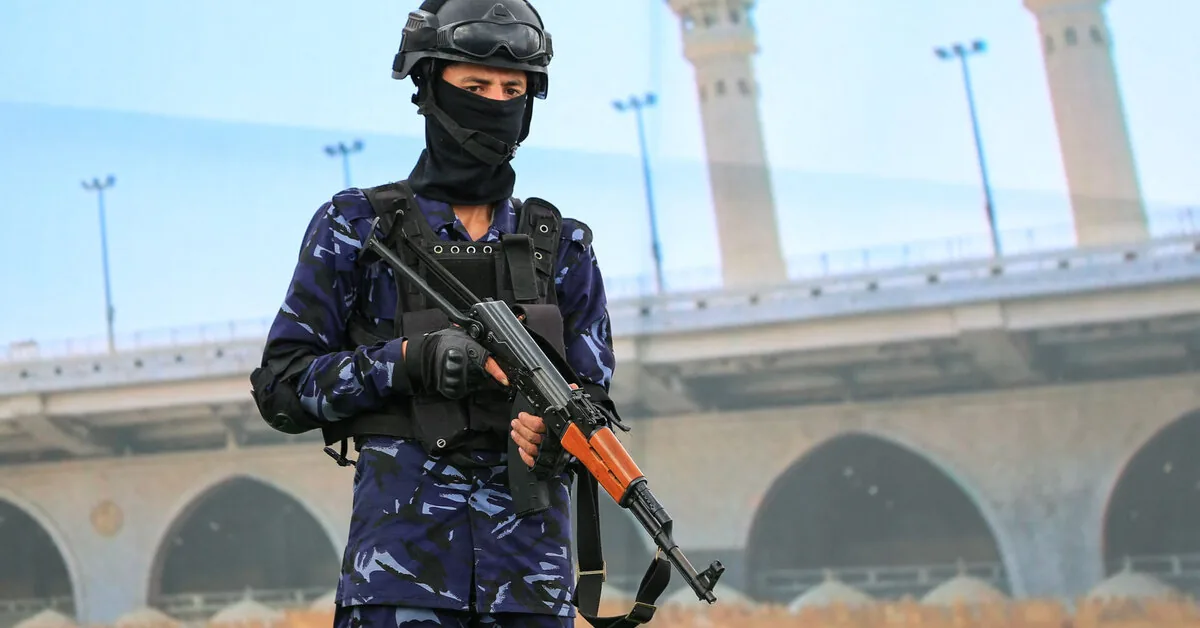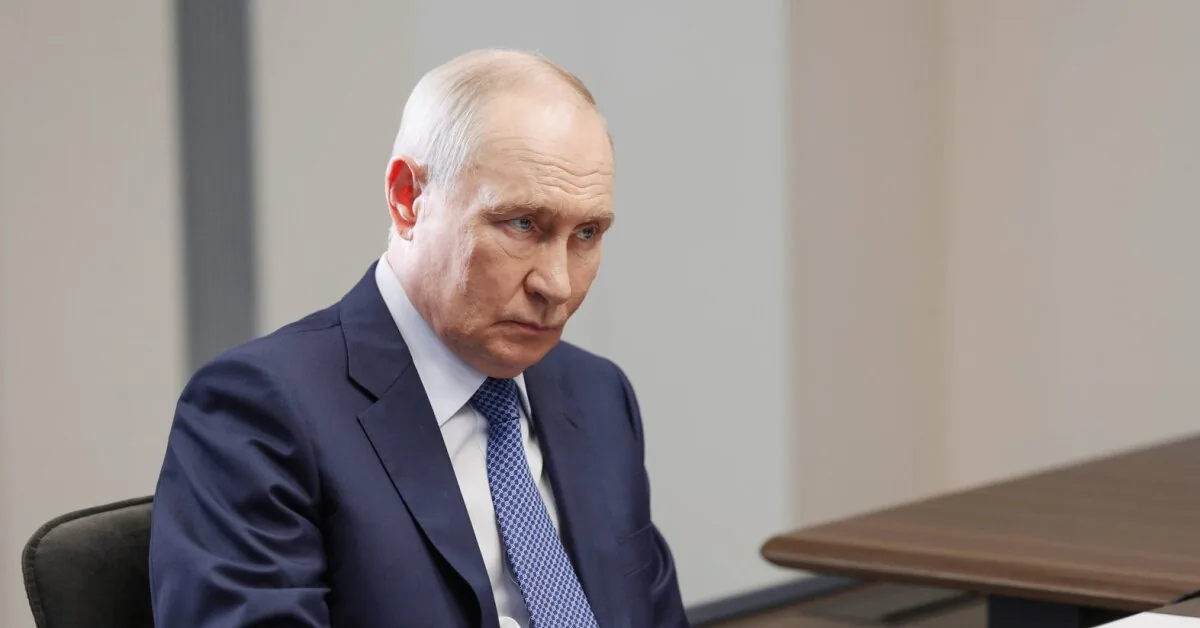
- After Russia’s strike on warehouses in the Kyiv region – detonation: the prime minister hinted at possible ammunition
- “Bloomberg”: Europe sees no evidence that Russia is preparing to attack NATO
- Fedorov became an advisor to the Italian defense minister
- Budanov named the minimum number of people Ukraine must mobilize each month
All news about Russia’s invasion of Ukraine can be found HERE.
“The Telegraph” named six Putin scenarios that could destroy NATO
09:47
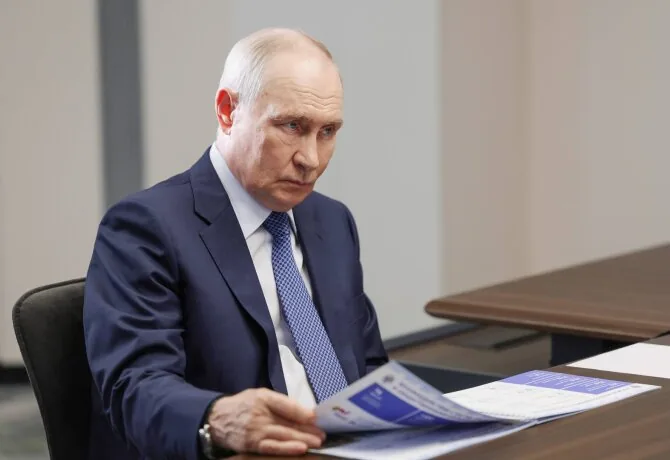
Western governments have long warned about the threat of a Russian attack against NATO. Although intelligence officials recently believe that Vladimir Putin does not want a direct military confrontation with the Alliance, he is simultaneously planning “hybrid operations” against NATO member states, which could ultimately accidentally provoke a confrontation.
“The Telegraph” analyzes what aggression scenarios against NATO Russia might consider and where strikes could occur.
Option 1. “Crimea scenario” attacking neighboring NATO countries
This is the most discussed possible scenario of Putin’s actions.
One could imagine “activists,” actually Russian agents operating undercover, starting protests over artificially created alleged discrimination against the ethnic Russian minority, for example, in Estonia’s Narva or Latvia’s Daugavpils cities. Under the guise of protests, Russian soldiers, initially without insignia and dressed in civilian clothes, would cross the border and take control of key cities.
Theoretically, NATO would find itself in a difficult position: is this a Russian attack or just street protests? While the Alliance hesitates, Russia could deploy troops supposedly “to maintain peace.” Within a few days, Russia could effectively take control of part of NATO territory.
However, repeating this scenario would be difficult. After the annexation of Crimea, the governments of Estonia, Latvia, and Lithuania prepared specifically for such a scenario.
Option 2. Conventional attack on neighboring states
This would be the worst but least likely scenario – a direct conventional attack.
An attack launched simultaneously from Kaliningrad and Belarus could cut off the Suwałki corridor – a narrow border strip between Poland and Lithuania. Meanwhile, Russian paratroopers or marines could land on Gotland Island in Sweden, disrupting air supply.
The three Baltic states would be cut off from the rest of NATO. The Russian military could advance towards Tallinn, Riga, and Vilnius.
However, as with the “Crimea scenario,” such an operation has already been widely analyzed and preparations are underway.
Option 3. Invasion
One possible scenario is a Russian helicopter “emergency landing” near the Kaliningrad border due to engine problems. To ensure the security of the site in neighboring Polish or Lithuanian territory and to recover the crew, a “rescue group” would be sent.
Various versions of the so-called “missing helicopter” scenario are possible, including missiles and drones that would “accidentally” fly over Ukraine and crash in Poland, Romania, or Moldova.
In this way, Russia could signal that much greater damage could be done in the future, trying to intimidate Western politicians and thus influence their support for Ukraine.
Option 4. “False flag” operation
Reports increasingly appear that the Kremlin is accumulating captured or downed Ukrainian drones that could be used for provocation.
In such a case, the aim would be to divide NATO unity and weaken support for Ukraine by creating the impression that a massive airstrike on Russia tragically failed and some weapons fell on NATO territory.
Poland, where anti-Ukrainian sentiment is already growing, could become an attractive target for such a strike.
Option 5. Sabotage in Europe
Russia has already demonstrated the ability to conduct sabotage operations across Europe, often choosing countries less prepared for such threats than its direct neighbors.
If Putin were looking for a way to test NATO, the logical next step could be an operation causing casualties, such as a train derailment or factory explosion.
However, Russia cannot precisely know what scale of escalation would change Western policy as it wishes. Therefore, such operations carry the risk that instead of the desired political effect, a military response will be provoked.
Option 6. Cyberattack
Systematic cyberattacks could theoretically be the basis to activate NATO’s collective defense principle. However, due to their nature, it is often difficult to determine who is responsible and unclear what countermeasures should be taken.
Such an attack would not necessarily be devastating. For example, disrupting stock exchange operations and causing market panic or closing an important airport could cause huge inconveniences and affect political decision-making.
The Kremlin hopes such attacks will not provoke a significant response. According to the publication, this is the main deterrence issue for such actions.
Putin’s attack on NATO
According to ISW, CIA Director John Ratcliffe’s visit to Moscow indicates that Russia may be preparing for an attack on NATO in the near future.
Meanwhile, US President Donald Trump continues to dismiss such a possibility. He also stated that the CIA chief’s visit to Moscow is a “routine matter.”
Russian drone struck a warehouse near Kyiv: hundreds evacuated
08:39

A Russian drone strike on a warehouse on the outskirts of Kyiv caused a powerful fire and a series of explosions, and hundreds of people were evacuated from the region due to the incident, officials reported Saturday morning.
Russia and Ukraine have been intensifying long-range strikes for several months. Increasingly, civilian infrastructure is targeted, including logistics warehouses, oil, and port facilities.
These attacks result in a growing number of civilian casualties.
After the attack in Myla village, Bucha district, the prosecutor’s office launched an investigation into negligence in ensuring storage conditions.
The fire was accompanied by explosions, reported the head of the regional military administration Tymur Tkachenko on the social network “Telegram.”
“More than 200 people, including children, have already been evacuated from the scene,” he said, adding that at least six people were injured.
The prosecutor’s office clarified that the investigation will focus on the legality of storing explosive objects and materials on the company’s premises. It is also being clarified whether the unnamed company had all the necessary permits and approvals.
Prime Minister Serhiy Koretsky expressed regret that lessons were not learned after the previous deadly attack in July in Vyshneve, near Kyiv, when an ammunition warehouse was struck.
The investigation then revealed serious errors by a state-owned company, as it did not comply with standards despite nearby residential buildings.
“Repeating the same mistakes in the fifth year of the large-scale invasion is criminal negligence,” he wrote on the Telegram platform.
“All responsible persons, without exception, must face severe punishments so that such situations never happen again,” the Ukrainian stated.
Russian attack in Odesa region: one person killed, eight trucks caught fire
08:31
The Russian attack in the Odesa region killed one person and injured three others. Additionally, trucks loaded with food caught fire.
Ukraine’s State Emergency Service (DSNS) reported that during the night attack in the Izmail district, eight trucks carrying food products caught fire, as well as nearby dry grass. The fires were quickly extinguished.
Fourteen DSNS firefighters and three fire trucks were dispatched to deal with the consequences. Two local “Bahate” fire service workers and one vehicle also assisted.
One person died in the attack, three others were injured. Transport infrastructure objects were damaged.
Ukrainian strikes shook Rostov region: flames engulfed “Ozon” and other warehouses
08:03
Ukrainian forces struck a warehouse belonging to the Russian e-commerce giant “Ozon” during the night of August 29, the company itself reported. At the same time, attacks were also reported in various locations in the southern Russian Rostov region.
A drone hit the “Ozon” logistics facility in Rostov-on-Don. According to the company, a small fire broke out, which was quickly extinguished. The company temporarily suspended the facility’s operations so emergency services could inspect the area and ensure it was safe.
Meanwhile, in the city of Aksay, a warehouse belonging to the household appliances and electronics retailer DNS caught fire due to the attack. After the incident, employees were evacuated, reported the “Exilenova Plus” Telegram channel.
Rostov region governor Yuri Slyusar said that drone debris was found on the territory of the warehouse in the Aksay district but did not specify which facility it belonged to.
In the nearby village of Leninskaya, a warehouse of the Russian retail chain “Chizhik” was also reportedly struck.
Y. Slyusar said that the Rostov-on-Don, Aksay, Bagayevsky, and Neklinovsky districts were attacked. According to him, seven people were injured during the “mass” attack. Four of them – two adults and two children – were hospitalized in Rostov-on-Don.
The governor also reported that drone debris falling in the Proletarsky district of Rostov damaged two apartment buildings, and their residents are being evacuated. In the Bagayevsky district, several house windows were broken by the strikes, he said.
This information could not be independently verified immediately.
Ukraine regularly conducts strikes on military infrastructure and other targets on Russian territory to reduce Moscow’s ability to continue the war. Recently, “Ozon” warehouses in Ufa and Orenburg were also attacked, and on August 26, a strike was reported on a “Wildberries” warehouse in the Tambov region.
Read more Vilnius “Taikos” Progymnasium renamed after Leonidas Donskis