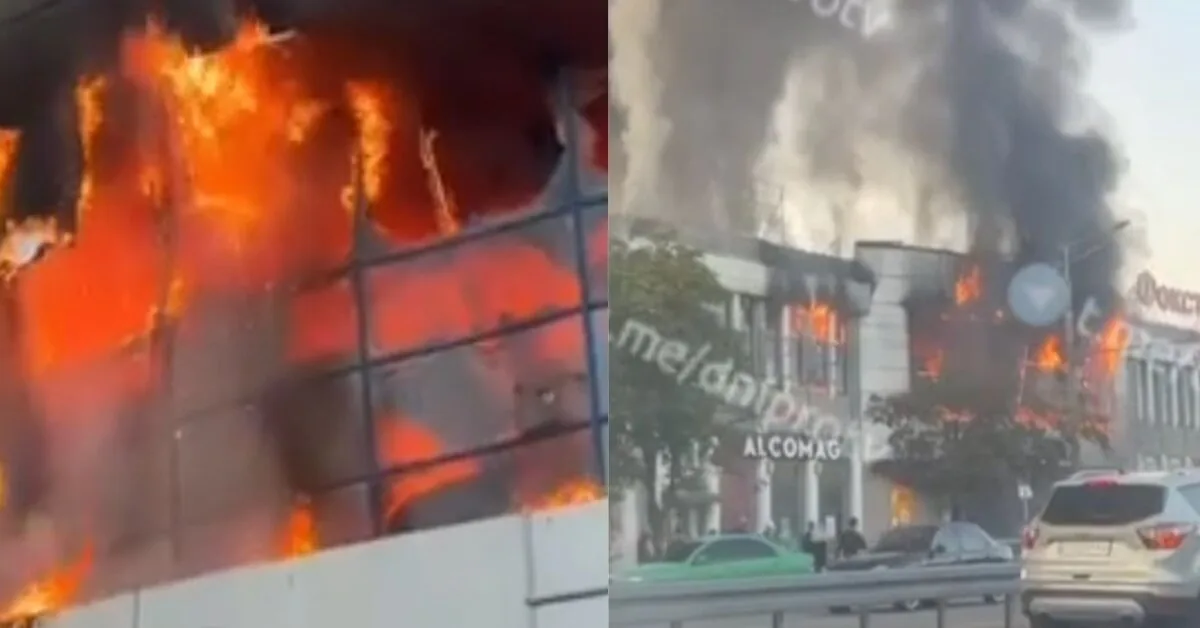
- This is the Siege of Kyiv: 17 Air Raid Alerts in 33 Hours
- New Threat to Ukraine Residents: Leave Kherson
- NYT: CIA Chief Appeared in Moscow to Tell the Kremlin What Russian Generals Are Hiding
- Donald Trump: Russia Does Not Intend to Attack NATO Territory
All news about Russia’s invasion of Ukraine can be found HERE.
This is the Siege of Kyiv: 17 Air Raid Alerts in 33 Hours
09:41 Updated 09:46

From midnight on August 27 to 9 a.m. on August 28, air raid sirens sounded 17 times in Kyiv, with Russia repeatedly sending swarms of drones into Ukraine to disrupt transport and business throughout the capital, reports the news portal Kyiv Post.
Read more When is it safer to fly by plane – day or night? The answer from aviation experts will surprise you
As stated in the article, 13 air raid alerts were recorded in Kyiv on Thursday – the highest number in one day since the start of Russia’s large-scale invasion. These alerts lasted a total of 872 minutes, or nearly 15 hours.
The sirens also sounded last night, so over a 33-hour period Ukrainians spent 17 hours under air raid conditions.

During this time, Russian forces launched at least 398 drones into Ukraine, with most of the drones launched during the day targeting Kyiv. Repeated warnings undoubtedly have a direct impact on daily life in the capital.
During air raid alerts, Kyiv’s metro stops trains on surface sections, and underground stations serve as shelters.
Branches of the logistics center Nova Poshta suspend customer service, and shopping centers, cinemas, gyms, and other businesses may suspend operations and direct visitors to shelters following safety procedures.
Due to repeated drone attacks, even when the capital is not directly attacked, residents may have to spend hours in shelters responding to air raid alerts until they are declared over.
For residents, these recurring alerts have become another trial of life in the capital, as public transport, businesses, and other services must constantly stop work to mitigate the effects of each Russian attack on the city and its people.
Goal – Paralysis of the Capital
Russia releases small waves of jet drones, hoping to paralyze Ukraine’s capital, exhaust air defense and residents, said Andrius Kovalenka of Ukraine’s Center for Combating Disinformation.
“The enemy launches small waves of jet drones aiming to paralyze Kyiv. The enemy does not have resources for a large number of drones. The goal is to exhaust air defense and residents,” he emphasized in his post on Telegram.
A. Kovalenka also assured that “decisions will be made to combat such Russian tactics.”
China’s Nudge to Moscow: Pushed Russia Out of a Strategic Region
10:53

After the collapse of the Soviet Union, Russia remained a natural arms supplier to Central Asian countries for a long time, but China gradually began cooperating with them in defense as early as the end of 2010.
After Kremlin host Vladimir Putin started the war against Ukraine, the former Soviet republics began diversifying their military arsenals much more actively to reduce their heavy dependence on the country that considers the “near abroad” its sphere of unconditional influence, writes the news portal The Caspian Post.
The article analyzes that for a long time China was primarily a trade and investment partner for Central Asian countries, but now it is rapidly conquering their defense market.
Beijing sells these countries drones, transport aircraft, armored vehicles, and air defense systems, finances border security infrastructure, and expands cooperation with regional security forces.
For example, Turkmenistan acquired large (HQ-9) and medium-range (HQ-12) air defense missile systems, and Uzbekistan acquired the long-range air defense system FD-2000, similar to the HQ-9. Uzbekistan and Kazakhstan have also shown readiness to integrate Chinese equipment into their air forces: the former apparently recently received four Chengdu J-10CE multirole fighters and possibly agreed on the supply of 20 more, writes Eurasianet. Meanwhile, the latter already operates eight Chinese-made Y-8F-200 military transport aircraft.
Air defense is one of the most important and sensitive elements of national security, so including a new supplier has significant strategic consequences, notes The Caspian Post.
It is explained that each country essentially allows such a partner to become part of its airspace defense system. The same applies to fighters. Moreover, acquiring such systems creates long-term ties with the supplier, who will supply missiles, spare parts, engines, software, upgrade services, and provide personnel training for years or even decades.
Chinese weapons are rapidly filling the arsenals of Central Asian countries, despite Kazakhstan, Kyrgyzstan, and Tajikistan being members of the Collective Security Treaty Organization (CSTO) military alliance along with Russia.
However, Tajikistan even boldly demonstrates Chinese equipment in parades in Dushanbe, noted defense analytics company Janes. It has also purchased armored personnel carriers, armored vehicles, self-propelled mortars, and firearms from Beijing.
China also finances the construction and expansion of security facilities along the Tajikistan-Afghanistan border, including its transport corridor and protection of investments in Central Asian economies.
Regional states also buy drones from China, which has become especially relevant as the conflict in Ukraine has largely turned into a “drone war.” Thus, Kazakhstan, Uzbekistan, and Turkmenistan have filled their arsenals with combat drones Wing Loong and CH-3A.
According to the Stockholm International Peace Research Institute (SIPRI), total arms exports from Russia decreased by 64% in 2021–2025 compared to 2016–2020, and its share in the global export market shrank from 21% to 6.8%.
New Threat to Ukraine Residents: Leave Kherson
09:57

Residents of Kherson in southern Ukraine were urged on Thursday to leave the city due to intensifying Russian attacks that could cut off electricity and heating supplies for a long time.
“Once again, I appeal to the residents of Kherson, especially families with children and the elderly: if you have the opportunity (…), please leave,” wrote regional governor Oleksandr Prokudin on the Telegram platform.
Early Friday, a man was killed in Kherson during a Russian attack.
Three more injured were taken to a hospital in the Dnipro region.
Prokudin said the day before that Kherson, which had about 280,000 residents before Russia’s invasion in February 2022, is facing an “especially difficult security situation.”
“The enemy intensifies attacks on the region’s critical infrastructure daily,” he added.
“Last night, Russian forces again attacked the Kherson district heating plant with guided bombs (…) – the facility suffered very serious damage. Kherson may be left without electricity or heating for hours, days, or a long time,” emphasized the governor.
Ukraine’s missile interceptor stocks are also dwindling.
“Currently, no region in our country has the capability to destroy such types of drones or aerial bombs,” he noted.
NYT: CIA Chief Appeared in Moscow to Tell the Kremlin What Russian Generals Are Hiding
09:01

John Ratcliffe, head of the U.S. Central Intelligence Agency (CIA), secretly visited Moscow to privately present his grim assessment of Russia’s war against Ukraine, reports The New York Times.
According to sources for the publication, he sought to urge Russian officials to reach an agreement before the country’s military and economic situation worsened further.
Ratcliffe conveyed this message to Alexander Bortnikov, head of Russia’s Federal Security Service (FSB). The article states that the CIA director did not threaten Russia with possible consequences if President Vladimir Putin ignored his assessment and decided to continue the war.
Importantly, CIA analysts have long doubted whether Putin’s advisors honestly portray the course and true scale of the war.
Some officials expressed hope that Putin, who previously worked in intelligence, would consider the CIA director’s message more urgent and reliable than reports received through usual diplomatic channels.
“It is unclear whether Ratcliffe’s message heralds any changes in U.S. policy toward Russia or Ukraine. Ratcliffe’s visit was another attempt by the Trump administration to revive stalled negotiations,” the article states.
Presenting his grim assessment of Russia’s military and economic reality, Ratcliffe told Bortnikov he believes it is time for Moscow to start serious negotiations to end the war.
He noted that in 18 months Russia has occupied only about 1% of Ukraine’s territory, the average lifespan of a Russian soldier on the front line is less than 35 minutes, and Ukraine’s skillful use of drone technology is causing Moscow huge losses.
Russia’s “Black August”: How This Curse Haunts Putin
08:52

Over the past few decades, the term “Black August” or “August Curse” in Russia has become a kind of journalistic term describing dramatic crises that seem to always occur in the last weeks of summer, writes CNN.
As the article’s authors note, looking at recent Russian history, the belief that dramatic events mostly happen in August is not far-fetched.
Thirty-five years ago, a group of hardline communists staged a failed coup against Soviet leader Mikhail Gorbachev, accelerating forces that eventually led to the Soviet Union’s collapse.
In August 1998, Russia experienced a financial crisis that left the country unable to repay domestic debt and caused the ruble to sharply devalue.
A year later, a group of fighters invaded the southern Russian republic of Dagestan, starting the second Chechen war – a conflict that propelled former KGB officer Vladimir Putin to the highest levels of power.
Putin became Russia’s leader in 2000 after the unexpected transfer of power from President Boris Yeltsin.
But even he was not spared from the “August curse.” One of the first major trials of his tenure was the sinking of the nuclear submarine Kursk, in which 118 sailors died.
Read more Despite the energy crisis, schools will open in Cuba next week
In August 2008, Russia started a war against neighboring Georgia, revealing the true, belligerent face of Putin’s new foreign policy.
And the summer of 2026 was bleak for Russia. The Russian army made very little progress on contested front lines in Ukraine.
The country’s cities were overshadowed by precise Ukrainian strikes on oil refineries and Russian online retail giants Wildberries and Ozon, dubbed the “Amazon” of Russia. As if that were not enough, kilometer-long lines reappeared at gas stations in Russia, and rumors of a new mobilization wave in September cause some Russians to grumble and others to flee.
Another “Black August”?
Exiled Russian commentator Ilya Varlamov told CNN journalists that recurring historical failures in August are “of course, a coincidence.”
However, he continued, many Russians await August with anxiety.
“Especially now, when the country is really in crisis… Chaos over fuel has started again, prices are rising and show no signs of stopping, the ruble is falling, elections are approaching, and God knows what else,” Varlamov said.
He also pointed to recently publicized remarks by a high-ranking Russian economic expert who warned that Moscow faces a “social crisis” and is “losing both technological and economic competition globally.”
Even the Kremlin-friendly and loyal tabloid Moskovskij Komsomolets noted the traditional anxiety and fear that accompany August.
But despite speculation, Kremlin host Putin radiates his usual confidence.
A week ago, speaking about infrastructure and development projects, the Kremlin leader acknowledged the economic damage Ukraine caused by striking Wildberries’ warehouses, though he did not mention the company by name and downplayed the long-term impact of these strikes.
“Obviously, these attacks will not have, do not cause, and cannot cause any critical consequences,” he said. “True, they cause damage – that is obvious, and we understand, see, and know it.”
According to the Kremlin host, these logistics facilities will be restored with government support. But the war is rapidly approaching many Russian homes and quickly emptying their wallets.
Analyst: Tensions in the U.S. Could Encourage Kremlin to Test NATO
08:43

Political scientist Ramūnas Vilpišauskas says that contradictory statements by Donald Trump, the consequences of the Iran war, and domestic political tensions in the U.S. could encourage the Kremlin to test NATO unity.
“U.S. President D. Trump’s unpredictable communication and criticisms of allies – sometimes justified, sometimes causing confusion and distrust – may strengthen the Kremlin’s resolve to test NATO solidarity.
Especially as America is stuck in a war with Iran and the midterm Congressional elections are approaching this fall,” Vilpišauskas, a professor at Vilnius University’s Institute of International Relations and Political Science, writes in a comment for 15min.
You can read the full comment here: Ramūnas Vilpišauskas. How Will Moscow React to the CIA Chief’s Warning?
Three Times in a Row: How Russia Is Retaliating Against Kyiv for Strikes on Wildberries
08:01

On the night of August 28, Russian forces struck Nova Poshta warehouses in the Bilohorodka community, Sviatopetrivska, Kyiv region, reports RBC-Ukraine.
After the first strike, a large fire broke out in the warehouses. Nearly an hour later, while firefighters were still extinguishing the flames, two more strikes hit the same location. Rescue teams managed to retreat to a safer place just before the repeated strikes.
The attack also damaged a nearby production facility. Information about casualties and injuries is being clarified.
State Emergency Service, firefighters, police, and municipal service forces were dispatched to the scene. Residents are urged to stay away from the strike site due to the risk of repeated attacks.
Due to heavy smoke, residents of Sviatopetrivska and surrounding areas are advised to close windows and avoid going outside unless necessary.
RBC Ukraine also reports that during the massive night attack in Kyiv region, various logistics infrastructure was hit, including distribution centers for Fora, Budynok Igrashok, and Comfy.
The Times: Putin and North Korea’s “Invincible” Alliance May Last Beyond the War in Ukraine
07:27
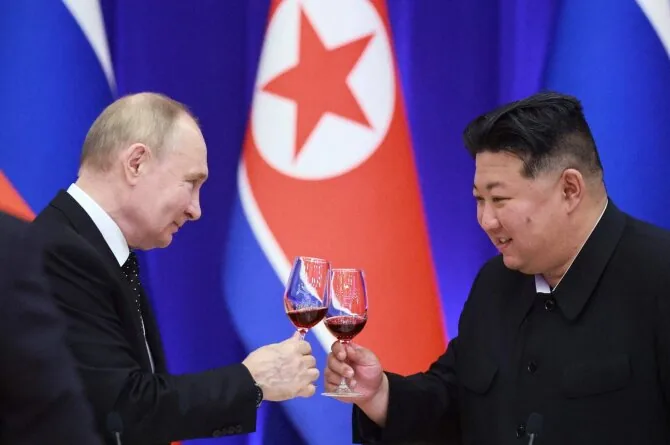
Relations between Russia and North Korea, which both countries call “invincible,” have developed rapidly since Russia’s large-scale invasion of Ukraine began in 2022. In 2024, during Russian President Vladimir Putin’s visit to Pyongyang, he and North Korean leader Kim Jong Un signed a mutual defense agreement, writes The Times.
Oxford University North Korea expert Edward Howell says that previously these countries’ relations were often seen as purely pragmatic, but now they increasingly appear as true allies.
“Relations between Russia and North Korea are no longer just business ties. They are becoming more strategic and, importantly, long-term. I think they will last longer than the war in Ukraine,” he said.
According to Ukrainian military intelligence, Russia has asked North Korea to deliver 120 ballistic missiles, which are said to be three times more powerful than the 40 KN-23 and KN-24 missiles already received. Moscow also wants six North Korean missile launch systems, along with up to 90 specialists and 30,000 to 50,000 troops.
Royal United Services Institute expert Samuel Ramani says this would further increase pressure on Ukraine’s already weakened air defense. According to him, North Korea’s assistance to Russia is now much more noticeable than in 2024–2025.
South Korea’s central bank estimates that North Korea’s economy has grown more than 3% annually since 2023, exceeding the growth rates of any G7 country.
Former White House national security official and North Korea expert Victor Cha says the war in Ukraine has been a big benefit for Kim Jong Un. Additionally, North Korean soldiers fighting Ukrainian forces in the Kursk region have gained important modern warfare experience, especially in drone use.
Howell emphasizes that North Korea has essentially forced Russia to recognize Pyongyang’s importance. This is a significant change compared to the Cold War period when North Korea was much more dependent on Moscow and Beijing.
New Deployment of North Korean Soldiers to Russia
Ukrainian intelligence also reported that North Korea is preparing a new troop deployment in Russia. However, there are currently no signs that such deployment will happen soon.
North Korean leader’s sister Kim Yo Jong recently denied Ukrainian President Volodymyr Zelensky’s claim that Pyongyang plans to send up to 50,000 troops to Russia.
Chairman of Ukraine’s Ground Forces Reserve Council Ivan Tymochko said Kim Jong Un mainly seeks for his soldiers to gain modern warfare experience – to learn to operate in real combat conditions and familiarize themselves with new warfare methods. North Korean soldiers could later use this experience in their own country.
After Drone Attack, Luhansk Power Plant Caught Fire: Occupied Donbas Left Without Electricity
06:40

On the night of August 28, a large-scale power outage occurred in the occupied territories of Donetsk, Luhansk, Zaporizhzhia, and Kherson regions. Electricity went out after a drone attack on the Luhansk thermal power plant (TPP) in the city of Shchastia, reports Ukraine Pravda.
Around midnight, reports of power outages began spreading widely on social media. For example, electricity went out in occupied Donetsk around 1 a.m.
Local residents reported that the thermal power plant in Shchastia caught fire due to a drone strike. Photos allegedly showing the fire at the facility were also posted online.
Soon after, reports of massive power outages came from the so-called “Donetsk People’s Republic” territory, as well as from occupied parts of Luhansk, Zaporizhzhia, and Kherson regions. Local channels emphasized that “there is no accurate and official information.”
It is reported that on the night of August 28, Russian forces continued their offensive with strike drones and aerial bombs. Ukrainian Air Force recorded drone movements toward Kyiv, Kharkiv, Sumy, Poltava, Zaporizhzhia, Mykolaiv, Vinnytsia, and other regions. In the morning, some drones continued moving toward Kropyvnytskyi, Kharkiv, and Poltava directions.
By the way, residents of Kherson in southern Ukraine were urged on Thursday to leave the city due to intensifying Russian attacks that could cut off electricity and heating supplies for a long time.
“Once again, I appeal to the residents of Kherson, especially families with children and the elderly: if you have the opportunity (…), please leave,” wrote regional governor Oleksandr Prokudin on the Telegram platform.
Prokudin said that Kherson, which had about 280,000 residents before Russia’s invasion in February 2022, is facing an “especially difficult security situation.”
“The enemy intensifies attacks on the region’s critical infrastructure daily,” he added.
“Last night, Russian forces again attacked the Kherson district heating plant with guided bombs (…) – the facility suffered very serious damage. Kherson may be left without electricity or heating for hours, days, or a long time,” emphasized the governor.
“Currently, no region in our country has the capability to destroy such types of drones or aerial bombs,” he noted.
Read more Janina’s cucumber recipe will surprise you: here’s what she adds to the marinade