In the project “Change your attitude, not things,” organized by the Environmental Project Management Agency, we share real stories about how to preserve items and help them live not just a second life, but many more. In the recent readers’ contest, participants gladly shared their redesigned or renewed clothes, shoes, and accessories.
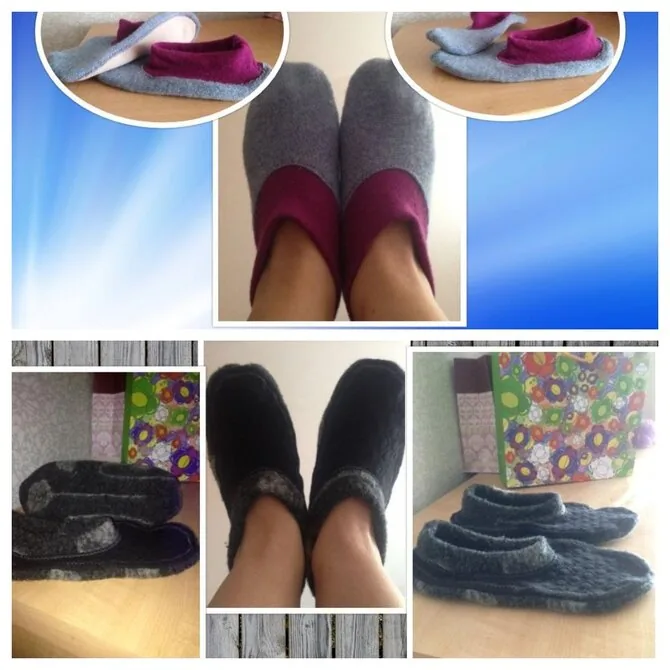
In the photo sent by contest participant Silvija, you can see several different types of slippers made from old woolen sweaters.
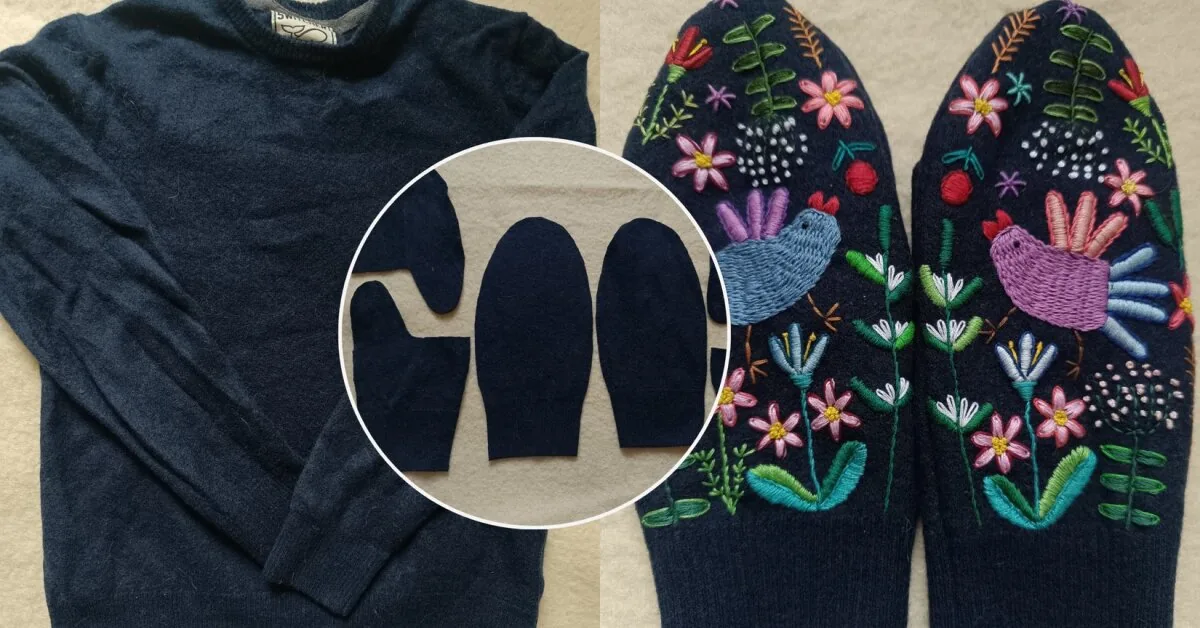
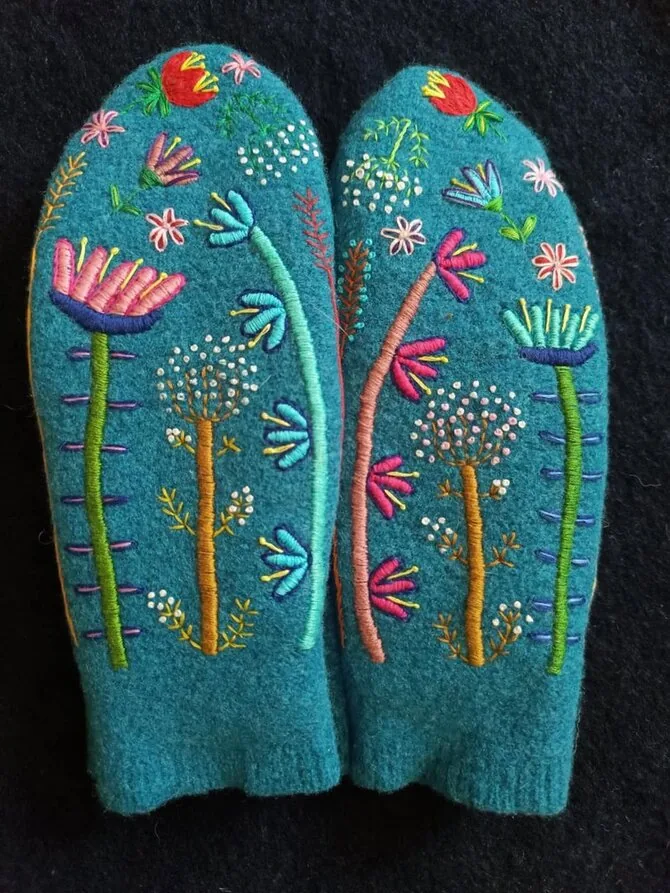
In another photo, you can see Eglė’s artwork – colorful, richly embroidered gloves made from shrunken woolen sweaters. She jokes that many people, upon seeing gloves made from shrunken sweaters, are amazed at how such beauty can be created and regret their discarded woolen sweaters that could have become excellent gloves.
A person without much knowledge and skills should need about 3-4 hours a day to make one pair of footwear or gloves.
According to her, gloves never repeat because there are never identical sweaters; they are exactly as they come. The woman also creates from moth-eaten or heavily worn sweaters. Eglė says she shrinks the sweaters herself by washing them in a washing machine at a high temperature. From one sweater, she usually manages to create one, at most two pairs of gloves.
“So, first of all, I cut out the glove pieces. I arrange it so that the edge of the sweater becomes the elastic edge of the gloves. Then I richly embroider by hand. I embroider with mouliné threads. The embroidery never repeats because I improvise directly on the glove. Only the bird is a frequently recurring motif, like a sign, and then I embroider whatever comes to mind. When I finish embroidering, I sew the glove parts with a sewing machine,” Eglė explains the process step by step.
The biggest mistake – choosing the wrong wool
Inga, who owns one of the largest handmade felted footwear manufacturers in Lithuania, says there are several methods, but for those who use only wool, the most important thing is to choose the right one because if the wrong wool is chosen, the product will fail or the person will have to felt it for a very long time. One type of wool is more suitable for felting, while a completely different one is intended for yarns and knitting. Also, one wool is meant for soft products, such as scarves, while a completely different wool is intended for coarse products, such as footwear.
Having a beloved woolen item, such as a sock, you can cut it up and felt the yarn into laid-out wool or use it to make a stronger structure.
“To achieve a high technological level, a lot of knowledge is needed, but making simple homemade slippers, hats, or gloves is not very difficult. A person without much knowledge and skills should need about 3-4 hours a day to make one pair of footwear or gloves,” says the interviewee.
Participate in the contest:
Participate and win: show how old furniture or household items become new
The most common mistakes, according to her, are choosing the wrong wool and not felting the product to the correct felting level. For example, footwear should be felted very strongly, while hats have different, more varied standards.
There are several felting methods
Very few tools are needed to felt a non-professional product: a table or another waterproof surface, a container to warm water, about 200 g of wool for 38 pairs of slippers, household soap, a piece of synthetic old curtain 50×50, scissors, and bubble wrap 50×50. According to Inga, making these products does not require great effort or knowledge; it is enough to watch one or another video online.
Another felting method is slightly different – knitted or woven wool is felted and then covered. “Having a beloved woolen item, such as a sock, you can cut it up and felt the yarn into laid-out wool or use it to make a stronger structure. You can also do this with sweaters, for example, cutting off a sleeve and making a footwear shaft. This method is suitable not only for wool but also for linen, cotton, silk,” the interviewee explains.
Wool product care should not be forgotten either. It is recommended to occasionally put them in the freezer, protect them from moths – keep lavender balls in the closet, watch for moths at home, avoid machine washing, and wash by hand avoiding strong movements. Also, occasionally shake out or air them outside, and beat out dust.