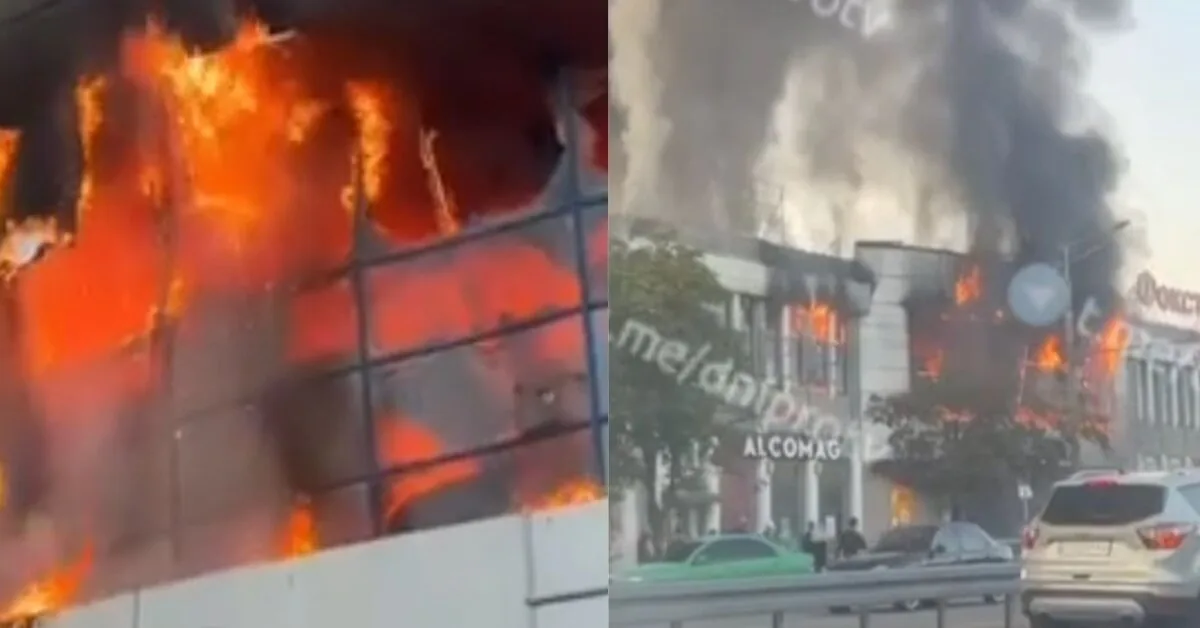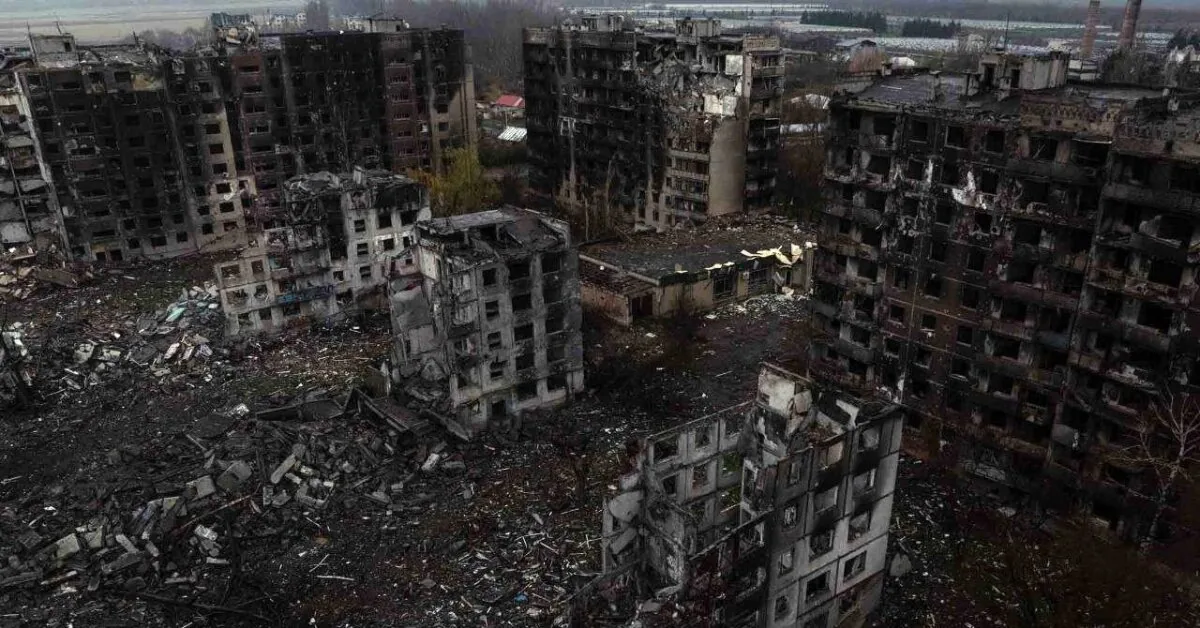
“In some places, the front is already slowly crumbling. There are simply not enough forces to stop them,” said an officer of a Ukrainian brigade that has been fighting in the Kramatorsk and Sloviansk region for many years.
Read more The minister explained who needs traffic rule changes: drivers or cyclists
In his opinion, there is a real risk that Russian forces could reach these cities by the end of the year.
“If this is not done, it will happen even sooner,” he added.
This assessment was also supported by the battalion commander of a brigade fighting in the Sloviansk direction.
“Their attacks follow one after another. That’s why they are moving forward – their offensive was not so intense before,” he said.
A high-ranking Ukrainian staff officer also admitted that the Russian army could approach Kramatorsk and Sloviansk by the end of the year:
“Russia is concentrating its forces there. If we properly organize our actions and provide the soldiers with everything they need, we will be able to stop them. The fate of Kramatorsk and Sloviansk is not yet sealed.”
Grey Zone
On Ukrainian military maps, which show the real-time situation on the battlefield, the grey zone begins just four kilometers east of Kramatorsk. This indicates that Russian troops have already penetrated this territory. If Ukrainian forces fail to detect and destroy them, the Russian army could gradually concentrate more forces there and approach the cities.
It is noted that this does not mean that a battle for Kramatorsk is inevitable. However, the more Russian forces manage to break through Ukrainian positions and establish themselves near Kramatorsk and Sloviansk, the harder it will be to dislodge them from there.
The terrain in the eastern part of the front remains more favorable to the defending side, although it is precisely here that Russian forces have advanced the most recently. Large high grounds beyond the cities remain under Ukrainian control, giving Ukrainian drone operators a greater range of action and more favorable positions. However, if Russia were to capture these high grounds, it would gain favorable positions for drone strikes against Kramatorsk and Sloviansk.
Ukraine is also under immense pressure south of Kramatorsk, where Russian forces have effectively taken control of most of Kostiantynivka. The city is approximately 20 kilometers from Kramatorsk in a straight line.
37-year-old Khottabych, commander of the drone battalion of Ukraine’s 28th Mechanized Brigade, whose unit has been fighting for Kostiantynivka for over a year, described the situation there as “consistently bad.” However, in his assessment, it will still take several months for Russian forces to capture the entire city.
“Currently, it doesn’t look like they can quickly advance from Kostiantynivka,” said 37-year-old Grek, a senior sergeant of the 28th Brigade’s drone battalion.
Meanwhile, Russian forces managed to move drone operators into Kostiantynivka, thus gradually pushing the drone “death zone” – an area where movement is virtually impossible due to drone threats – towards Kramatorsk. According to Khottabych, this zone now extends to Druzhkivka, located between Kostiantynivka and Kramatorsk. Beyond Druzhkivka, the approaches to Kramatorsk effectively begin.
Read more Ramūnas Vilpišauskas. How will Moscow react to the CIA director’s warning?
According to journalists, it cannot be ruled out that, at the initiative of the new Ukrainian army commander Mykhailo Drapatyi, Ukrainian forces could launch a successful counterattack and strengthen Kramatorsk’s defense, as has already been done further south, at the border of Zaporizhzhia and Donetsk regions, as well as near Lyman, north of Sloviansk, across the Siverskyi Donets River.

In early summer, Russian forces dangerously approached Lyman and Siverskyi Donets, threatening Sloviansk from the north. They were later repelled. 45-year-old Nesma, commander of the drone battalion of Ukraine’s 66th Mechanized Brigade, defending the Lyman sector, said:
“The conventional front line is now practically the same as a year ago. Only the affected territory, where everything is destroyed, changes. They come, we destroy them, then new ones come.”
Lack of a Clear Front Picture
It is important to note that determining the true location of the front line in Ukraine is becoming increasingly difficult. Publicly available front maps, such as Ukraine’s “DeepState,” no longer reflect the full real situation on the ground and are primarily useful for understanding the general picture.
The reason is the changing tactics of both sides in drone warfare, especially in recent months. Drones have long rendered entire trench lines an outdated form of combat. Russian units have relied on infiltration for some time – small infantry groups penetrating gaps between enemy positions, but in recent months, both sides have taken this tactic to a new level.
Small Russian and Ukrainian assault groups have learned to penetrate more than ten kilometers into enemy rear areas. Groups consisting of a few soldiers to 10-15 people can often operate independently for a long time at such depths. Their goal is not necessarily to break through the front – they aim to disrupt enemy defenses and detect drone operators.
The publication writes that currently, the main force stopping the enemy’s advance is drone-using groups. If an assault group detects an enemy drone group and forces it to leave its position or destroys it, a temporary “drone gap” immediately forms in that sector. Other assault groups can use this to advance and eventually concentrate larger forces.
Near Kramatorsk, the commander of a Ukrainian assault unit showed his soldiers’ positions in a village marked deep within Russian-controlled territory on “DeepState” maps. In reality, Ukrainian soldiers are still there, and Russian forces have been unable to dislodge them for several months. The position can still be supplied, and troops can be redeployed there if necessary.
“As penetrations into the enemy’s rear deepen, the nature of trench warfare also changes. The front can no longer be understood as a fixed line or even as a zone just a few kilometers wide, as was often the case last year. Instead, it is becoming an increasingly wider and more fluid strip – in some places, especially in the open territories of Eastern Ukraine, already about ten kilometers deep – and it is likely to continue to expand,” the article states.
Interestingly, one Ukrainian officer suggested replacing the term “front line” with “active battlefield” – a territory where drones from both sides track targets, and small infantry groups fight each other. Villages in this combat zone can change hands multiple times in a short period, depending on which side’s infantry is present there at the time. This is why publicly available front line maps are becoming increasingly misleading.
By the end of the year, this “active combat zone” could expand to 15-20 kilometers wide in some sectors. It should not be confused with the drone “death zone” – an area where enemy drones can strike virtually any moving target. The latter can be approximately twice as wide.
Read more Rockefellers, medicine and false quotes: how conspiracy «evidence» is born