After the large-scale Russian invasion of Ukraine and the sanctions imposed by the West, trade volumes with many countries have sharply decreased, and the previously initiated reform of trade missions, according to the publication, has effectively failed.
Read more Repetition without the taste of victory: Arizona students defeated the Lithuanian national team
According to a source at the Russian Ministry of Industry and Trade cited by “The Insider,” its head Anton Alikhanov ultimately convinced Vladimir Putin to reduce the number of GRU employees in the trade missions by about half and transfer their positions to trade specialists.
However, as “The Insider” investigation shows, the withdrawal of intelligence officers does not necessarily mean the professionalization of trade diplomacy. According to the publication, the vacated positions are increasingly being filled by relatives and friends of high-ranking Russian officials – thus the system, which was supposed to get rid of intelligence “baggage,” turns into another mechanism for protecting the influential.

In August last year, Russian Prime Minister Mikhail Mishustin, at the request of the Ministry of Industry and Trade, dismissed the Russian trade representative in Austria – 67-year-old Andrey Plotnikov. Officially, it was stated that he was dismissed “upon the expiration of the fixed-term service contract.”
Since 1921, when the Soviet trade mission was opened in Austria, the position of trade representative has always been assigned to military intelligence. Intelligence officers succeeded each other in this post, except for the period when Austria was annexed to Nazi Germany.
A. Plotnikov served as Russia’s trade representative in Austria for four years and often spoke publicly about the trade relations between the two countries. However, according to “The Insider,” this activity was merely a cover – Plotnikov, who held the rank of colonel, actually served as the deputy GRU resident in Vienna.
His intelligence interests included heads of large companies, Austrian politicians, and journalists. Plotnikov also supervised the Russian-Austrian Business Council, whose activities ceased after Russia began its large-scale invasion of Ukraine.
A source at the Russian Ministry of Industry and Trade called Plotnikov’s dismissal wrong and wondered why his contract was not extended. According to the source, long periods of service abroad for trade representatives are not unusual in the Russian system.
Within the GRU itself, Plotnikov was reportedly called “our legend” and presented as an example to other employees. As a young military intelligence officer, he was sent to West Berlin, where he worked as a warden at Spandau Prison on behalf of the Soviet Union. At that time, one of Adolf Hitler’s closest associates, Rudolf Hess, was serving a life sentence there.
R. Hess died in prison in 1987. The official version is suicide, but among neo-Nazi circles, a version is still circulated that the last Spandau prisoner was killed by British special services. Later, Plotnikov wrote a book about this period titled “The Mystery of Rudolf Hess’s Death: The Warden’s Diary,” in which he himself raised doubts about the official version of the death.
After working in Germany, Plotnikov continued his service in the GRU and graduated from the Military Diplomatic Academy. Later, he was appointed to the arms export structure “Rosvooruzhenie,” the predecessor of the current “Rosoboronexport,” where he headed the Southeast Asia direction.
From 2003 to 2009, Plotnikov conducted intelligence activities in China under the cover of a Russian trade mission employee. Before his appointment to Austria, he headed the state corporation “Rostec” representative office in Germany.
However, after several public espionage scandals, Austrian authorities began to scrutinize the activities of Russian diplomats and other official representatives much more closely. According to “The Insider,” the Austrian Ministry of Foreign Affairs rejected all candidates proposed by Moscow for the new trade representative position, so Russia had to look for a replacement among the mission’s existing employees in Vienna.
Initially, these duties were intended to be entrusted to Alexander Zherikhov. “The Insider” classifies him among the so-called “blatny” – protected people with influential connections. His father, Alexander Zherikhov, headed the Russian customs service from 2004 to 2006 and now works as an advisor to the CEO of Gazpromneft.
However, A. Zherikhov’s candidacy was not approved, and the trade mission was eventually entrusted to Artyom Klimentyev.

A. Klimentyev graduated from the Foreign Trade Academy and began his career at the Russian Ministry of Economic Development, later moving to the Ministry of Industry and Trade, where he headed one of the departments until his departure to Austria. “The Insider” also draws attention to his family connections: his mother, Svetlana Klimentyeva, is a well-known figure in the Russian financial sector, currently working in the management of a Moscow venture capital fund.
However, the change of leadership did not improve trade results – in 2025, trade turnover between Russia and Austria fell by 74%, and a further decline is forecast for this year.
Algeria – Gateway to Africa
The lists of dismissed trade mission employees at the Russian Ministry of Industry and Trade are compiled by the first deputy minister Kirill Lysogorsky, who directly oversees these missions. His own biography is also closely linked to military structures: K. Lysogorsky graduated from the Strategic Missile Forces War Academy and later headed departments responsible for the defense industry and arms supply in the government.
According to sources at the ministry cited by “The Insider,” K. Lysogorsky signs dismissal documents for colleagues without much scruple. One of the officials who lost their position in September last year was the Russian trade representative in Algeria, Ivan Nalich, whom the publication identifies as a career GRU officer.
Ivan Nalich worked in Algeria for eight years and, according to “The Insider,” during that time created a wide network of contacts among military personnel, officials, and public figures. In an interview, he himself called Algeria the “gateway to Africa.”
Nalich’s career is also typical of officials associated with Russian intelligence and defense sectors. In 2003, he graduated from the Moscow State University Institute of Asian and African Countries, later worked at RIA Novosti covering Middle Eastern topics. In 2005, he moved to Rosoboronexport, later worked in Rostec structures, and then returned to Rosoboronexport.
According to “The Insider,” before his appointment to Algeria, Nalich conducted intelligence activities in Morocco for five years and was sent to work as a trade representative in Algeria in 2019.
Russian Prime Minister Mikhail Mishustin appointed 56-year-old Alexey Shatilov as the new Russian trade representative in Algeria. Before that, he worked in the presidential administration. He began his career there at the end of the 1990s and moved through several different departments.
Recently, A. Shatilov worked in the presidential administration’s expert board, advising on foreign economic activity issues. He has previously served as a trade representative in Algeria and also worked with the United Arab Emirates and Qatar.

According to “The Insider,” A. Shatilov belongs to the circle of Igor Neverov, head of the Foreign Policy Department of the presidential administration, who reportedly helped him get the post in Algeria for the second time.
In a recent interview, A. Shatilov praised Algeria for its favorable attitude toward Moscow and urged Russian companies to be more active in entering the country’s market.
However, “The Insider” notes that the trade representative did not mention the widespread corruption problem. One example cited is the highway project connecting Algeria with Morocco and Tunisia: its initial budget was about 6 billion USD, but the final cost rose to 17 billion USD. According to the publication, about 5 billion USD of this amount went as bribes to local officials.
Comedian instead of smuggler
In January 2023, Russian trade representative Sergey Baldin arrived in Cuba. Before his appointment in Havana, he headed the trade and economic section at the Russian embassy in Portugal and was also the Russian trade representative in Brazil.
Analysis of S. Baldin’s activities shows that in Brazil he mainly represented the interests of Rosoboronexport. For example, he actively participated in negotiations on Russia’s entry into the Latin American arms market and attended military technology exhibitions “Latin America Aero & Defence” in Rio de Janeiro.

He is also credited with successful negotiations to abolish the visa regime between Russia and Brazil – which, as “The Insider” notes, could undoubtedly have been of interest to the GRU and SVR as well.
While working in Cuba, S. Baldin spoke in interviews about good trade prospects between Moscow and Havana. However, in June 2026, before his contract expired, he unexpectedly resigned voluntarily.
“The Insider” found out that S. Baldin concealed from the leadership of the Russian Ministry of Industry and Trade that a criminal case had been initiated against him for currency smuggling. On May 2, 2021, he arrived at Moscow Sheremetyevo Airport from Lisbon and proceeded through the green customs corridor. When asked if he had undeclared currency, he answered negatively, but during inspection, nearly 52,000 USD was found on him.
S. Baldin was replaced in Cuba by a new trade representative sent from Moscow, Vakhtang Mosashvili. His father, Vyacheslav, is well acquainted with Vladimir Putin’s aide Igor Levitin – both previously worked together at the Russian Ministry of Transport.
The resume obtained by “The Insider” shows that V. Mosashvili comes from a privileged family connected to the state apparatus. He studied at a school attached to the Russian embassy in Belgium, graduated from the Law Faculty of the Russian State University for the Humanities, worked at Aeroflot and Russian trade missions in Hungary and Spain.
Already in his new position, V. Mosashvili visited Adygea, where he spoke about good prospects for Russian companies operating in Cuba.
According to “The Insider,” in the Russian mission in Havana, he is known as the life of the company, fond of jokes and sharp anecdotes. His peculiar sense of humor was also evidenced by a now-deleted account on the social network Odnoklassniki, where V. Mosashvili wrote obviously absurd things about himself – that he was convicted of robbery, has no money or car, suffers from various diseases, and has many bad habits.
More trade representatives associated with Russian military intelligence were included in K. Lysogorsky’s staff reduction, but no replacements have been found for them yet.
One of them is Vladislav Darvay, who left Moldova in September 2024. However, according to “The Insider,” his departure would likely have happened even without the reform. The publication previously released recordings of his conversations, which allegedly show that V. Darvay organized a visit of Moldovan oligarch Vladimir Plahotniuc to Russia. V. Plahotniuc is associated with the so-called “Moldovan laundromat” – a scheme through which about 20 billion USD of Russian-origin funds were laundered.
According to “The Insider,” V. Plahotniuc met in Russia with then-Kremlin official Dmitry Kozak and discussed possible interference in Moldovan elections.
However, the plan failed: V. Plahotniuc was arrested, D. Kozak lost his position, Kremlin-friendly political forces lost the elections, and the way back to Moldova was closed for V. Darvay.

Intelligence activities will continue in Syria
However, in not all countries were GRU officers in trade missions replaced by people protected by influential officials. In Syria, Russian military intelligence managed to appoint its cadre to the trade representative post – 55-year-old Vladimir Noskov.
The previous trade representative associated with the GRU, Georgy Asatrian, was recalled to Moscow. According to “The Insider,” he was presented with an award for the successful evacuation of Russian troops and military equipment from bases in Syria to Libya.
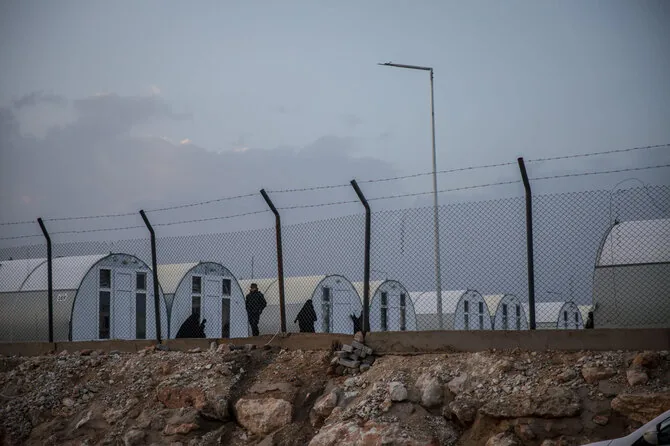
Colonel V. Noskov graduated from the Military Diplomatic Academy, was seconded to work in the structures of the Russian Ministry of Foreign Affairs, and, according to “The Insider,” conducted intelligence activities in Lebanon, Egypt, and Qatar.
The publication assumes that in the case of Syria, the GRU retained the post for a simpler reason – representatives of influential families, accustomed to more comfortable assignments, might simply have been unwilling to work in an unstable country.