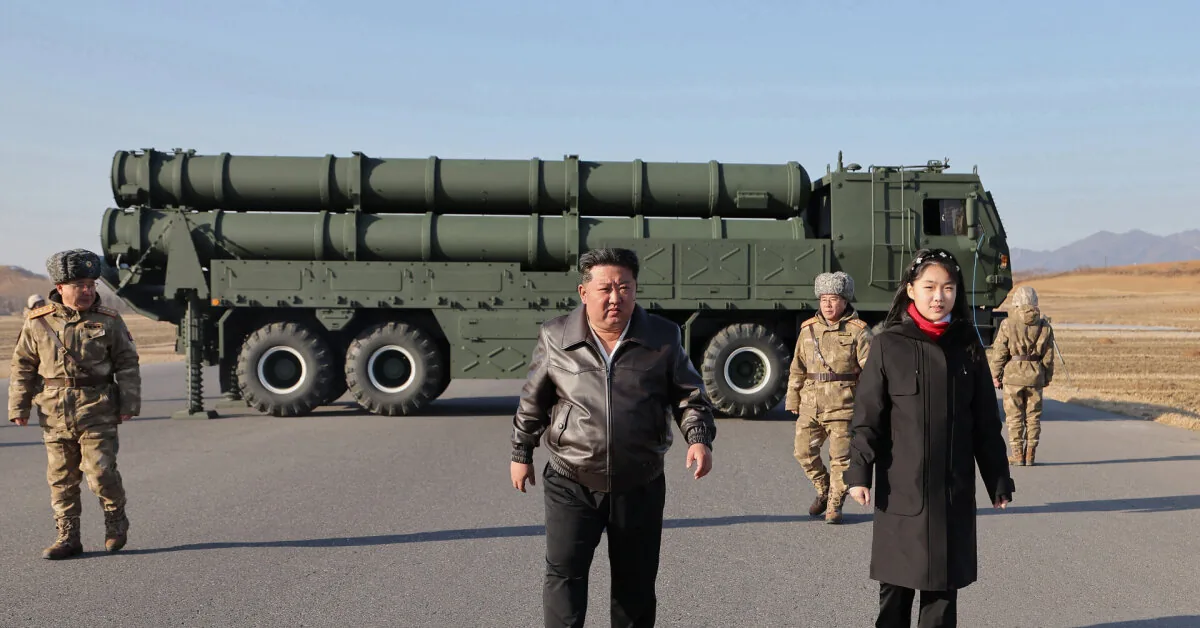
It is also planned to use six transport and launch vehicles, which will be serviced by North Korean soldiers together with Russia’s 112th Guards Missile Brigade.
According to available data, North Korea has transferred about 50 ballistic missiles to Russia, including the new KN-30. The Russian military has previously used North Korean KN-23 and KN-24 missiles.
At the same time, there are reports of a possible deployment of up to 120 missiles in the Voronezh region. If this information is confirmed, Moscow would gain an additional ballistic missile supply channel, supplementing Russia’s own “Iskander-M” missiles.
Until August 20, no confirmed KN-30 launches against Ukraine had been recorded.
How does the KN-30 differ from previous missiles?
The KN-30 is an enlarged version of the “Hwasong-11” family missile. Its length is about 10.1–10.2 meters, and its diameter is approximately 1.26 meters. For comparison, the KN-23 is about 8.77 meters long and 1.1 meters in diameter.
It is reported that the KN-30 can fly 600–900 kilometers, allowing it to be launched from Russian territory farther from the Ukrainian border.
North Korea also states that the missile’s warhead can weigh up to 2.5 tons, but these technical details have not been fully independently verified.
Because of this, the missiles could potentially be used to strike large stationary targets – industrial enterprises, energy and transport infrastructure, warehouses, and other facilities.
Read more Petrauskas – about the new «Neptūnas» model, roster, thicker wallet, and goals
Which regions of Ukraine can they reach?
The deployment of missiles in the Voronezh region is significant due to its proximity to Ukraine. Analysts estimate that from this territory, targets in the Sumy, Kharkiv, Chernihiv, Poltava, Kyiv, Dnipropetrovsk, and Zaporizhzhia regions could potentially be attacked, depending on the specific missile’s range and launch location.
The greater range of the KN-30 also gives Russia the ability to keep launch vehicles farther from the Ukrainian border and still strike targets in central Ukraine.
Why does Russia need North Korean missiles?
The supply of KN-30s can increase pressure on Ukraine’s air defense. Ballistic missiles are difficult to intercept, and the number of systems capable of effectively shooting them down is limited.
Even lower-accuracy missiles force Ukraine to use limited air defense interception resources. Therefore, Russia can combine its “Iskander-M” with North Korean KN-23, KN-24, and KN-30, increasing the total number of ballistic missiles available.
Experts also point to the possibly lower accuracy of these missiles. Due to the large warhead and imprecise targeting, they may pose a particularly high threat to civilians.
Read more A powerful Lunar eclipse is approaching: who will have to fundamentally change their life?