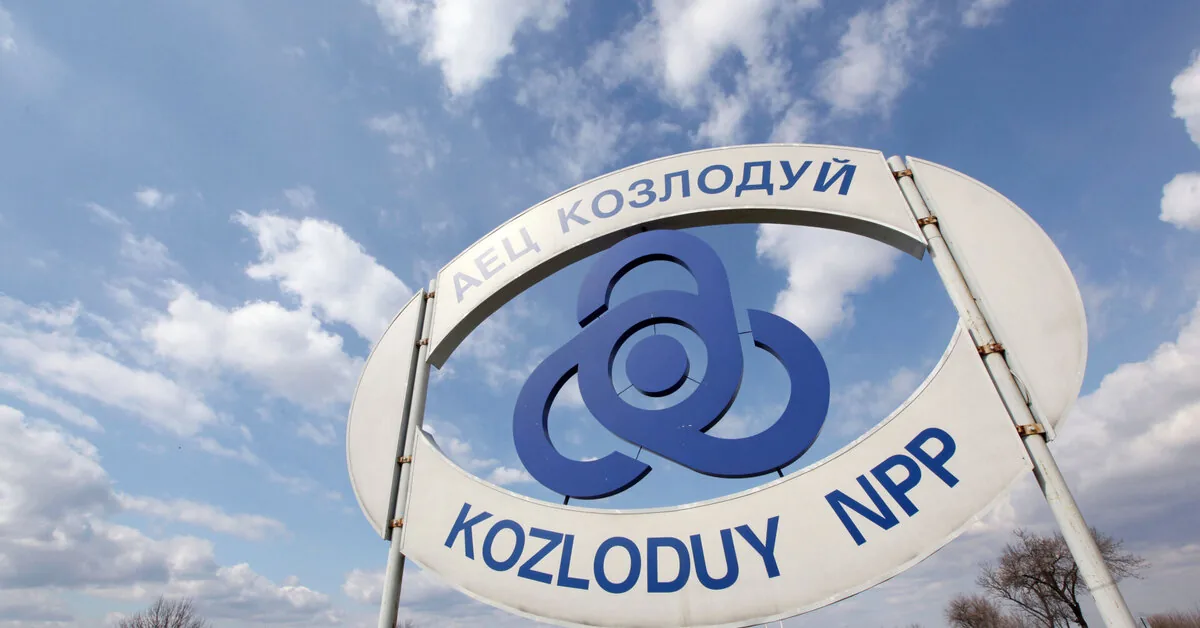
The state-owned Kozloduy nuclear power plant will reduce the capacity of one of its two operating reactors by about 120 megawatts due to an “unprecedented and critical” drop in the water level of the Danube River, the ministry said.
Read more Rado a new secret tunnel from Belarus: who was digging into Latvia
The Kozloduy plant, which provides more than a third of the country’s electricity supply, uses Danube water for cooling.
The production reduction is intended to “ensure the safe operation of the plant,” the ministry said, adding that forecasts for the river’s water level in Bulgaria “continue to show a downward trend.”
According to the ministry, this will be the first time the plant’s capacity has been reduced due to “extreme weather and hydrological conditions” since it began operating 52 years ago.
Romania and Hungary have also recently reduced their nuclear power production due to low Danube water levels.
On August 13, Romania completely shut down the Cernavodă plant, which usually produces a fifth of the country’s electricity. Meanwhile, Hungary is trying to avoid a complete shutdown of the Paks plant, whose capacity has sharply decreased since the end of July. To maintain the plant’s operation, a riverbed threshold was built in Hungary, and two stone-loaded barges were partially submerged to raise the water level.
Read more The infamously known US aircraft carrier is finally sailing home: what happens next
On Thursday, Hungarian Prime Minister Péter Magyar said the plant would restart turbines on Sunday and should return to full capacity production next week.
The situation is also difficult in other European countries. The Beznau nuclear power plant in northern Switzerland was shut down in June due to high river water temperatures, and France also reduced the capacity of several reactors due to a heatwave.
The Bulgarian plant has two 1000-megawatt reactors. The ministry said the plant has its own pumping station on the Danube bank, which has so far protected it from the need to reduce production.
Experts say the drought in Europe has been further intensified by human-induced climate change, and they warn that the problem will worsen.
Read more Juozas Olekas does not see the need for research on the extent of exploitation in the Church