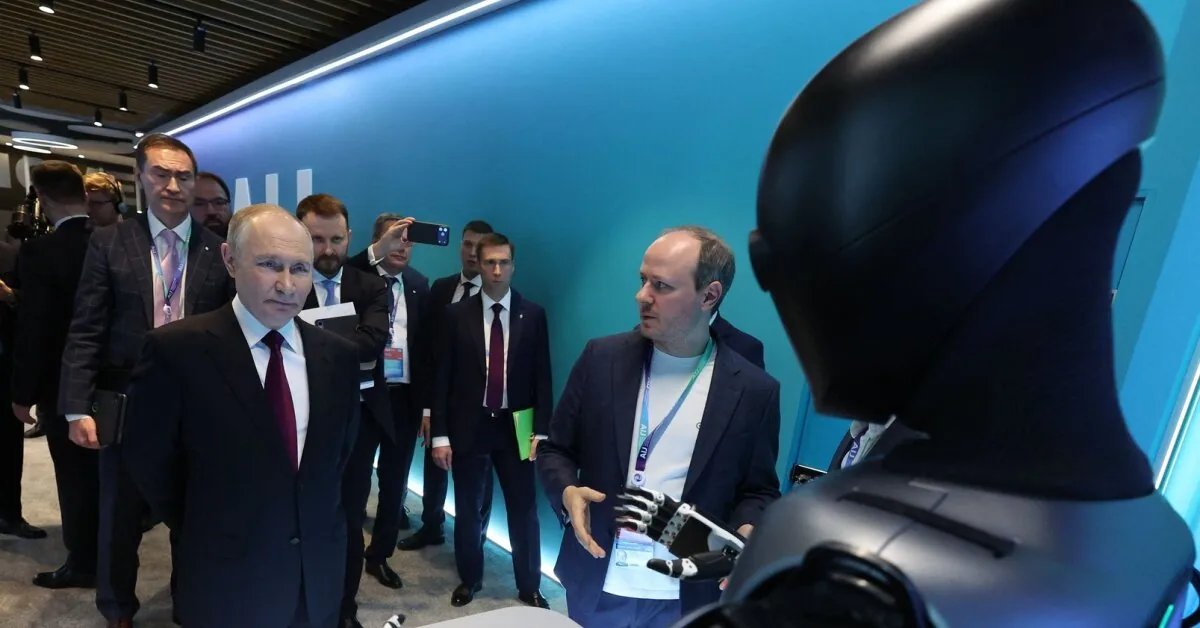
Putin ordered investment growth
However, V. Putin ordered the return of investment growth and warned: this will become “the most important indicator of the effectiveness of economic authorities’ work.”
Read more Protests in Gargždai: a crowd of fans shouted, the mayor admitted: «We were a bit sneaky»
The end of the previous investment cycle is explained by A. Novak with the situation in the largest corporations, including state-owned ones. According to him, the five largest state-owned companies account for more than 15% of all the country’s investments. However, since last year, “many so-called megaprojects have passed the main investment phase… practically ended.” Among those reducing investment programs are “Gazprom,” Russian Railways, and “Rosatom.”
To launch a new cycle, A. Novak listed priorities: it is necessary to clear the main sectors of the economy from accumulated debts and losses, create incentives to fully utilize existing infrastructure, ensure state support for investments, and improve the investment climate.
What Russian business is preparing for
Business is unaware of the new cycle. Among the 12,000 companies surveyed by the Russian Central Bank, there are more that plan to reduce investments than those preparing to increase them. Investments are essentially “confidence and mood,” noted Minister of Economic Development Maksim Reshetnikov, and the mood of Russian entrepreneurs is currently poor.
A. Novak traditionally promised that to encourage investments, “stable tax conditions, protection of property rights, and reduction of administrative barriers” would be ensured. In reality, the opposite is happening, and business, according to M. Reshetnikov, “forgets nothing.”
Despite promises from V. Putin and Finance Minister Anton Siluanov, the Russian government has raised taxes twice – in 2025, the profit and personal income tax, and in 2026, the value-added tax – and business fears that the tax burden will increase again next year: the budget deficit for seven months amounted to 6.5 trillion rubles.
Expectations of new taxes are making business very nervous, noted Sberbank Deputy Chairman Taras Skvortsov. Increasing budget revenues through quickly introduced targeted measures shortens companies’ planning horizons and complicates the implementation of projects with long payback periods, warned CMAKP analysis center chief expert Emil Ablayev. A. Novak considered the adopted law on the statute of limitations for privatization deals important – but it did not stop the redistribution of property, and administrative barriers, often pointless, are only growing, noted Doctor of Economics Vladislav Inozemtsev.
Experts explain that integration into the world economy is needed
There will be no economic growth without investments, V. Putin is convinced, but the essence is not so much in the investments themselves as in their quality. The recent investment boom has not yielded a great return, reports “The Moscow Times.”
Read more The main favorite is no longer in Cincinnati – Zverev stumbled in the round of 16
“Over the past three years, investments have increased by a third. However, so far we do not see that this has turned into labor productivity growth,” said Elvira Nabiullina, Chairwoman of the Russian Central Bank.
“Both among ordinary people and experts, the prevailing opinion is that investments are the main driver of economic growth. But this is only one of the factors,” says Central Bank Chairman’s advisor Kirill Tremasov. “Economic growth based solely on investments is usually a fading growth.”
Stronger and more sustainable growth, which V. Putin demands, in his opinion, is possible by increasing overall productivity, which “among other things means improving institutions and integration into the world economy.”
What is the state of the Russian economy
According to the Russian Ministry of Finance, from January to July the federal budget deficit reached 6.5 trillion rubles and exceeded the planned deficit for the entire year by 70%.
Russian economic growth has practically stopped: in 2023–2024 GDP grew more than 4% annually, last year growth was 1%, and in the first half of 2026 – only 0.6%.
However, it is unlikely that the economic situation will force V. Putin to stop the war, especially now when he is supported by high oil prices, says Elina Rybakova, senior researcher at the Peterson Institute for International Economics.
“The situation should become much worse,” she believes. For example, oil prices should remain around 35–40 US dollars per barrel throughout the year. However, according to E. Rybakova, considering the war involving the US, Israel, and Iran, such a scenario is unlikely.
Read more “Circle K”: New competitors have appeared in the European fuel market