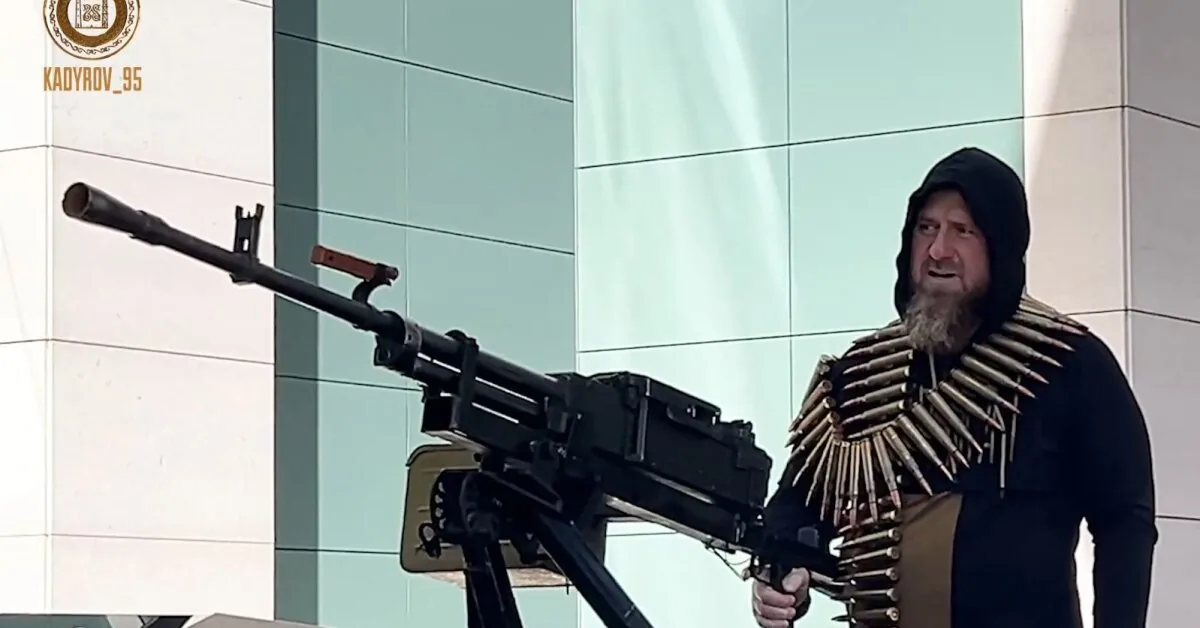
How Ramzan Kadyrov Came to Power – and Why the First Victims Were Not Enemies, but His Own
When in 2000 Moscow appointed former mufti Akhmad Kadyrov to lead the Kremlin-loyal Chechen administration, his son Ramzan was still a little-known figure.
Read more Mindaugas Lipnius revealed what connects him with Viktorija Siegel: «I won’t hide it»
Officially he headed his father’s personal security – a unit tasked with protecting the republic’s leader, but over time it became an independent armed force.
One of the first detailed public accounts of this unit’s activities appeared in June 2003, when Novaya Gazeta published Anna Politkovskaya’s article “The Kadyrovs Decide Everything. And Everyone?”. In it, the journalist described kidnappings, robberies, and extrajudicial executions linked to Akhmad Kadyrov’s security.
Among the crimes she described was the shooting of a family – three men and a 27-year-old mother of three children were killed. Politkovskaya directly linked responsibility for this crime to Ramzan Kadyrov and the unit he commanded.

The turning point came on May 9, 2004. In Grozny, during the Victory Day celebration at the Dynamo stadium, a bomb hidden under the stands killed at least seven people.
Among the dead was Akhmad Kadyrov. That day Ramzan Kadyrov was in Moscow, and he had entrusted his father’s security to one of his closest associates, Magomed Israpilov, nicknamed Mamak.
The death of his father opened the way to power for Ramzan, but not immediately. He was only 27 at the time, and the Chechen constitution did not allow anyone under 30 to become the head of the republic. Therefore, for several years he formally rose through the ranks of power, while strengthening his real influence by relying on loyal security forces.

It was during this transitional period that a series of killings began, which investigators and journalists linked to the elimination of competitors and potential rivals as Ramzan Kadyrov consolidated more and more power in his hands.
The First Victim – From Kadyrov’s Own Circle
The beginning of the string of murders is detailed in an investigation by journalists from Projekt and OCCRP.
In 2009, Magomed Israpilov, nicknamed Mamak, was killed – the same man to whom Ramzan Kadyrov had entrusted his father’s security in 2004. His brother Akhmed was also killed: his head was cut off, and his body was publicly displayed in the Kadyrovs’ hometown of Centoroy.
Ordered to Be Fed to a Lion
According to the investigative report by Projekt, Ramzan Kadyrov allegedly ordered Israpilov to be fed to a lion kept in his private zoo.
There are at least two versions of the motive for the murder. One suggests R. Kadyrov was removing people who might know something about the circumstances of his father’s assassination. The other, which Projekt investigators consider more likely, is that Mamak sought greater influence in Chechnya after Akhmad Kadyrov’s death and thus became a dangerous rival.
Similarly, Movladi Baisarov – another former head of Akhmad Kadyrov’s security – was eliminated. His position was unique: unlike most armed groups loyal to Ramzan Kadyrov, the unit “Gorets” led by M. Baisarov formally belonged to the federal FSB structure. This allowed him to maintain independence from Grozny authorities for some time.
M. Baisarov openly refused to obey Kadyrov, spoke to the media about kidnappings and extrajudicial executions in Chechnya, and later tried to contact the General Military Prosecutor’s Office.
Soon, structures loyal to R. Kadyrov announced a federal search for him on an old criminal case in which M. Baisarov had previously been only a witness. He claimed the case was just a pretext to get rid of him.
In November 2006, M. Baisarov was shot in Moscow. The official version stated he died resisting arrest. However, the media, citing sources, wrote that the operation was led by one of R. Kadyrov’s closest associates, Adam Delimkhanov.
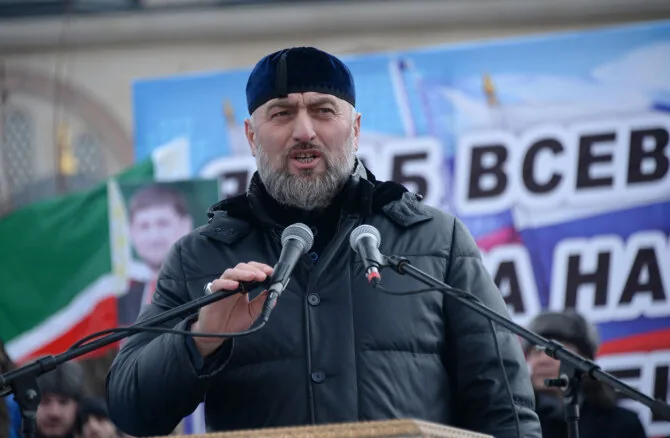
The fiercest and most open struggle for influence was with the Yamadayev brothers. At that time, they were considered almost the only ones in Chechnya capable of realistically challenging the growing power of Kadyrov.
The Yamadayevs had backing in Moscow – they had strong ties to the Ministry of Defense and military intelligence. Moreover, their battalion “Vostok” was subordinate not to Grozny but to the federal government. For R. Kadyrov, this meant there was an armed force in the republic that he did not control. Tensions between the two camps often erupted into open armed clashes.
Shot in His Car at a Traffic Light
In 2008, the conflict moved to Moscow. On September 24, Ruslan Yamadayev was shot in his car while stopped at a traffic light.
His brother Sulim Yamadayev fled to Dubai but also became a target there. In March 2009, he was shot in the underground parking of his residence and later died. Dubai police publicly named Adam Delimkhanov – one of R. Kadyrov’s closest associates – among the suspects. Both denied the accusations, calling them a provocation against Russia.
The third brother, Isa Yamadayev, survived. In 2009, he learned in advance about an assassination attempt and, cooperating with law enforcement, agreed to act as bait.
The suspected killer was arrested. In a later released interrogation recording, the man claimed that the murder of I. Yamadayev was ordered by Ramzan Kadyrov himself for one million dollars.
This period is important to understand what happened later. Even before officially becoming the head of Chechnya in 2007, R. Kadyrov had already eliminated most of his real and potential rivals.
And these were not so much political opponents as people from the same security structures – leaders who had their own fighters, connections in Moscow, and could challenge his rule.
The model of repression formed in Chechnya soon became evident beyond the republic’s borders. The geography changed, but the same elements repeated: people linked to R. Kadyrov’s circle, networks of loyalty and personal connections, and enough links among possible organizers, intermediaries, and direct executors to make it difficult to trace responsibility all the way to the top.
Later, R. Kadyrov’s opponents began to be killed in other parts of Russia and eventually abroad.
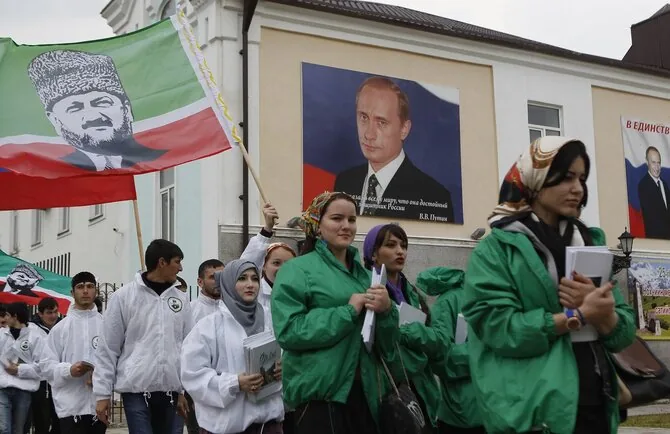
The Most Famous Political Murders – Politkovskaya and Nemtsov
However, the international image of R. Kadyrov’s regime was shaped most by two political murders – those of journalist Anna Politkovskaya and opposition politician Boris Nemtsov.
In both cases, courts convicted the perpetrators and those linked to organizing the crimes, but the most important question remained unanswered: who ordered these murders.
Neither in Politkovskaya’s nor Nemtsov’s case was the organizer identified. This boundary between what is proven and what can be suspected based on connections revealed during investigations remains important when examining later repressions against Kadyrov’s critics.
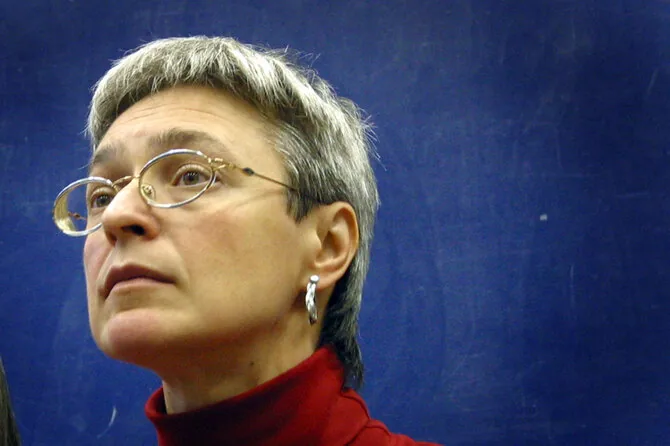
Novaya Gazeta journalist Anna Politkovskaya investigated R. Kadyrov and his circle’s crimes for many years. As early as 2003, she wrote about kidnappings, extortion, and other crimes committed by people loyal to him.
She returned to this topic in August 2006, less than two months before her death. In the article “Laying Down Arms, Kadyrov’s Calculation. The Caucasus Knot”, she examined the amnesty declared for fighters in the North Caucasus. Officially, it was meant to allow fighters who laid down arms to return to civilian life. Politkovskaya wrote that the reality was different: the amnesty became a PR campaign, and those wishing to use it had to agree to join armed units controlled by R. Kadyrov.
In one described episode, she told about former field commander Ishiev – when Kadyrov accused him of treason, 24 of his relatives disappeared, including women and a three-year-old child.
Politkovskaya’s relationship with R. Kadyrov was openly hostile. In June 2004, the journalist went to Centoroy to talk with the then first deputy prime minister of Chechnya.
In a report published after the meeting, she revealed that R. Kadyrov called her an enemy and said she was “worse than Basayev.” The conversation was so threatening that as she left, Politkovskaya later wrote, she expected a shot in the back.
On October 7, 2006, Politkovskaya was shot near her apartment building in Moscow. The killer waited by the elevator. After firing several shots, he approached and fired a control shot to her head. A silenced pistol was left at the crime scene.
In 2018, the European Court of Human Rights ruled that Russia did not properly investigate Politkovskaya’s murder. Although the perpetrators and some organizers were identified and convicted, the investigation did not answer the key question – who ordered the murder.
The ECHR emphasized that Russian law enforcement insufficiently investigated versions linking the crime to Politkovskaya’s professional activities, including possible roles of Chechen authorities or FSB officers.
Who ordered the murder remains unknown. Novaya Gazeta’s editor-in-chief Dmitry Muratov linked it to Politkovskaya’s last investigation in Chechnya – before her death, she was looking into the finances of the Akhmad Kadyrov Foundation. Muratov believes this investigation could have been the reason for her murder.
After the Murder – a State Award
Boris Nemtsov and the Kadyrovs had crossed paths long before his murder. Nemtsov himself described a 2002 visit to Chechnya, where at Akhmad Kadyrov’s invitation he participated in a public event and spoke out against the presidential governance model in the republic.
According to Nemtsov, after his speech a man with an FSB officer’s ID approached him and said he should be killed for such words. Bystanders explained that it was a “joke” by Ramzan Kadyrov.

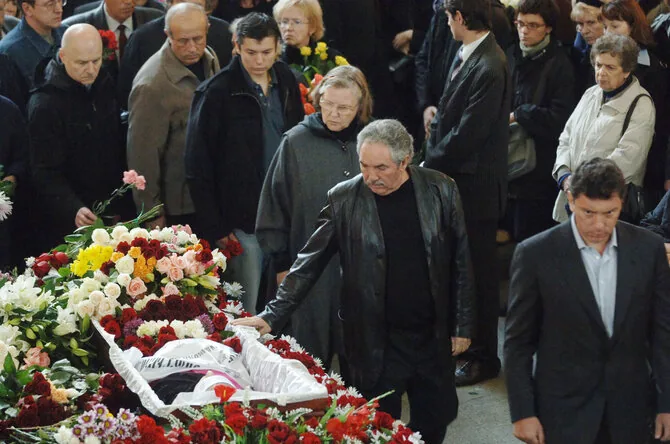
More than a decade later, on the evening of February 27, 2015, Nemtsov was shot dead in central Moscow on the Bolshoy Moskvoretsky Bridge, just a few hundred meters from the Kremlin. At the time, one of Putin’s most famous critics was preparing a report on the Russian military’s role in the war in Ukraine.
Among possible motives mentioned were Nemtsov’s criticism of Vladimir Putin and Russia’s war in Ukraine. His sharp words about the Russian president on Ukrainian TV in 2014 attracted particular attention.
In this case, the trail quickly led to Chechnya. A Russian court convicted five men for Nemtsov’s murder. The direct killer was identified as Zaur Dadayev – former deputy commander of the Chechen Interior Ministry’s “Sever” (“North”) battalion, who served for many years in structures subordinate to R. Kadyrov.
After Z. Dadayev’s arrest, Kadyrov publicly defended him – calling him a “true Russian patriot” and saying he did not believe in his guilt.
However, the investigation did not reach the link that would identify the final organizer of the murder. One of the most important unexamined figures was Ruslan Geremeyev, an officer of the “Sever” battalion. Nemtsov’s family lawyers sought to have him questioned, but this was unsuccessful.

Lawyer Vadim Prokhorov said the investigator went to R. Geremeyev’s home in Chechnya, but no one opened the door – and the attempt to question him ended there.
Investigative journalism and Nemtsov’s family representatives paid much attention to Kadyrov’s circle and R. Geremeyev. However, theories about R. Kadyrov’s or even Putin’s direct involvement remain unproven – the court did not confirm them.
The Kremlin’s behavior after the murder also raised additional questions. Just over a week after Nemtsov’s killing, Putin awarded Kadyrov the Order of Honor. The award itself is a fact, but its timing does not prove any connection to the murder.
Both cases – Politkovskaya’s and Nemtsov’s – illustrate the same structural feature: Russian law enforcement can find and convict the executor, but the chain leading to the possible organizer systematically breaks at the border of Kadyrov’s circle.
Hitmen Move to Europe
Chechen “death squads” operate not only in Russia but also abroad, pursuing Kadyrov’s enemies everywhere – former field commanders, current Chechen political opponents, public figures, and human rights defenders.
On January 13, 2009, in Vienna, Umar Israilov was shot dead – a former bodyguard of Ramzan Kadyrov who later became one of his regime’s accusers. Incidentally, just a month before this, former Chechen field commander Islam Dzhabrailov was killed near his home in Istanbul.
U. Israilov had previously fought against the Russian army. Captured in 2003, he claimed he was held at Kadyrov’s base, tortured, and eventually forced to join his forces.
In 2004, U. Israilov fled Chechnya and later received asylum in Austria. But the pressure did not end. To force him to return, his father was kidnapped in Chechnya and held captive for almost eleven months.
Living in Europe, U. Israilov took legal action against his former boss. In 2006, he applied to the European Court of Human Rights, accusing R. Kadyrov and his subordinates of torture and extrajudicial executions. In 2008, he filed a criminal complaint in Austria as well.
A few months later, U. Israilov was murdered.
Austrian counterterrorism investigators concluded after a 15-month investigation that the initial plan was to kidnap U. Israilov and bring him back to Chechnya, but the operation ended in murder.
Read more Horoscope for August 20: why will this day become a turning point for many Zodiac signs?
Investigators believe the order to kidnap the former bodyguard came from R. Kadyrov himself. This was the conclusion of Austrian law enforcement, but the court did not find Kadyrov guilty and no charges were brought against him.
In 2011, a Vienna court convicted three Chechens for U. Israilov’s murder. Ramzan Edilov, considered the main organizer, was sentenced to life imprisonment, and his two accomplices received 20 and 16 years respectively.
The suspected direct killer was never caught. The investigation revealed links between the convicted and Kadyrov’s circle, but the chain did not extend further. Austria’s requests to Russia to question the Chechen leader himself and other key figures in the case went unanswered.
Targets Include Lesser-Known Individuals
More than a decade later, targets in Europe were no longer former associates of R. Kadyrov or widely known politicians and journalists, but much less influential bloggers who loudly criticized the regime.
On January 30, 2020, in Lille, France, 44-year-old Imran Aliyev was found dead in a hotel room. Known online as Mansur Stary. He had left Chechnya earlier and since 2012 lived in Belgium, where he had refugee status.
His videos were harsh, full of personal insults directed at R. Kadyrov and his circle. However, Aliyev was not considered an influential opposition figure or a real political rival. His public statements were contradictory – at one point he even swore loyalty to R. Kadyrov.
Aliyev arrived in Lille from Belgium a day before his death, accompanied by another man believed to be of Chechen origin. After the murder, this man disappeared.
Later, Chechen blogger Tumso Abdurachmanov published his version of the suspected killer’s identity and route, claiming the killer returned to Chechnya after the crime. However, this remains Abdurachmanov’s claim – neither French investigators nor the court confirmed this version.

Interestingly, just a month later, on February 26, 2020, Tumso Abdurachmanov himself narrowly escaped a similar fate – an open critic of R. Kadyrov and supporter of Chechen independence.
At night, a man broke into his apartment in Gävle and struck Abdurachmanov on the head with a hammer. However, the blogger survived, managed to overpower the attacker, film him, and hand him over to the police.
A year earlier, in March 2019, Chechen parliament speaker Magomed Daudov publicly declared a blood feud against Abdurachmanov for his criticism of Akhmad Kadyrov.
The direct attacker Ruslan Mamayev claimed after arrest that he came from Moscow and explained that his mother was being held hostage. Abdurachmanov rejected this version, saying Mamayev’s parents were living peacefully in Omsk at the time.
A Swedish court later sentenced two people: R. Mamayev to 10 years and his accomplice Elmira Chapayeva to 8 years in prison. According to the investigation, E. Chapayeva had a close relationship with Abdurachmanov for several months, photographed his apartment, and eventually let the attacker inside. Court documents also state that R. Mamayev was offered 50,000 euros for the murder.
The Couple Was Shot Twice
Another target was Chechen-origin Amina Okuyeva, who fought on Ukraine’s side, and her husband Adam Osmayev. A doctor by training, A. Okuyeva participated in the 2014 Euromaidan protests and, after the war began in Donbas, joined Ukrainian forces and became a press representative for the Chechen battalion named after Dzhokhar Dudayev.
She publicly criticized R. Kadyrov and spoke about Chechens living abroad ready to fight on Ukraine’s side against Russia and Kadyrov-loyal fighters.
In 2017, the couple survived two assassination attempts. In June, a man posing as a French journalist met them in Kyiv, pulled out a gun, and shot A. Osmayev. A. Okuyeva returned fire and wounded the attacker. Both survived.
Four months later, another attack was carried out. On October 30, 2017, near Kyiv, the car carrying A. Okuyeva and A. Osmayev was shot at. Okuyeva was killed, and her husband was wounded.

Another Blogger as a Victim
Another critic of R. Kadyrov – blogger Mamichan Umarov, known online as “Anzor from Vienna” – was shot dead in July 2020 in Gerasdorf, near Austria’s capital.
On his YouTube channel, he sharply and often with profanity criticized R. Kadyrov and his family, constantly receiving threats. Austrian special services had offered him state protection, but he refused.
Umarov was killed during a meeting with Sarali Akhtayev, with whom he was negotiating a car-for-Glock 17 pistol exchange. Six shots were fired at the blogger, one hitting his head. Akhtayev was arrested the same day, and in August 2021, an Austrian court found him guilty of Umarov’s murder and sentenced him to life imprisonment.

Although Umarov’s murder was investigated from the start as a possible politically ordered assassination, the court could not determine who might have ordered it. During the investigation, evidence linking the crime to the blogger’s activities increased, and his bodyguard testified in court that a $5 million bounty was promised for Umarov’s head.
However, the Korneuburg court concluded that there was insufficient concrete evidence to confirm a political motive. The killer was sentenced to life imprisonment, and the court cited greed as the motive for his actions.
The Murder of an Artist Highlighted European Security Gaps
The latest and so far least clarified case is the murder of Russian artist and political emigrant Robert Kuzovkov, who worked under the name Semion Skrepecki, in Poland.
R. Kuzovkov (S. Skrepecki) was a politically active caricaturist and performance artist who sharply satirized Vladimir Putin, Ramzan Kadyrov, and Alexander Lukashenko in his works. He also criticized the Russian liberal opposition.
The 44-year-old artist was shot on the morning of June 15, 2026, in Biala Podlaska city, in a parking lot. Local police confirmed the victim’s identity. The city is just about 40 kilometers from the Belarusian border. The incident is believed to have signs of a political murder.

Just three days before the murder, on June 12, he staged a performance near the Russian embassy in Berlin. The artist walked along the line of guests arriving for an official reception, holding a painting depicting Joseph Stalin feeding a baby Vladimir Putin.
About an hour before the murder, R. Kuzovkov wrote on social media that after this action he received many threats from “Russian patriots.”
According to Polish prosecutors, the killer ambushed the artist in an indoor parking lot near his home and fired five shots at close range. Three shots were fired after Kuzovkov fell to the ground. Investigators found 9mm Luger shell casings and a bullet at the crime scene. The attacker fled and was not detained in the first days of the investigation.
Soon after the murder, a Belarusian citizen was detained near the Belarusian consulate in Biala Podlaska. The opposition Telegram channel DzikMedia reported that the man tried to climb over the consulate fence and enter its territory.
He allegedly worked as a taxi driver and brought persons possibly connected to the murder from Warsaw. Later, the man and another Belarusian citizen were released due to insufficient evidence of direct involvement in the murder.
Three days later, on June 18, a 36-year-old man suspected of shooting the artist was detained in Piastów near Warsaw during a special operation. He had a Georgian passport, but Polish media, citing unofficial sources, reported that the man might be of Chechen origin and that his document was forged.
The suspect, publicly named as Elnur A., was ordered detained for three months. He denied guilt and did not testify.
The Internal Security Agency (ABW) is investigating the version that the murder may have been ordered by persons connected to R. Kadyrov’s circle or that it was a Russian special services operation carried out by hiring criminals.
S. Skrepecki’s work constantly irritated the entire cream of Russian dictators – he depicted Vladimir Putin naked in Joseph Stalin’s arms or kissing US President Donald Trump, Chechen leader Ramzan Kadyrov and his son Adam with pig snouts, and Belarusian leader Alexander Lukashenko as Hitler holding a bucket of potatoes.
He left Russia in 2021 and in recent years lived with his family in Poland. After the murder, local media reported that his relatives were given police protection.

Who Is Behind It?
Who exactly organizes such operations and where final decisions are made is one of the hardest parts of the chain to trace. However, some investigations have managed to look beyond direct executors and intermediaries.
In 2021, the Swedish public broadcaster SVT’s investigative journalism program “Uppdrag granskning” obtained a secret report from a European intelligence agency about the 2020 assassination attempt on Tumso Abdurachmanov in Gävle and other attacks on critics of the Chechen regime in Europe.
The report suggests looking for organizers, coordinators, and executors of such extrajudicial executions in the special units of the Russian National Guard, especially the special purpose unit “Terek” operating in Chechnya.
This special purpose unit belonging to Rosgvardiya was renamed SOBR “Akhmat” at the end of 2021 in honor of Akhmad Kadyrov. According to Radio Svoboda, “Terek” operated since 2009 and was one of the federal security units formally deployed in Chechnya.
However, the document’s logic is not limited to R. Kadyrov’s circle: the chain of responsibility leads up to Vladimir Putin himself.
In other words, it is not about an independent operation by Chechen leadership but about possibly sanctioned activities within structures formally subordinate to the federal center.

However, this does not mean that intelligence identified a specific order from Vladimir Putin to kill Chechen oppositionists.
The assessment was broader: according to the report’s authors, such operations would not be possible if Putin opposed them. In other words, it is about political and systemic responsibility for the activities of structures formally belonging to the federal Rosgvardiya, not about proven direct presidential orders for a specific operation. These conclusions were also reported by The Guardian.
In Turkey, the chain of possible organizers and intermediaries was documented more concretely. In October 2021, Turkey’s National Intelligence Organization MIT arrested four citizens of Russia, Ukraine, and Uzbekistan in Istanbul and Antalya, and later two more suspects.
They were accused of political and military espionage and preparing an armed attack against Chechen opposition representatives living in Turkey.
In the 2022 indictment, the main organizer of the group was named as Bislan Rasayev. According to the Turkish prosecutor’s office, he acted under the instructions of one of R. Kadyrov’s closest associates – Russian State Duma deputy Adam Delimkhanov – and Kazbek Dukuzov.
Daily Sabah, citing the indictment, wrote that K. Dukuzov was A. Delimkhanov’s intermediary and recruited people for attacks against Chechen dissidents.
K. Dukuzov’s name also appeared in the case of Paul Klebnikov, the editor-in-chief of Forbes Russia, who was killed in Moscow in 2004.
Investigators considered him one of the direct executors and named Chechen criminal world figure Khozh-Akhmed Nukhayev as a possible organizer, about whom the journalist had published a book.
However, there was another possible motive for the murder: before his death, P. Klebnikov was collecting material about embezzlement of federal funds in Chechnya. One of his sources, who promised to provide documents, was shot just two weeks before the journalist’s death.
K. Dukuzov was not finally convicted for P. Klebnikov’s murder: the acquittal was later overturned, but a retrial did not take place. Radio Svoboda’s investigative report states that he was later returned to Russia, amnestied, and sent to Chechnya.
All these actions correspond to a broader transnational repression model – authoritarian regimes’ efforts to persecute, intimidate, or physically eliminate their critics beyond their national borders.
Freedom House names Russia as one of the most active perpetrators of such repression and separately notes R. Kadyrov’s regime’s efforts to control Chechens living abroad.
Read more Kretinga is offered to install distinctive boundary markers