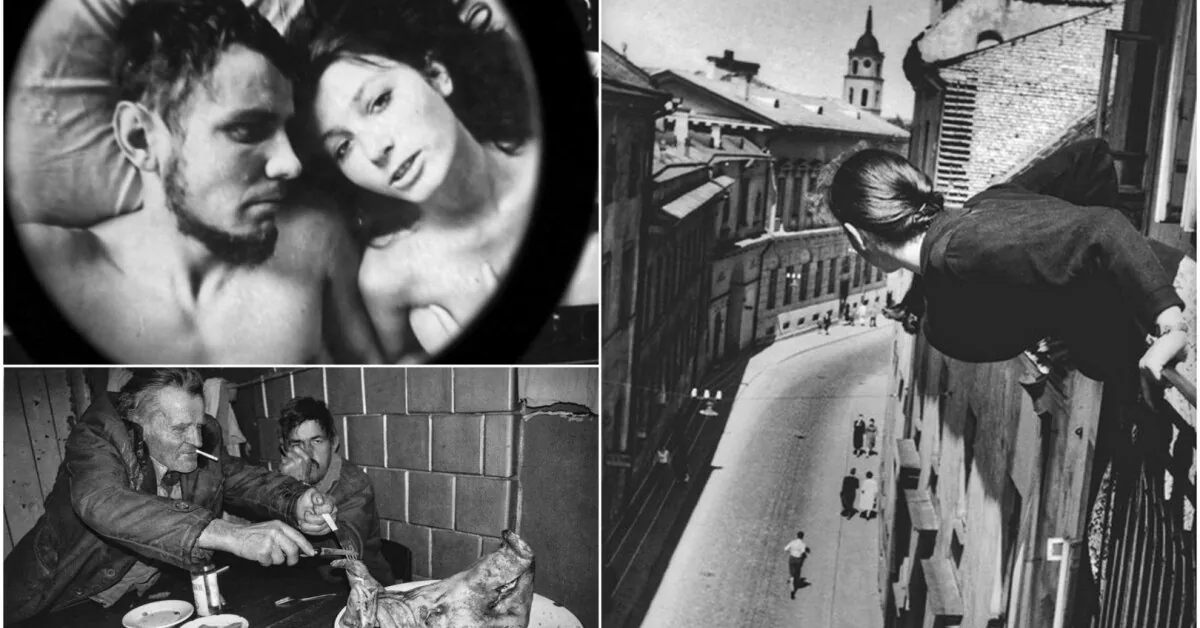
“Every photograph preserved in the museum’s collections is a living testimony to the creators through whom our cultural identity was formed. By selecting these shots for World Photography Day, we wanted to show the dual power of photography. Some shots amaze with their aesthetics, play of light, and the photographer’s mastery or the charisma of the posed subject, while others capture a historical moment, an irreplaceable emotion, or an event that changed the course of Lithuanian performing arts. It is a rare opportunity to see what remained behind the scenes and what today has become invaluable history,” says the museum director Nideta Jarockienė.
Read more Kaunas district is catching up with big cities: salaries already surpass Vilnius district
The journey through awakening photographs will be accompanied by stories prepared based on texts from Lithuanian theatre, music, and cinema workers. You can find them, along with other interesting stories, on the museum’s website, virtual museum, social networks, and other sources.
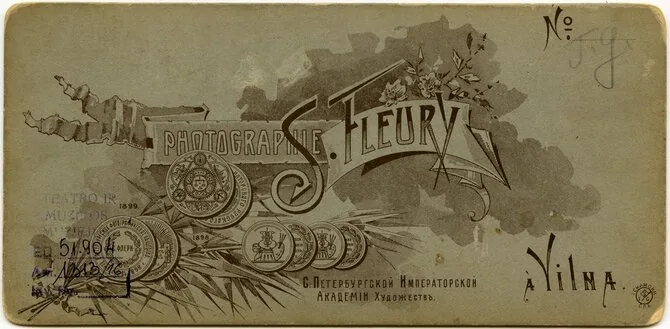
Chronicler of the Epoch S. F. Fleury: spatial city portraits and acquaintance with Čiurlionis
Stanisław Filibert Fleury (1858–1915) was not only a meticulous chronicler of the changing city streets, market bustle, and architecture but also a talented portraitist. His studio became a true attraction center for the Vilnius intelligentsia, painters, and musicians of that time. The light captured in S. F. Fleury’s glass negatives today allows us to see the vivid, unembellished faces of a past era.
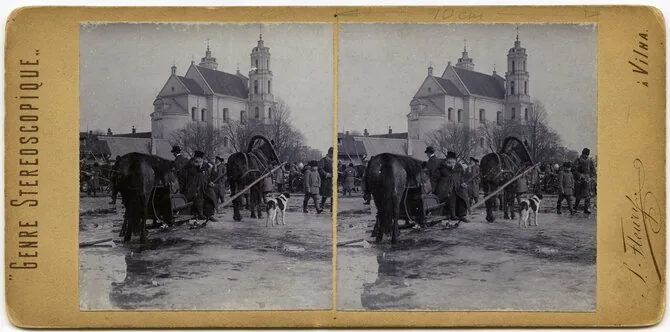
Fleury was one of the pioneers of stereoscopic (spatial) photography in Lithuania. At the turn of the century (around 1900–1910), he captured unique three-dimensional views of Vilnius. These photographs allowed viewers of the time to see the city through special devices with an astonishing illusion of depth. Stereoscopic photography works on the principle of two photos taken from slightly different angles. They are placed side by side. When viewed through special glasses or a device – a stereoscope – the brain merges these two images into one spatial, 3D effect image.
The Lithuanian Theatre, Music and Cinema Museum, besides individual portraits of personalities captured by Fleury and artistically seen landscapes, has an exceptional collection of stereoscopic photographs. It is a set of 17 images featuring well-known places in Vilnius: Lukiškės, Town Hall and Cathedral Squares, the Providence of God Chapel of St. Catherine’s Church, the Vilnelė River near Bernardine Garden, and more.
In the exhibition “M. K. Čiurlionis and Vilnius,” open at the Lithuanian Theatre, Music and Cinema Museum until October 25, the connection between the famous composer and painter and Fleury holds an important place, as it was in Vilnius that the two creators met personally in the cultural field.
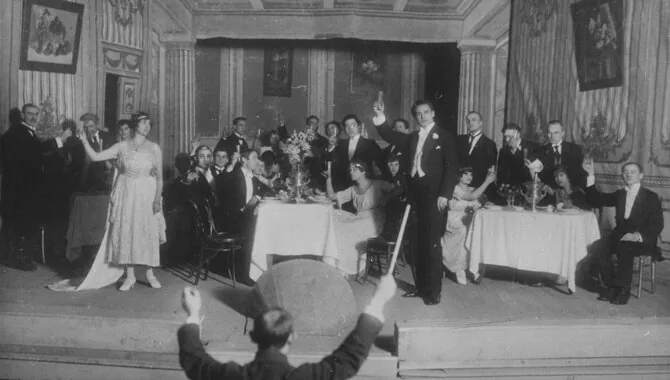
The first “Traviata”: challenges and a packed hall
In 1920, after Poland occupied Vilnius, cultural life moved to Kaunas. Here, the Lithuanian Artists’ Society established a Council to create an Opera Theatre, led by Kipras Petrauskas, Juozas Tallat-Kelpša, Stasys Šilingas, and Juozas Žilevičius. The organizers faced a huge challenge – limited finances and a shortage of performers.
The first opera chosen was Giuseppe Verdi’s “Traviata,” as it required few principal soloists, a smaller choir, and ballet troupe. The work was translated by Faustas Kirša and Balys Sruoga. The premiere was prepared by conductor Juozas Tallat-Kelpša and director Konstantinas Glinskis, with leading roles performed by Adelė Galaunienė, Kipras Petrauskas, and Antanas Sodeika.
The historic premiere took place on December 31, 1920, in the current Kaunas State Musical Theatre building. Despite the lack of advertising, the hall was packed, and even the militia was needed backstage to maintain order. Stasys Šilingas’s announcement about the first opera in Lithuanian caused great public enthusiasm and laid the foundation for the Lithuanian National Opera.
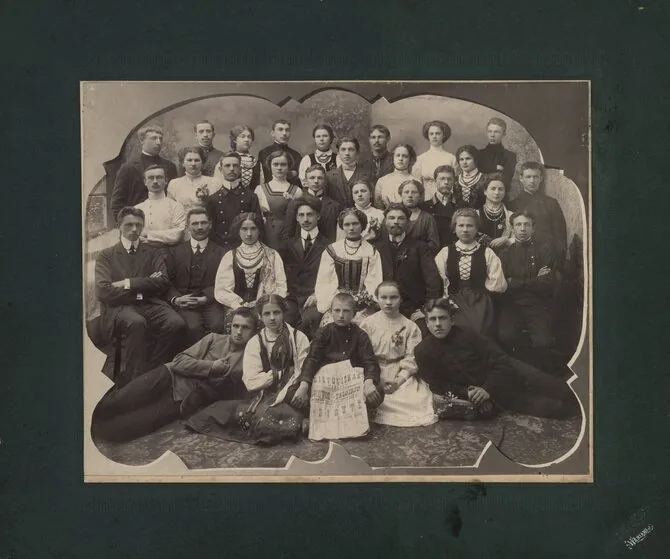
Opera “Birutė”: the first Lithuanian opera – the love of a duke and a priestess
After the historic premiere of Giuseppe Verdi’s “Traviata” on December 31, 1920, the Opera troupe presented its second production on February 16, 1921. It was Mikas Petrauskas’s “Birutė” – the first Lithuanian opera. The production was directed by Konstantinas Glinskis, conducted by Juozas Tallat-Kelpša, and the visual design was created by famous painters Petras Kalpokas, Paulius Galaunė, and Adomas Varnas.
In the premiere, the main role was performed by Vladislava Grigaitienė, the part of Kęstutis was sung by Juozas Bieliūnas, and among other performers appeared Julija Dvarionaitė, Antanas Dvarionas, Jonas Byra, and Aleksandras Kačanauskas. Since the opera score has not survived, the only source to understand the work became the piano score published in the USA in 1928, printed by the composer himself as he wrote it in his youth.
The work tells the legendary 14th-century pagan Lithuanian story about the love of Duke Kęstutis and the priestess Birutė and their battles with the Teutonic Knights. M. Petrauskas himself evaluated his opera modestly and acknowledged the influence of Italian and German music but emphasized its historical importance.
“Birutė” paved the way to the professional stage and inspired the younger generation to choose the path of singers. For example, K. Petrauskas and S. Audėjus, who sang in the early opera attempts, later went to study in Saint Petersburg and returned to form the core of the theatre troupe. Although the opera was performed only four times in the theatre and, according to musicologist Jonas Bruveris (1939–2023), was too simple for the professional stage, its role in the national revival was enormous. This production proved the possibilities of Lithuanian opera and encouraged other national composers to create mature national works.
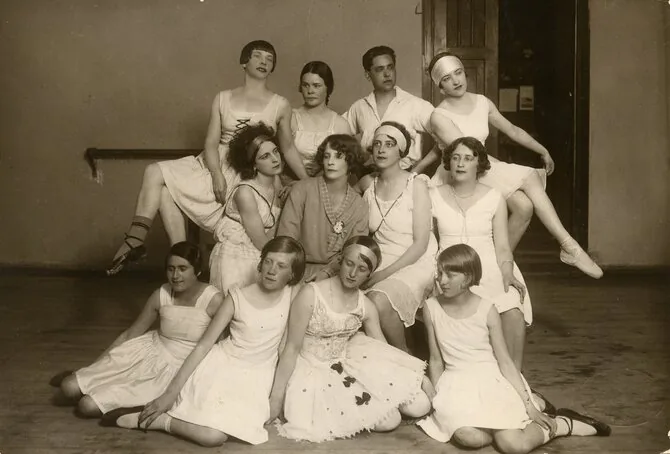
Olga Dubeneckienė-Kalpokienė: the spirit of bohemia and many talents
Olga Švedė-Dubeneckienė-Kalpokienė (1885–1967) was a prominent interwar Lithuanian artist, dancer, ballet master, and painter. She began her creative path in Saint Petersburg, where she studied painting and dance art in private studios and performed in theatres of the most famous directors of that time.
In 1919, together with her husband, architect Vladimir Dubeneckis, she moved to Kaunas. Both artists actively engaged in cultural life, bringing the spirit of Petersburg bohemia to the temporary capital and contributing to the establishment of important art societies and schools. In Kaunas, the artist organized dance courses, founded a private ballet school, and later deepened her knowledge in Berlin.
From 1921 to 1925, she created dances for almost all State Theatre operas and soon began designing costumes and stage sets. Using the pseudonym Deo, she also wrote ballet reviews. As a painter, O. Dubeneckienė-Kalpokienė actively participated in exhibitions in Lithuania and abroad – exhibiting portraits, landscapes, and stage design sketches, illustrating books, and decorating the interior of the Bank of Lithuania. Unfortunately, this active activity ceased when Lithuania lost its independence.
The Lithuanian Theatre, Music and Cinema Museum preserves nearly a thousand of her works. Her scenography is characterized by the aesthetics of the “World of Art”: decorative forms, rich color, knowledge of historical styles, and the ability to convey the spirit of the era. Among her works stand out the modern, art deco-style costumes for the ballet “Sailors” (1937) and the design of Molière’s comedy “The Imaginary Invalid,” which revived the traditions of commedia dell’arte (Italian improvisational masked theatre). Besides her theatrical legacy, the museum also preserves the artist’s drawings and sketches of tomb monuments from the Curonian Spit.
In the exhibition “Dances, Performances, Revelations… Lithuanian Ballet – 100,” open at the Lithuanian Theatre, Music and Cinema Museum until the end of August, Olga Dubeneckienė-Kalpokienė is presented through authentic archival documents, personal notes, performing arts, and art exhibits.
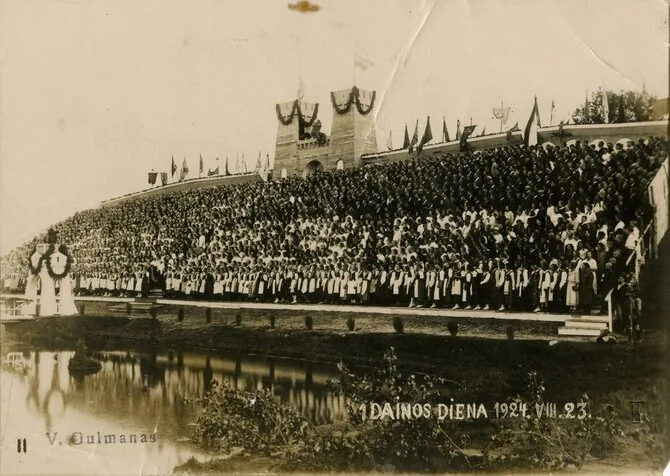
The first Song Festival: an event uniting the nation
Song Festivals in Lithuania are a unique cultural event uniting the entire nation. On November 7, 2003, the tradition of Song Festivals in Estonia, Latvia, and Lithuania was declared by UNESCO as a masterpiece of the oral and intangible heritage of humanity.
The first Republican Song Festival in our country took place on August 23–25, 1924, in the then temporary capital Kaunas and has been held almost continuously to this day. The event was organized in Petro Vileišis Square, together with the Agriculture and Industry Exhibition.
At the Song Festival, then simply called “Song Day,” 77 choirs and about 3,000 participants gathered. The chief conductors of the festival were the most prominent composers of the time: Juozas Naujalis, Stasys Šimkus, and Julius Štarka. The program consisted of dozens of Lithuanian folk songs and original works, with one of the repertoire’s highlights being J. Naujalis’s “Dear Lithuania.”
Read more Commander of the Armed Forces Vaikšnoras awarded the retiring border guard commander Liubajevas
This event received enormous public support: thousands of spectators from all over Lithuania flocked to Kaunas, and the festival itself was perceived not only as a musical concert but also as a powerful symbol of national unity and statehood consolidation. The first success gave a strong impetus to the continuity of the tradition – by 1928, the second Song Festival gathered almost twice as many singers.
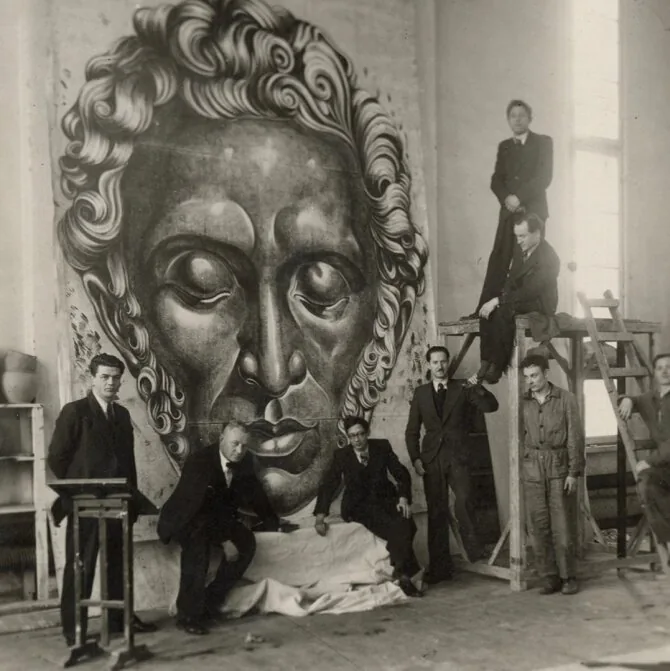
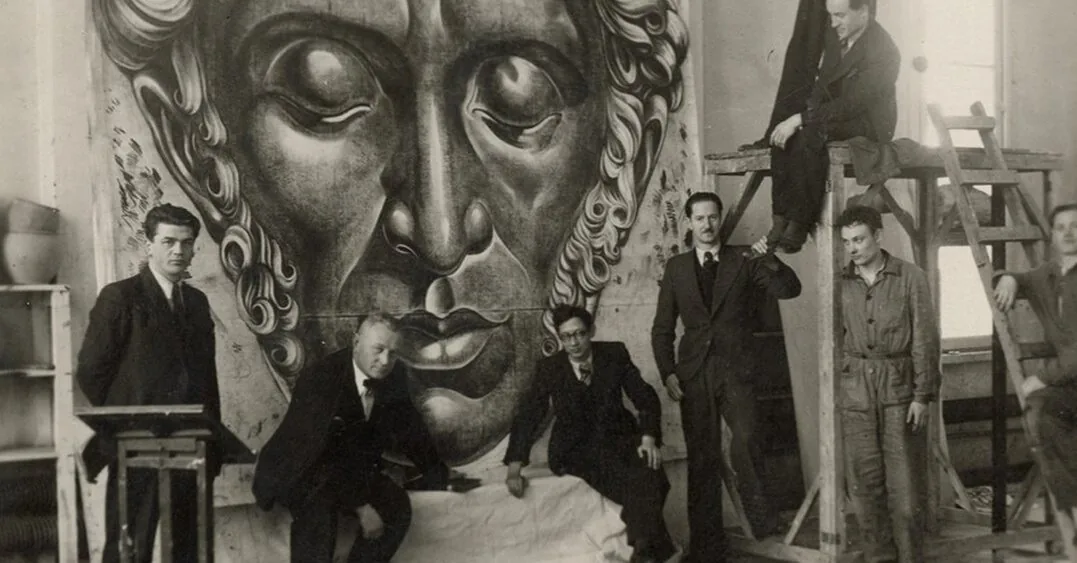
Setting up the exhibition in the State Theatre: a moment before the museum’s wandering began
In 1936, the Theatre Museum found a new home in the State Theatre in Kaunas. This institution, born in 1926 through the initiative of humanists Balys Sruoga and Vincas Krėvė-Mickevičius, had long lacked a permanent place, so moving to the country’s main cultural center was a huge achievement. In the new premises, it was possible to properly exhibit and preserve the rapidly growing collection created by the independent Lithuanian theatre community.
Unfortunately, this period of peace and creative rise was short-lived. During World War II, with the German and Soviet occupations of Lithuania, the museum’s collections suffered catastrophic losses. Priceless archives, historical costumes, and stage design sketches were scattered, looted, or simply destroyed. Only the devoted Theatre Society managed to save a small part of the collections. After the war, in 1947, the museum was moved to Vilnius, where it had to house all its surviving assets again in a small room in the Actors’ House.
The surviving unique 1939 photograph today serves as an invaluable document capturing the setup of one of the last exhibitions in the State Theatre just before the historical upheavals began. The photo shows a lively, behind-the-scenes process of preparing the exhibition. Four prominent Lithuanian cultural figures, who shaped the stage face of that time with their talent, work shoulder to shoulder: decorator Algirdas Radzevičius, scenographer and graphic artist Romanas Krinickas, directing master Boris Dauguvietis, and pioneer of modern scenography Vladimiras Dobužinskis. Although the author of this historic photograph remains unknown, it perfectly conveys the spirit of the interwar intelligentsia and dedication to their work.
Žalakevičius, about whom it is said: “No cinematographer has yet been born who can stand alongside him”
Film director and screenwriter Vytautas Žalakevičius (1930–1996) debuted at the Lithuanian Film Studio in 1956 with the film “The Drowned Man,” and after thirty-six years directed his last work – “The Beast Rising from the Sea.” During this period, he created more than twenty internationally awarded films that left a strong mark in world cinema history. His most famous works are “Adam Wants to Be a Man,” “Chronicle of One Day,” and, of course, “Nobody Wanted to Die.”
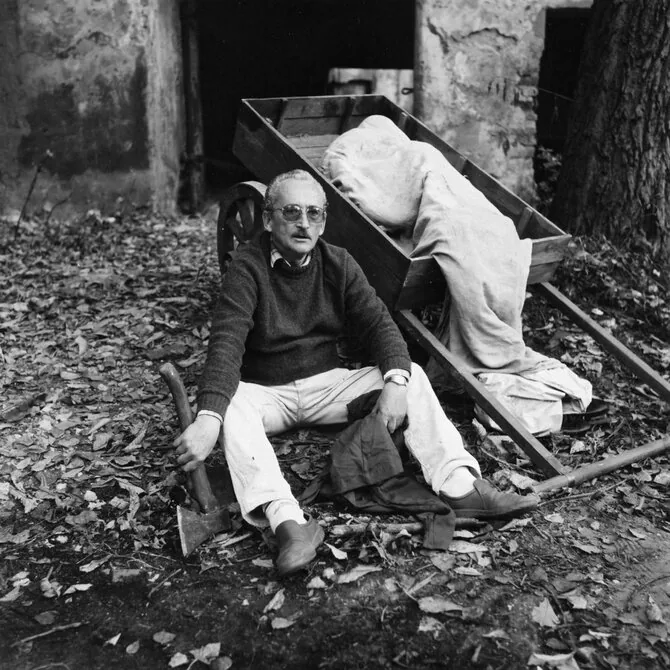
The latter film still sparks sharp discussions even after 60 years. Nevertheless, its artistic value remains indisputable – in 1995, on the occasion of the cinema centenary, UNESCO included it in the list of the hundred most significant films. As philosopher Leonidas Donskis (1962–2016) aptly noted, this film is a testament to the maturity of an entire generation of artists, and, according to him, only a person unfamiliar with the language of cinema or driven by political motives can call it bad.
V. Žalakevičius wrote the scripts for all his films himself and also inspired other cinema masters such as Almantas Grikevičius and Algimantas Puipa. However, the brightest triumph of this collaboration was the film “Feelings,” directed by Algirdas Dausa and A. Grikevičius, with V. Žalakevičius himself as the artistic director and scriptwriter. The film, awarded at the San Remo festival, was later chosen by critics as the best Lithuanian feature film of all time.
Three decades ago, A. Puipa admitted that no cinematographer had yet been born in Lithuania who could stand alongside V. Žalakevičius. This assessment of V. Žalakevičius’s work remains relevant today.
Jocys’s concerts: from Verdi arias in Budapest to the stage on the open sea
In 2024, the collection of the Lithuanian Theatre, Music and Cinema Museum was supplemented by the collection of Lithuanian opera singer Jonas Jocys (1929–2012). More than 350 exhibits – photos, letters, posters, and memorabilia – were donated to the museum by the soloist’s daughter, jazz singer Evelina Jocytė. This collection reflects the interesting and winding life path of the owner of a rich voice, his personality, and the realities of singers’ lives in the second half of the 20th century during the Soviet era.
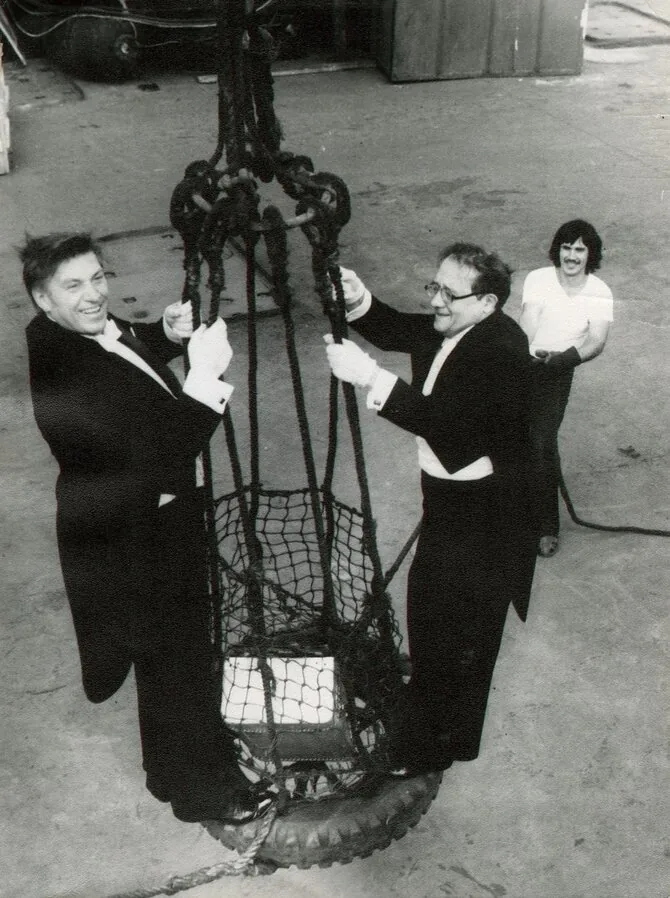
The basics of vocal technique were given to the young man by Juozas Bieliūnas, a teacher at the Juozas Gruodis Music School in Kaunas, who himself studied singing in Italy. It was he who encouraged the student to “spread his wings” for studies at the Moscow Conservatory. Admission was not easy – in 1953, more than 400 candidates competed for 15 places in the vocal faculty. Although suffering from pneumonia, Jonas Jocys defeated his competitors. Later, he recalled that during the first round, he was so nervous he did not want to live, and other students even placed glasses and cups on his back to help treat his pneumonia a little before the decisive singing.
After graduating from the Moscow Conservatory, the singer returned to Lithuania at the invitation of the then Minister of Culture Juozas Banaitis. His debut in Gioacchino Rossini’s opera “The Barber of Seville” took place in 1959, but there was no place for the young soloist in the local theatre. He gained recognition in 1960 at the international Ferenc Erkel vocal competition in Budapest.
However, fate arranged that the opera singer had to spend the prime of his creative period abroad, choosing the demanding path of a touring soloist. Attached to major concert organizations, J. Jocys lived a grueling rhythm – he had to perform up to 50 solo concerts per month in various republics. The expressive Lithuanian bass sounded in unusual conditions: for fishermen on Kamchatka and Sakhalin, directly on the open sea on rocking ships, as well as for reindeer herders, builders of the Karakum Canal, and oil workers in Tyumen and the Caspian Sea in harsh climates.
Only from the 1980s did J. Jocys sing again for a decade at the Lithuanian Opera and Ballet Theatre, where he created memorable roles of Varlaam, Duke Galich, and Mephistopheles, toured extensively abroad, recorded about 150 works, and in 2009 was awarded the Medal of the Order of the Grand Duke Gediminas of Lithuania.
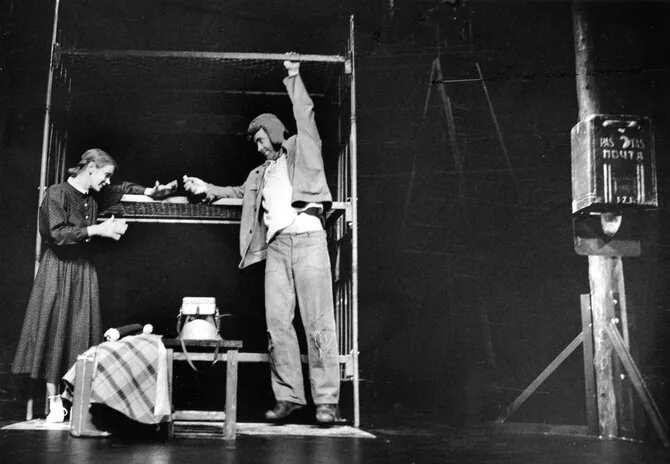
Eimuntas Nekrošius’s play “Square”: forbidden and not forbidden
This was the first play by Eimuntas Nekrošius (1952–2018) to break through the “iron curtain,” win international awards, and make the Youth Theatre famous abroad. Forbidden and not forbidden – allowed to be performed only at the Youth Theatre and only in Vilnius. Time has made its corrections. It was performed 315 times on four continents.
The play was created with the director categorically rejecting the sentimental text and concept of Valentina Jelisejeva’s “letter novella.” It was necessary to start “from scratch,” leaving only the novella’s characters. Rehearsals began with readings by writer Saulius Šaltenis. The author presented his night work – the literarily arranged texts of the previous rehearsal’s improvisations.
Overall, “Square” told about walls. Between people, countries, between “allowed” and “not allowed,” between the state and its citizen. However, a more important side, “silent” theme appeared about attention – necessary for every person like a flower, about the courage to trust another person, about immeasurable spaces of freedom and kindness unexpectedly opening beyond iron, concrete, or other walls and even in a prison cell, behind iron doors.
Why “Square”? After all, to close, fence, imprison something – four posts are needed first? They stood on the Youth Theatre stage with spotlights and loudspeakers – just like in GULAG camps. And a watchtower stood – almost real, only without a roof. Not all reviewers understood. One article was titled “Why is ‘Square’ without a roof?”
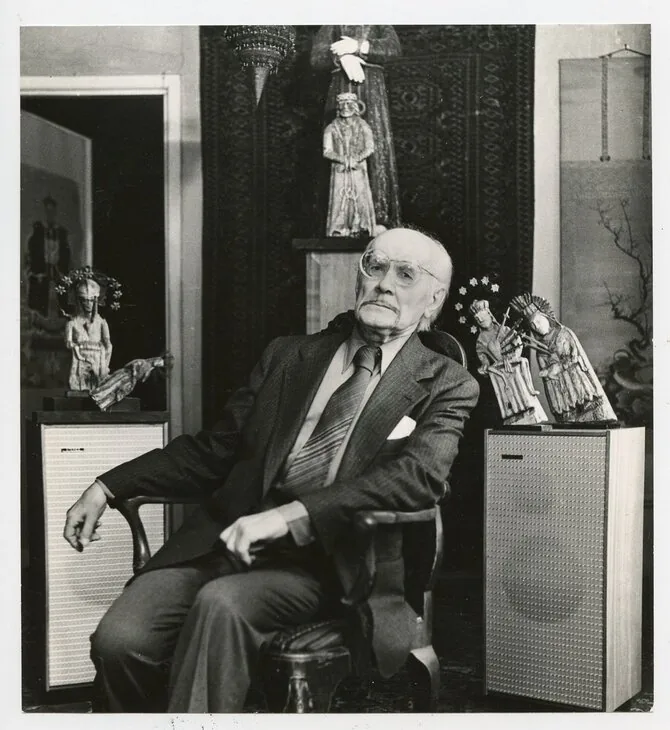
Truikys: connections of the East and Lithuania, image and music
Liudas Truikys (1904–1987) was a phenomenal figure of 20th-century Lithuanian culture, an innovator of opera scenography who combined the experiences of ancient Lithuanian and Eastern cultures in his works. His creative goal was to reveal the depth of philosophical ideas and visualize the synthesis of art and music. After graduating from the Kaunas Art School, L. Truikys later deepened his knowledge of theatre decorations, stage, and lighting technology in Berlin and Paris and became acquainted with the great European stages.
From 1931, the artist actively worked at the State Theatre in Šiauliai and Kaunas. Here he found the opera genre closest to his nature and met his life partner and muse – opera soloist Marijona Rakauskaitė. The artist gained international recognition in 1937 when his scenography for the opera “The Three Talismans” was awarded an Honorary Diploma at the World Exhibition in Paris. This work became a successful example of the union of modernism and folk art.
After the war, L. Truikys taught at the Kaunas Institute of Applied and Decorative Arts, headed the department and faculty. However, in 1948, after becoming the chief artist of the opera theatre, he was dismissed after a few months. The Soviet authorities removed him from the institute’s positions and the Artists’ Union, restoring his rights only after several decades. Despite persecution, he later returned to teaching and theatrical creativity.
Between 1975 and 1987, the most important late works of the artist were realized – scenography for Giuseppe Verdi’s operas “Aida,” “Don Carlos” (for which he was awarded the State Prize), and “Traviata.” In these productions, he managed to maximally combine image and music. The huge legacy of L. Truikys’s sketches and stage designs is today preserved in the Lithuanian Theatre, Music and Cinema Museum, the National M. K. Čiurlionis Museum, and the artist’s memorial museum in Kaunas.
Read more TBT: US sanctions destroy the rule of law
The publication was prepared based on museum staff texts by Austėja Mikuckytė-Mateikienė