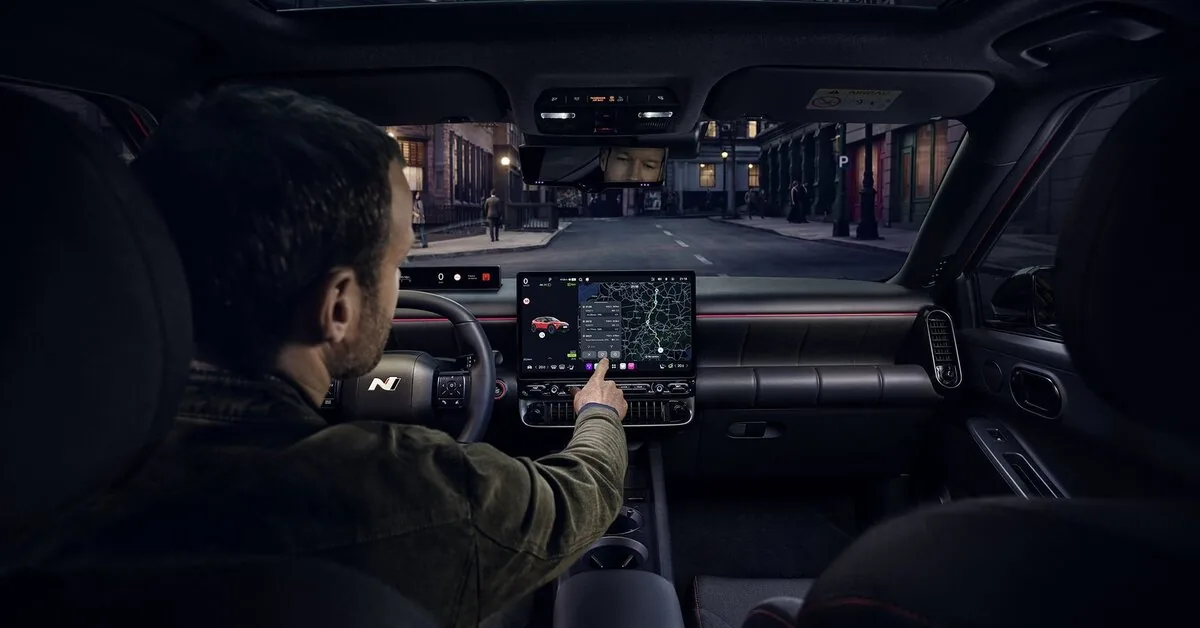
One of the most interesting aspects of working at „42dot“ is how different technologies are combined into a single product. For example, „Gleo AI“ is an AI agent based on a large language model (LLM) designed to understand the driver’s intentions and safely control the car’s systems. Another team is developing autonomous driving AI using Vision Language Action (VLA) technology.
Read more Andrius Romanovskis: As Air Baltic reduces flights in Lithuania, LOT could take its place
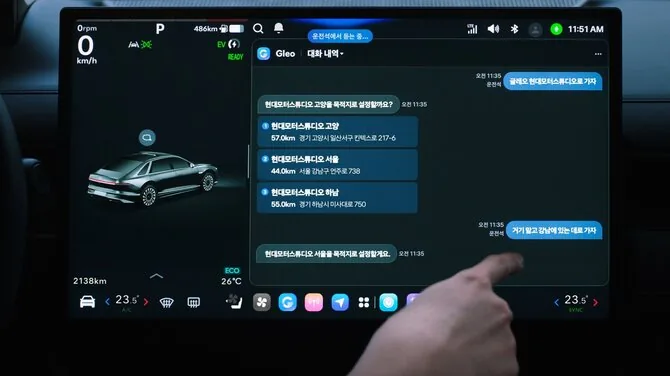
It combines AI environmental perception with real car control. The car OS development team is creating the base software that will allow different car systems to communicate and work together.
The challenges lie not in the programming itself
For example, during the autonomous driving development process, a test was conducted where only the destination in the navigation system was changed in the same driving scenario. Then the AI itself selected the appropriate lane for turning or driving straight. This task showed the code developers that their algorithms truly control the movement of a real car.
A particularly interesting part of the development process is testing unexpected situations. While testing the „Gleo AI“ safety system „Gleo Guard“, the team used a controlled attack method by deliberately providing the system with atypical data.
In one case, the AI did not understand the slang word „dujjongku“, so a normal navigation system query was classified as risky. Instead of simply adding the word to the list, the team tackled a deeper problem – they realized that the AI must understand both the user’s intentions and the context of car usage. This motivated them to further develop „Gleo Guard“, turning it into a specialized proprietary model used in the automotive field.
Another interesting approach is applied in developing vehicle operating systems (Vehicle OS). The goal is to hide the complexity of car systems from other programmers. For example, a programmer can control the car window using a simple command like „Window.set_position(0.5)“, without needing to understand the complex window controller structure. This allows programmers to focus on the functions they are creating.
Measuring progress in autonomous driving
While working on autonomous driving, the team also needed a clear way to measure progress. Since there is no single correct solution, programmers first set common standards and then created evaluation metrics. This made the code more systematic – instead of guessing whether a new model is better, they could improve it based on measurable results. Even failed experiments were useful because they provided information for other tests.
Read more Ice rink or football: why did the idea of a new arena in Gargždai cause discord?
In summary, the methods applied by „42dot“ reveal that modern car development is no longer just about hardware manufacturing or code writing. Programmers must understand complex systems, set clear standards, collaborate with other teams, test results in real-world situations, and take responsibility for the final product. At „42dot“, a programmer’s work is considered complete not when the code works, but when the code becomes a reliable part of the real customer experience on the road.
„Pleos“ is a next-generation software platform and in-vehicle infotainment (IVI) system developed by „42dot“. IONIQ 3 is the first Hyundai model with this infotainment system. Model specifications and prices will be announced soon, and the model itself will be released this fall.
AI accelerates development
At Hyundai Motor Group, AI transformation is not just about technology implementation. AI deployed across the entire corporate group is considered a competitive advantage.
One example is the Crash Safety AI Assistant, which helps engineers search, compare, and evaluate relevant cases from accumulated crash test data and scientific literature. The system collects crash test results, test images, and engineering analysis data, allowing engineers to search, compare, and evaluate relevant cases.
Another example is the AI Automation Recognition Service, which uses computer vision and cameras installed on production lines to automatically read vehicle identification numbers (VIN) and verify whether the car on the assembly line matches real-time system records. Previously, employees checked this information visually.
Read more A new «Eglė Rehabilitation Center» has opened its doors in Klaipėda