Asta Gegužė suggests not rushing to throw away jeans – they can be reborn in various forms in your home and serve for many more years. She resews jeans, and this hobby, which has become a source of income, reveals Asta’s attitude towards things, her desire to conserve, renew, or recycle.
Read more Tuesday test: can you answer at least 8 out of 10 general knowledge questions?
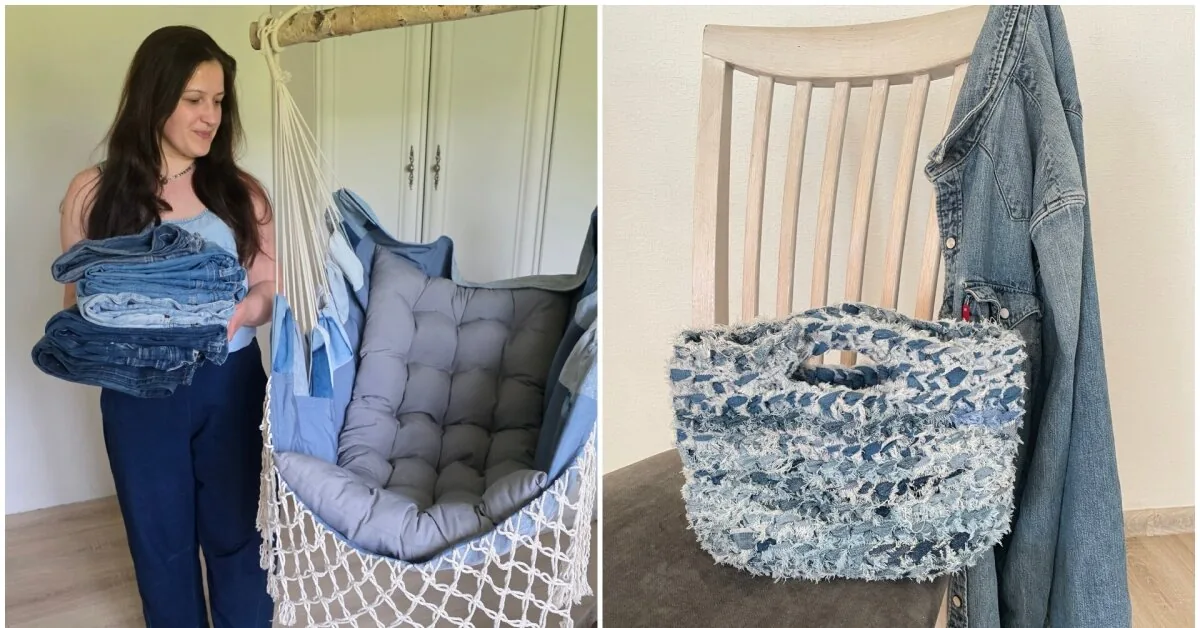
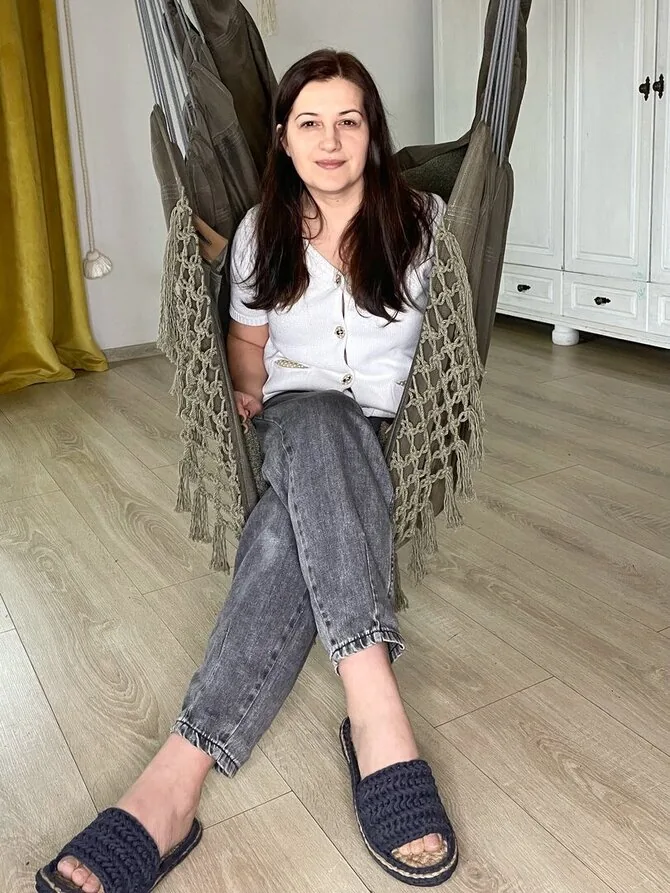
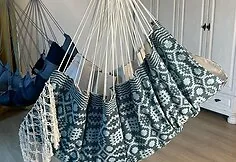
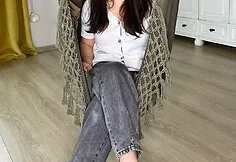
The creator says that renewing and resewing jeans started when she made a few toys from jeans for her firstborn. However, everything gained momentum when the family bought a hanging hammock, hung it under an oak tree, but it tore before summer ended. Asta decided to resew the torn fabric from worn-out jeans, using 6 pairs for the hammock.
In the content project “Change your attitude, not things,” organized by the Environmental Project Management Agency, we share true stories about how to preserve things and help them live not only a second but many more lives.
The renewed hammock hung under the oak tree for three years: shining in the sun, raining, snowing. It withstood all Lithuanian weather perfectly. “We took it down after three years when we saw mold in one spot after winter, but the fabric itself did not lose its strength. That’s when I thought that more such hammocks could be made,” the creator shared.
Asta says that at that time the sustainability topic was just becoming popular, and she got involved with pleasure. The whole activity was further boosted by requests from others to sew hammocks for them.
“I am always looking for ways to encourage people to use their old jeans themselves, not to throw them away, but to bring them back to life,” the woman shared.
Looking for raw materials, Asta consciously refused to buy used jeans in stores. “I thought – those jeans can still be worn. So I wrote on social media that I accept worn-out jeans. That’s how it all started. Today, people from all over Lithuania send me jeans – bored, worn out, defective, or torn. They all become raw materials for new products,” the woman shared.
It’s not just hammocks, as not all jeans are suitable for sewing hammocks. She sews hammocks only from jeans that do not contain elastane and are not stretchy. It is important that the material is strong. Asta tears the jeans and then decides whether they are suitable for hammocks or not.
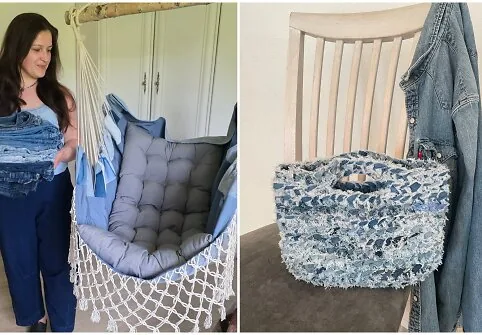
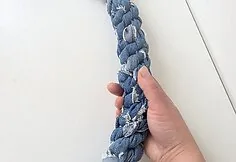
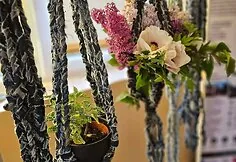
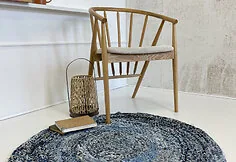
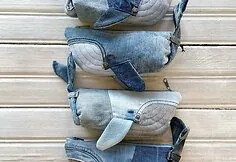
She adds that having a whole pile of jeans, she started looking for ideas on what else could be made from them. This gave birth to many new creations: from rugs to decorative strips, baskets, pet toys, pot holders, and more.
“I am always looking for ways to encourage people to use their old jeans themselves, not to throw them away, but to bring them back to life,” the woman shared.
At home – a kingdom of jeans
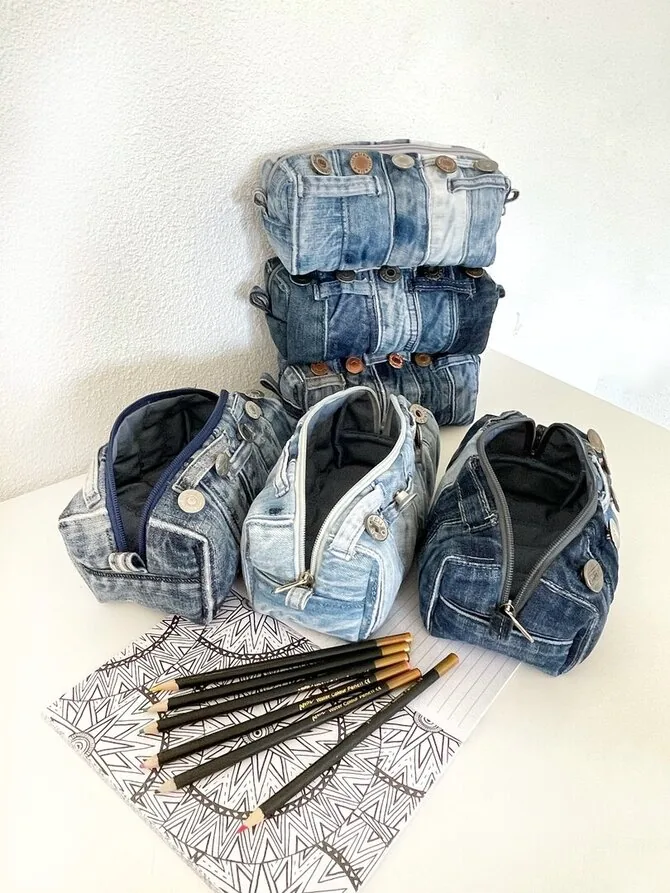
Asked if you can find denim works at her home, Asta answers definitely yes. Almost every room has a hammock hanging, both daughters carry her sewn handbags, use pencil cases. “They are my little influencers because they are the first to order, tell me what they want, and gladly carry and inspire their classmates. When they go to birthdays, the most common request from girls is for me to sew some product – a bag, handbag, or pencil case. I am glad that my daughters gladly get involved and even suggest ideas on what else I could make from denim,” the woman says.
Asta shares her work on social media, participates in fairs, goes to schools, libraries, communities, companies, and camps where she leads creative workshops. Most of her products go abroad through the Etsy platform, but hammocks remain the most popular in Lithuania.
Read more Scammers in Vilnius embezzled 10 thousand euros from residents
Several companies have already collected their employees’ old jeans and ordered hammocks or bean bags for relaxation areas. According to Asta, such products become not only furniture but also meaningful gifts intertwined with shared memories. They are increasingly given to teachers, on anniversaries, or to colleagues going on parental leave.
For example, a hammock was made for a teacher in her hands, for whom students wished to rest in a hammock made from their jeans. And once children and grandchildren collected their jeans and gave a hammock sewn from them to their father (grandfather). “I know he still enjoys this hammock and is very happy with this gift,” says the creator.
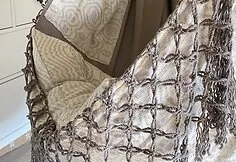
The woman says that such hammocks can hang not only outside, on the terrace or under a tree, but also indoors. She has also created a hammock model suitable even for balconies. Moreover, she sews hammocks from old bedspreads, so if you have one, you can also think about another way to use it.
Asta graduated in furniture design and technology and wood engineering, and as she says, she is not a seamstress, but today the knowledge gained during her studies helped her design a hammock that is very comfortable to rest in. “It is not just decoration like many hammocks from shopping centers. You want to get into mine and not get out. When guests come to us, the hammock is the place that is always occupied,” laughs Asta.
Sustainability was instilled in me from childhood, as was thrift. Now it seems like a trend, but sustainability is in my blood.
Sustainability – a way of life
The woman says that growing up, sustainability was a big part of everyday life. Asta grew up in a village where things were reused in the family without thinking that it could be otherwise. “At that time, there were no work gloves, so we sewed them from old coats. It was like a game for me because I was allowed to scratch patterns, cut, and then sew. My aunt knitted socks, so we had to unravel clothes that were already boring so they could be reborn in another form. Therefore, sustainability was instilled in me from childhood, as was thrift. Now it seems like a trend, but sustainability is in my blood. I tend to reuse things, and only when they are completely unsuitable anywhere do I let that thing go on ‘vacation’ after proper sorting,” shares Asta with her philosophy.
Today she eagerly goes to lead workshops on jeans reuse, explaining why it is important. According to the woman, starting to educate children as early as possible keeps this attitude for life. The seed of sustainability born later helps them consume more responsibly and buy less.
What awaits in the future? As Asta says, she has many ideas and does not manage to implement them all. This year she has set a goal to have even more creative workshops where she could encourage people to start working themselves. “I would like even more people to catch the jeans bug, learn to use them creatively. It makes me extremely happy when I see that I am not the only one creating from jeans,” said the creator.
Concluding the conversation, she adds that people sometimes mistakenly think they do not have a creative vein, do not know how to sew, or do not have a sewing machine, so they cannot create anything from old jeans themselves.
“I try to show that even without much experience, you can crochet a rug, weave a flower holder, or make a toy for a pet. In my own creations, I bring about 200 pairs of jeans back to life every year, but when leading workshops, this number becomes much larger. When people learn to use their old jeans creatively, together we can achieve much more,” says Asta.
The article was prepared as part of the project “Waste Prevention Promotion”.