ALSO READ: More details released on how a 17-year-old drowned near the Palanga bridge
Scientists work in the waves
Heavy clouds hang over the Baltic. The wind chases the sand, and waves reaching the shore one after another break into strips of white foam. From afar they look the same, but for scientists every break in the line of wave battle can be a sign that a deeper channel lies underwater.
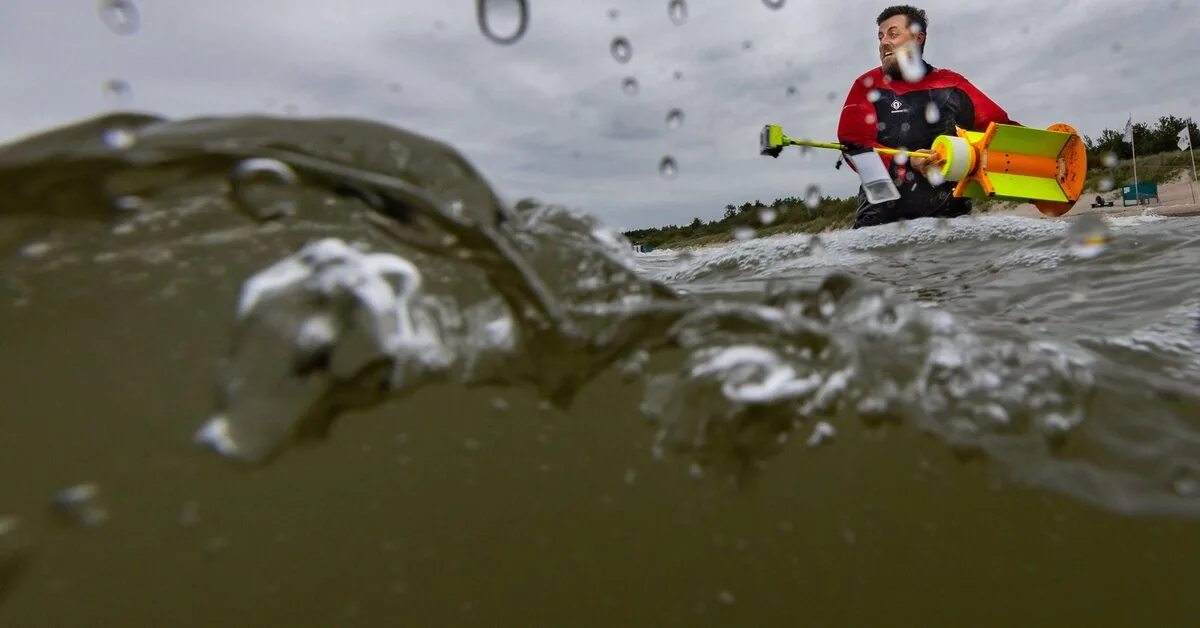
A group of people is walking towards the sea along the beach. Two of them carry bright yellow and orange devices resembling small buoys. Their colors look almost unnaturally bright in this gray coastal landscape. But that is how it should be – the devices released into the waves will later need to be found sometimes several kilometers from the starting point.
Read more Championship titles and tickets to Los Angeles – for Dutch and Swedish beach volleyball players
One team member is putting on a wetsuit. Another checks GPS trackers attached to the measuring devices. Dr. Rasa Janušaitė, a scientist from Vilnius University, looks at the sea. Before releasing the devices, waves, wind, and the place where the water may move differently than seen from the shore need to be assessed.
The researchers came to look for some of the most dangerous but at the same time hardest to notice currents of the Baltic Sea.
Read more 19 kg lost without the gym and medicine: it all started with these 3 drinks