1. “Fresh Blood”: what to do if you decide to start life anew?
The beginning of “Fresh Blood” (“The Rookie”) at first glance resembles a story about a midlife crisis. John Nolan, having survived a shocking event, decides to radically change his life and becomes a Los Angeles police officer. The only problem is that he is much older than the other rookies.
Read more Russia warns of «serious damage» to relations with the US and Turkey over arms transfer to Ukraine
But this is exactly what gave the series its uniqueness. Nolan cannot compete with the energy of twenty-year-olds, so his weapon becomes life experience, the ability to talk to people, and the understanding that the world is rarely black or white.
Nathan Fillion, who plays Nolan, was already well known to TV viewers from the series “Castle,” but “Fresh Blood” allowed him to create a completely different hero – a man who does not need to pretend to be younger than he is. The series creator Alexi Hawley gradually supplemented the classic police procedural format with humor, romance, and increasing attention to the entire police precinct team. Nolan himself becomes a mentor to younger officers, and the relationships, friendships, and romances of his colleagues become as important to some viewers as the weekly crime.
It is also interesting that the series, which initially seemed aimed at a fairly traditional TV audience, was later rediscovered by younger viewers, especially on platforms and social networks. This is one of the rare cases where a classic police procedural series managed to gain a second life momentum in the digital age.
“Fresh Blood” – on weekdays at 9 a.m. on LNK.

2. “Velvet. New Empire”: a Spanish story moved to New York
The case of “Velvet. El Nuevo Imperio” is different. Here, the most interesting thing is to watch how a familiar European story is adapted to another television culture. The original Spanish “Velvet” took viewers to 1960s Madrid and the world of luxury fashion houses. At its center was Ana – a talented seamstress – and the store heir Alberto. Their love was divided not only by family ambitions but also by a very clear social hierarchy: in one world lived those who sewed clothes, in the other – those who bought them.
“Velvet. New Empire” retains this genetic code but transfers everything to a more modern New York context. Ana Velázquez here is already a talented Mexican designer arriving at the “Velvet” fashion house and encountering the company heir Alberto Márquez. Alberto is played by Spanish actor Yon González, known from “Gran Hotel,” and Ana by Samantha Siqueiros, who also appeared in the series “Berlin.”
The new “Velvet” is interesting not only because of love triangles. It is a cultural transplantation: the Spanish costume drama is replaced by a more vivid Latin American melodrama temperament, Madrid nostalgia by New York dynamics, and the seamstress’s dream by a modern designer’s ambition to break through the fashion industry. So those familiar with the original can look for recognizable motifs, while those who have not seen it get an independent story about the fashion business, family money, and people trying to earn a place in a system where a surname is sometimes more important than talent.
“Velvet. New Empire” – on weekdays at 4:20 p.m. on LNK.

3. “Hudson & Rex”: when a four-legged partner is not just a cute friend
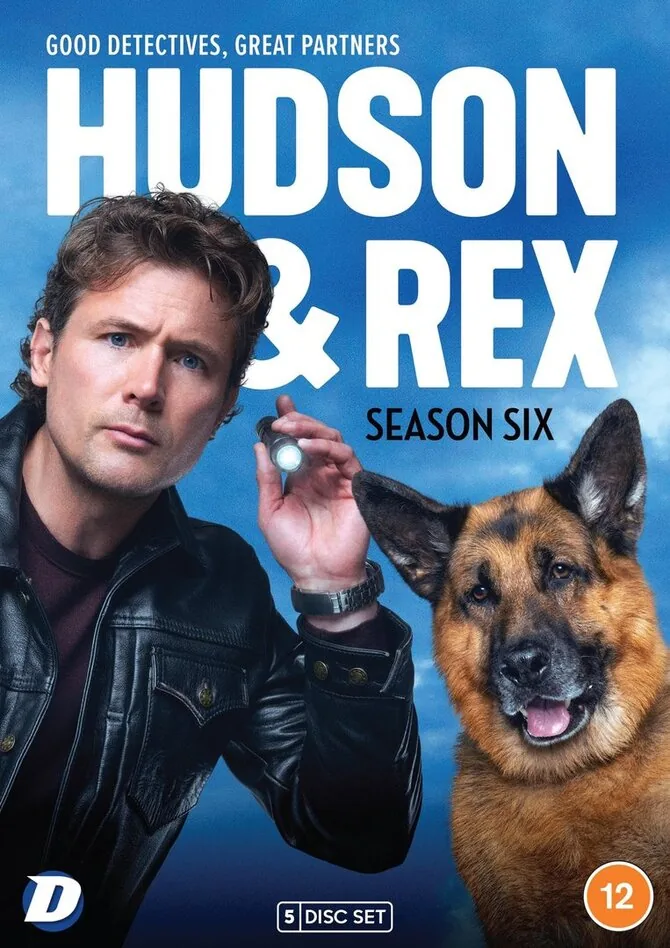
Police officer and dog on television is an old formula, but “Hudson & Rex” has a much more interesting genealogy. The Canadian series belongs to the same television tradition as the Austrian “Kommissar Rex,” only Vienna is replaced here by St. John’s, Canada.
Detective Charlie Hudson is played by John Reardon, but his equal partner is the German Shepherd Rex. And it is precisely the word “equal” that explains how the series differs from many other crime stories where the animal is merely an emotional accessory. Rex searches for clues, reacts to human behavior, notices what officers miss, and participates in the investigation itself. Therefore, the requirements for the four-legged actor on set are much more complex than just sitting or running to a designated spot. For many seasons, Rex was played by the German Shepherd Diesel vom Burgimwald. His trainer Sherri Davis said that working on the series requires constant preparation: the dog must not only perform commands but also work among cameras, lighting, dozens of people, and other actors.
The strength of the series is also the consciously chosen tone. “Hudson & Rex” does not compete for the title of the darkest or most brutal TV crime. It is a classic-paced crime series where the investigation is combined with team relationships and the bond between human and animal.
New “Hudson & Rex” episodes – coming soon on LNK.
4. “Cobra 11”: how to survive three decades of car crashes
When “Alarm für Cobra 11 – Die Autobahnpolizei” appeared on German television in 1996, few could have predicted that the highway police story would become one of the best-recognized German TV export products. The formula of “Cobra 11” was obvious from the start: fewer offices and more highway. Car chases, collisions, explosions, and stunt tricks here became not an addition to the plot but part of it. Over many years, the series changed cars, partners, and police officers, but one man practically merged with it – Erdoğan Atalay. His character Semir became one of the longest-living characters in European action TV series.
“Cobra 11” is also interesting technically. Stunt teams had to constantly find ways to perform increasingly complex crash scenes not by computer but in reality. Because of this, special car control systems, precise trajectories, and dozens of stunt performers were used on set – the chaos seen on screen was actually carefully calculated.
The series became a kind of TV dinosaur in a good way: it survived a period when action series effects were created almost entirely physically, transitioned to the digital era, and remained recognizable.
BTV now airs “Cobra 11” from Tuesday to Friday at 8 p.m. – a chance to see how the series looked back when many TV technologies we take for granted today did not exist.

5. “The Resident”: when the problem is not the disease but the system itself
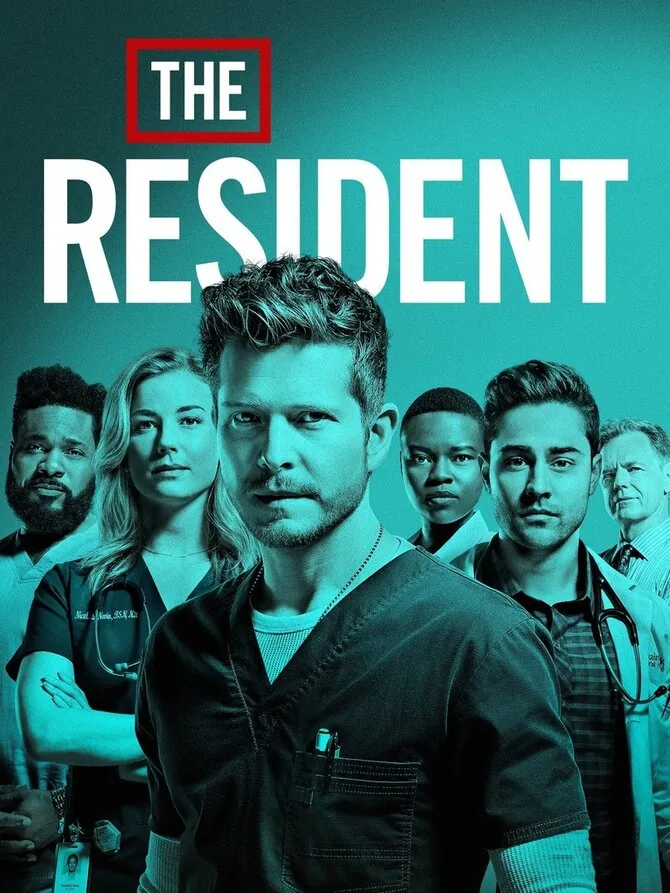
In medical series, the doctor is traditionally the person who solves the problem. “The Resident” from the start chose a much more uncomfortable question: what happens when medicine itself becomes part of the problem?
Read more August 16 Horoscope: Unexpected Opportunities Will Open for These Zodiac Signs
Young doctor Devon starts work at a prestigious hospital with an almost idealistic belief in his profession. His mentor Conrad quickly shows that the medicine described in textbooks and real hospital life do not always match. The series talks about doctors’ mistakes, hospital financial interests, the pharmaceutical business, the insurance system, administrative pressure, and situations where the best decision for the patient is not necessarily the one most beneficial to the institution.
At first, this divided critics. Some found “The Resident” too harsh on the medical system, others appreciated that the series consciously refuses to show the doctor as an infallible authority. Over six seasons, some characters left, new ones appeared, but the main conflict remained: what it means to be a good doctor in a system that sometimes rewards for the wrong reasons?
“The Resident” – on weekdays at 7 p.m. on TV1.
6. “Law & Order: Special Victims Unit” – 27 seasons with Olivia Benson
When “Law & Order: Special Victims Unit” appeared in 1999, no one could have predicted that more than a quarter of a century later Olivia Benson would still be one of the most recognizable TV police officers. The heroine created by Mariska Hargitay started as a detective and over the years became the captain of the Special Victims Unit. The actress herself grew as well – today she not only plays the main role but also directs episodes and works as an executive producer.
The Special Unit investigates sexual crimes and crimes against vulnerable people, so finding the perpetrator is often only half the story. Equally important is what happens to the victim afterward: how trauma works, why people hesitate to speak, how their testimonies are evaluated by police, courts, and society.
Over 27 seasons, the television vocabulary itself has changed. Topics that were discussed one way at the end of the 20th century are now examined in a different context – from consent and power relations to institutional responsibility. Because of this, the series has become a kind of chronicle of society’s views on sexual violence over several decades.
M. Hargitay has won an Emmy and a Golden Globe for this role, and the evolution of her character today is almost as important a part of the series’ history as the cases it examines.
TV1 viewers can look forward to the newest 27th season episodes of “Law & Order: Special Victims Unit” from autumn, while earlier seasons are currently airing on weekdays at 8 p.m.

7. “The Affair”: what if both people remember the same story differently?
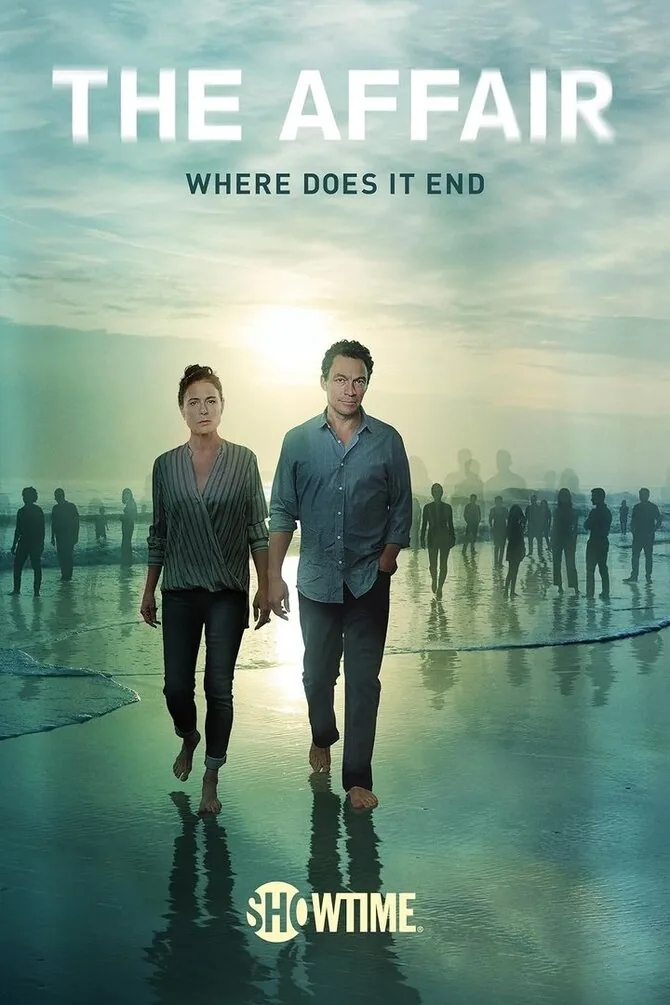
The LNKGO series “The Affair” stands out the most from this septet. There is no weekly case, highway, or operating room. There are two people and a question that gradually becomes more important than the affair itself: can we trust what we are told?
Writer and father of four Noah spends the summer with his family in Montauk and meets waitress Alison. Both are married, both bring disappointments, losses, and their family histories into the new relationship.
But the series creators do what melodramas usually do not: they show the same event from different people’s perspectives. And it is not just the details of the conversation that differ. Characters remember clothes, body language, initiative, sexuality, even the other’s temperament differently. In Noah’s version, Alison may appear one way, in her own memory – almost the opposite. The same happens to him.
The viewer gradually understands that there may be no “correct” version at all. This construction turned “The Affair” into not just a simple drama about infidelity but a series about memory, self-deception, and a person’s ability to rewrite their life story so they can live with it.
The series was also critically acclaimed – “The Affair” won a Golden Globe as the best drama TV series, Ruth Wilson was also awarded a Golden Globe for her role as Alison, and Dominic West was nominated for Noah.
In the five-season story, the initial affair gradually becomes just a starting point for a much broader narrative about marriage, guilt, grief, fatherhood, and how one decision can change the lives of several families.
Read more Dambrauskas’ team, pushing into the Champions League, started the title defense with a victory
“The Affair” – on LNKGO.