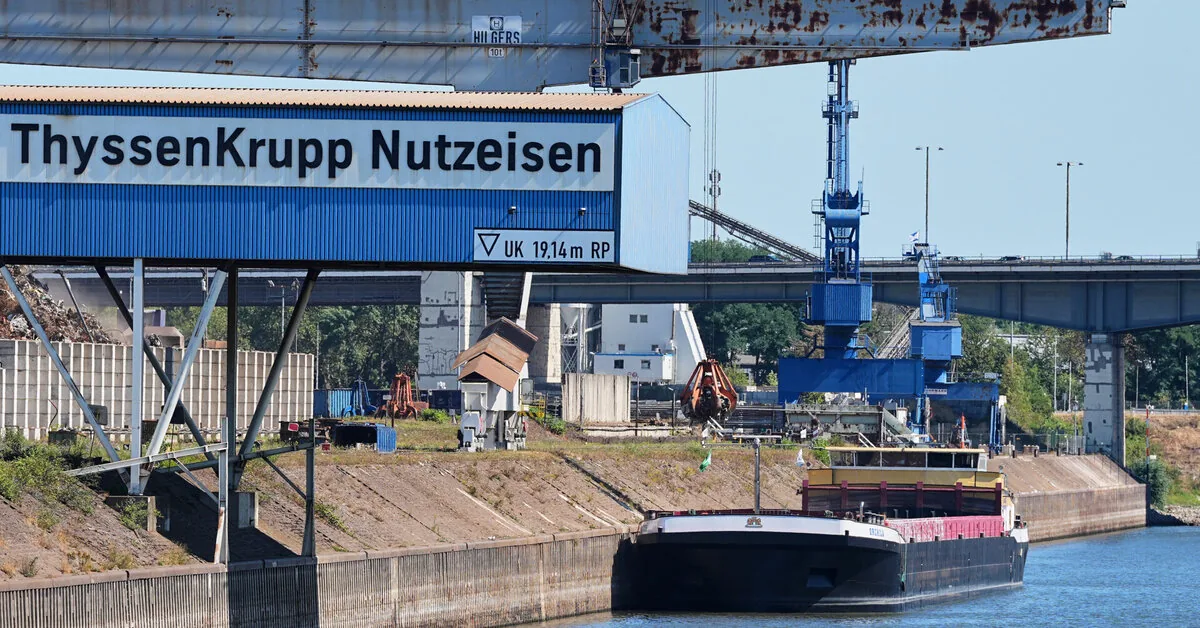
The Rhine, which is the main artery of many German industries, has dried up to a record low level due to rapidly rising air temperatures and low precipitation, including the area around the large Thyssenkrupp plant in the western city of Duisburg.
Read more Adrien Brody and Sean Penn began filming a thriller about sabotage against Nord Stream
The group had already announced that it is partially suspending deliveries of materials such as coal and iron ore to the plant by barges, and instead is chartering private vessels with a shallower draft that can still navigate shallower waters.
Although the company’s CFO Axel Hamann said that so far this has not had a major impact on the company’s operations, he added that the company is closely monitoring the situation.
“We have set up a special working group in the steel division to monitor the situation,” he said. “We have several options to adjust production and plant operation modes to some extent so that we can work longer with the available reserves. We are also examining how much goods can be transported by road using alternative routes.”
The German government temporarily lifted the ban on transporting goods by trucks on Sundays and holidays to help industries that rely on the Rhine for deliveries.
A. Hamann emphasized that there is currently no danger to customer supply. However, he also added that “if the situation really worsens and shipping stops, we cannot rule out an impact on our results.”
This week, the water level in the Rhine River dropped even further, and the German inland waterway shipping association warned that in some places it may become impossible to navigate the river.