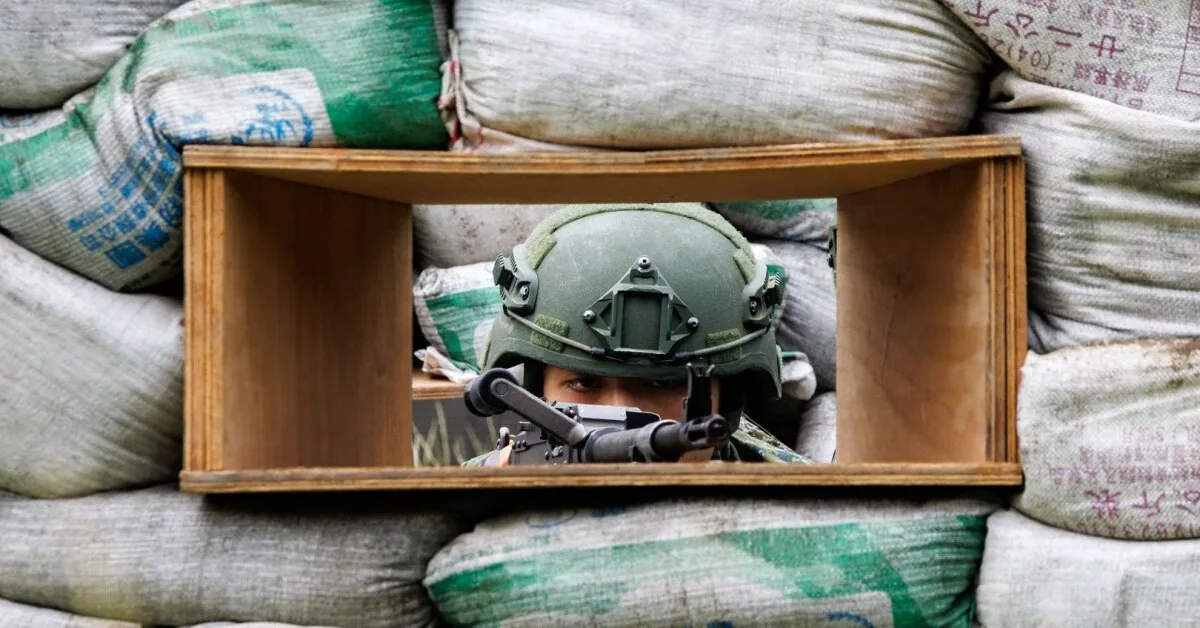
This strategy, developed by American military commanders, was dubbed the “hell’s jaws”: the attacking forces are planned to be “overloaded” with waves of drones, missiles, and artillery, turning an amphibious assault into such a risky operation that Chinese military commanders would not dare to start it.
Read more To the grieving Lionel Messi – a heartfelt message from Cristiano Ronaldo
The island, inspired by the experiences of Ukraine and other recent flare-up wars, is now making every effort to practically implement this strategy.
“Our work in the field of drones and counter-drone measures started relatively late, but we are learning and experimenting along the way,” Lieutenant General Huang Wen-chi, the Director General of Strategic Planning at Taiwan’s Ministry of Defense, told a legislative committee on Wednesday.
However, as he added, the situation has begun to change over the past two years.
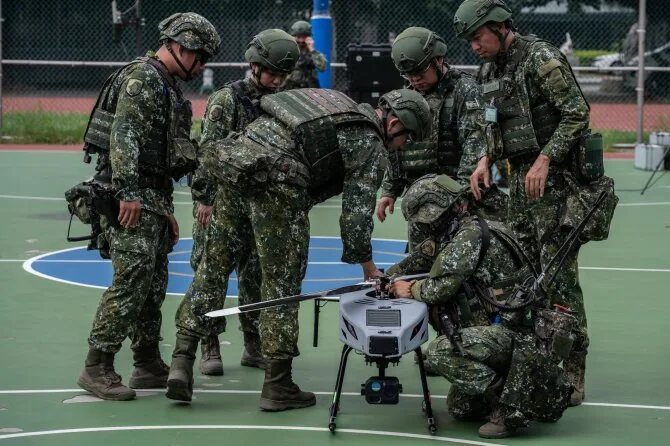
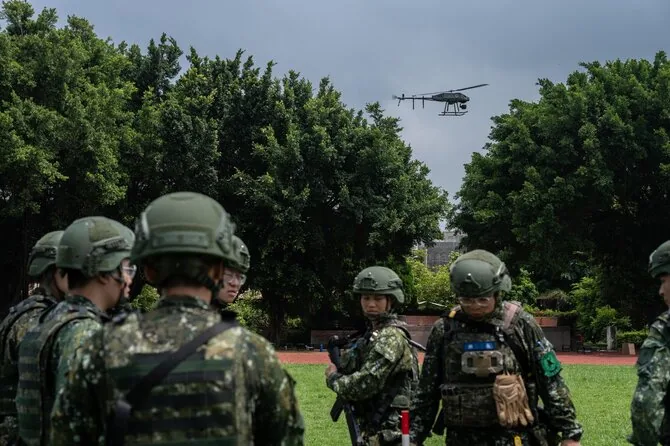
In early August, the Taiwanese military allowed journalists from The New York Times to observe how forces deployed in central Taiwan trained to use drones for reconnaissance – part of the annual “Han Kuang” military exercises on the island, which began on Wednesday and will last 10 days.
Major General Lu Wen-yuan, who helped plan these exercises, previously indicated that they would also teach how to destroy enemy drones.
Many countries around the world are joining the drone revolution. However, Taiwan faces an urgent threat: China, located 170 km away, claims that this autonomous island is its territory.
Chinese leaders talk about wanting to reunify Taiwan peacefully but do not rule out using force. Their threatening warnings are confirmed by rapidly expanding fleets of warships, aircraft, missiles, and drones, as well as much more frequent coast guard patrol missions and amphibious exercises.
Taiwanese officials have not overlooked Ukraine’s battlefield achievements, which were enabled by the use of drone technologies. Taipei is trying to imitate the Ukrainian “David versus Goliath” strategy and use relatively cheap and maneuverable drones in combat to level the playing field against a much more powerful adversary.
“Drones are starting a new phase,” emphasized Max Lo, chairman of Taiwan’s National Drone Industry Association.
“To survive and strengthen its national defense, Taiwan urgently needs drones. But the same is happening worldwide – this is an opportunity for Taiwan,” he added.
Taiwan has set a goal to become a drone industry superpower. According to the government, it is expected that by 2030 Taiwan could produce 100,000 drones per month, half of which would be exported. Taipei also has ambitions for the military to acquire more than 210,000 flying and maritime drones.
Taiwan “understands that drones will be important in all areas and at all stages” in the event of a possible war with China, says Mick Ryan, an Australian retired major general who has studied Ukraine and Taiwan.
Ukraine’s achievements in conducting long-range drone strikes indicate that Taiwan could also attack ships leaving Chinese ports if Beijing launched an offensive, noted retired General M. Ryan.
Most experts assess that the Chinese military is not yet strong enough to easily invade Taiwan. Moreover, recent “cleansing actions” in the top leadership of the People’s Liberation Army have further weakened its readiness. However, China, like Taiwan’s military, is developing fleets of unmanned aerial and maritime drones and investing heavily in technologies to detect and disrupt drone activities.
“Don’t forget that the Chinese are also watching everything the Ukrainians are doing,” added M. Ryan.
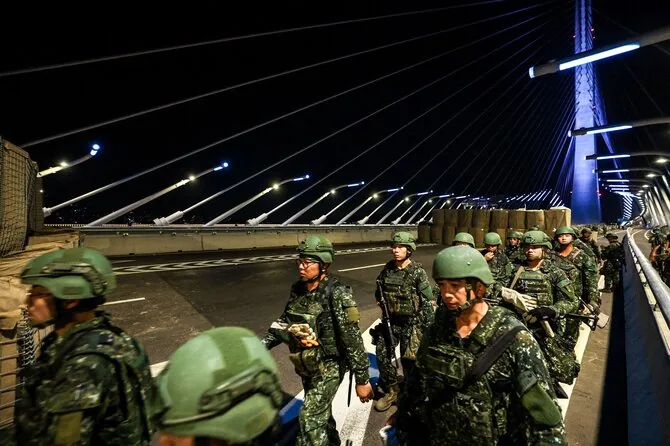
A long road to mastery
Acquiring drones may be the simplest task for Taiwan. However, to master drone operations, Taipei must also restructure its military organization, training, and doctrine.
According to experts, the island’s forces must learn to control drone swarms, quickly assess and share the intelligence they provide, and prevent the enemy from neutralizing them. This requires soldiers to be more agile and autonomous.
“Compared to the past, military operations on the front line of the armed forces must change completely,” said Shu Hsiao-Huang, an associate researcher at the National Defense and Security Research Institute in Taipei, supported by Taiwan’s Ministry of Defense. “In the Russian war against Ukraine, you might fire one shot, but if you stand there lined up and don’t move further, you won’t have the chance to fire a second one.”
Read more Tomas Navikonis after the final – about the Lithuanian record, mistakes, and rising talent
Unlike Ukraine, Taiwan does not face real invasion pressure that would force resource mobilization and change: “It is extremely difficult because they have not experienced the baptism of fire of war.”
However, military units are trying to learn drone tactics. This is one of the main focuses of the ongoing “Han Kuang” military exercises.
The Taiwanese military also released photos from exercises held last month, during which a military unit rapidly took positions to defend islands off the country’s eastern coast and used drones to search for enemy forces.
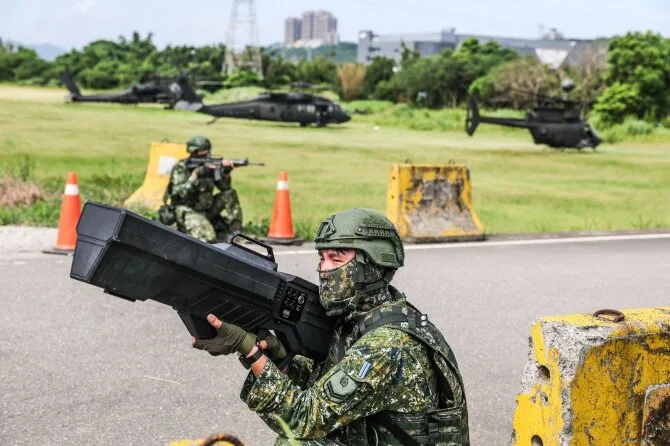
A week ago, Taiwan’s President Lai Ching-te observed exercises in the south of the island, where soldiers tested prototypes of two types of drones designed to attack invading forces.
Additionally, Taipei recently established a Coastal Combat Operations Command, which integrates drones, mobile missiles, and artillery into a coastal defense shield aimed at protecting against a possible Chinese invasion.
Nevertheless, according to many experts, Taiwan still faces a long road before the island can fully cope with the complex challenges of modern warfare.
It risks “focusing too much on technology and not enough on other equally important organizational and doctrinal changes necessary to implement the ‘hell’s jaws’ strategy,” said Stacie Pettyjohn, a senior fellow at the Center for a New American Security and author of a recent study on Taiwan’s drone warfare strategy.
An indispensable drone industry
In the event of an invasion, China will likely try to cut the island off from external support. To survive a blockade, Taiwan must stockpile supplies and expand local unmanned aerial vehicle production capacity, focusing on cheaper short-range one-way attack drones, explained S. Pettyjohn.
Both sides of Taiwan’s divided political scene agree on the need to produce more drones, although their opinions differ on details. Taipei proposed allocating $6.5 billion over five years for drone acquisition. However, two opposition parties holding a majority in the legislature rejected this plan, warning that corruption could increase and resources be wasted.
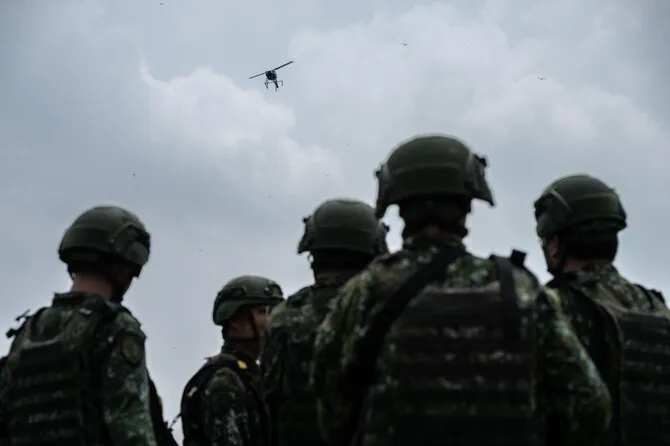
Instead, the main opposition Kuomintang party proposed a $7.4 billion budget over six years with commitments to increase domestic production volumes.
While legislators debate spending, Taiwanese and U.S. drone manufacturers compete for potential orders.
Taiwanese manufacturer Thunder Tiger and American defense technology company Shield AI conducted a test last month of two maritime drone models – these drones are designed to scout and destroy enemy ships. However, Thunder Tiger’s CEO Chen Kwan-ju emphasized that his company seeks clarity and stability of conditions before expanding production partnerships.
At the same time, Taiwan is rapidly increasing drone export volumes, driven by the ambition to become an indispensable supplier to other democratic states seeking to reduce dependence on China-made components, which increasingly raise concerns about delivery disruptions and potential espionage.
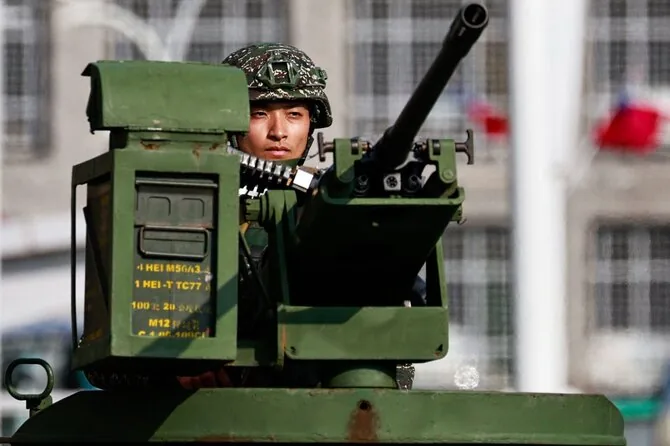
According to Taiwan’s Ministry of Economic Affairs, in the first three months of 2026, Taipei exported drones worth $115 million – exceeding the total drone export volume of 2025. Research shows that the main importer of Taiwanese drones is the Czech Republic, although many drones from there also end up in neighboring Ukraine.
It is likely that exports of components for drones made in Taiwan are even higher. Representatives of American drone companies say that demand for such parts as engines and optical equipment is likely to grow.
“Taiwan has found itself at the epicenter of some of the most important industrial and strategic competitions of our time,” wrote Michael Robbins, president of the International Association for Unmanned Vehicle Systems, in an email. “It is one of the few places in the world capable of ensuring reliable large-scale production of drone components.”
Read more August 13 Horoscope: For one Zodiac sign – intuition will guide the way very strongly
This article was published in The New York Times.
© 2026 The New York Times Company