When you cross the threshold, I hope to see Rima Kielienė. In my mind, I have already created her portrait: an older, well-read woman with whom we will soon talk at length about books, visitors, and what people choose to read while on vacation.
Read more Sunday «Group»: can you group 16 words into 4 categories?
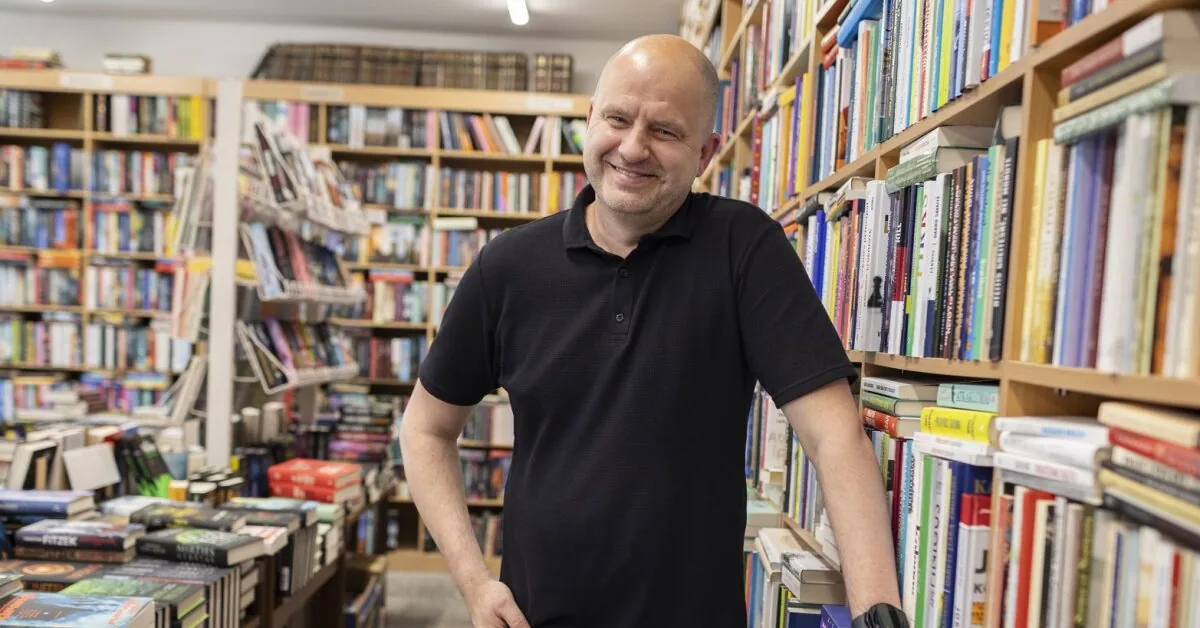
But behind the counter stands Ringaudas Kiela. Slightly confused, I ask how he, who looks nothing like the Rima I imagined, ended up here.
The story he tells turns out to be much more interesting than the scenario I had created in advance – beautiful, moving, and infused with love for books from beginning to end.
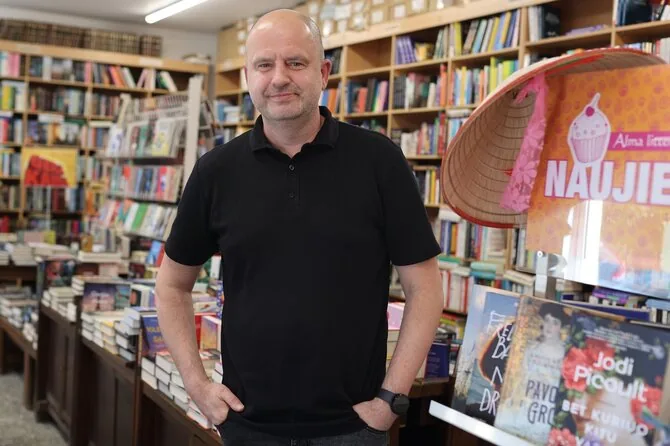
“My mother worked in a bookstore all her life, starting back in the Soviet era. It was where the ‘Rimi’ is now,” Ringaudas begins to tell, pulling out a guide to Palanga’s architecture. “Here,” he points.
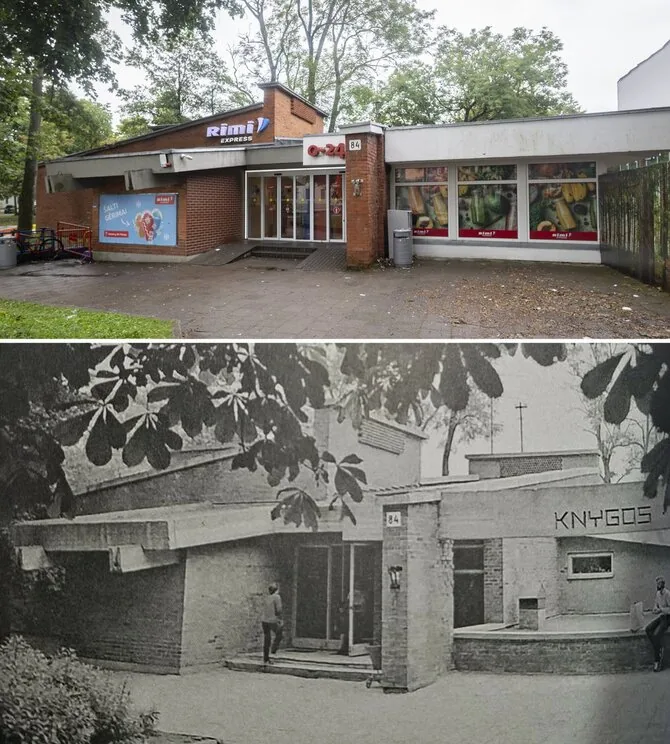
Rima started working in the bookstore at just twenty and devoted about five decades to books. Over time, she became inseparable not only from this place but also from the entire cultural life of Palanga.
“When I was little, I used to play between the shelves and ‘help’ her sell. Mom loved books and visitors very much, and this love was mutual – she was known by both locals and resort guests. Anyone who wanted to choose a book would definitely come to Rimutė for advice.
She would talk to everyone and find the most suitable reading for each. I was constantly hanging around there as a child, so it’s no surprise that when I grew up, enrolled in paid studies, and needed to earn money, mom suggested I work in the bookstore.
I spent five years there. That’s how my career started,” smiles Rima’s son, who later took over the family bookstore.
Ringaudas says that after Lithuania regained independence, the resort underwent many changes. One of them inevitably affected the bookstore.
According to him, Rima actively took care to keep the store open: she handled documents, contributed to transferring the bookstore to the Cultural Center, although she could have tried to take over the business herself.
“Mom was like roots grown into that bookstore – into every letter surrounding it, its atmosphere, the people, and finally the smell of books. She really hoped the bookstore would be preserved even in the years of independence. The government changed, and she was promised: ‘We will definitely keep Rimutė.’ She believed it because she had done a lot to keep the bookstore alive in the first place,” the man recounts.
However, in 2003, the municipality sold the bookstore. The new owners, according to Ringaudas, fired all the employees.
“That was such a blow to mom that her heart gave out, and she ended up in the hospital. She had devoted so many years to that place, managing everything, preserving it. It was the collapse of her whole life,” Rima’s son recalls those events with difficulty.
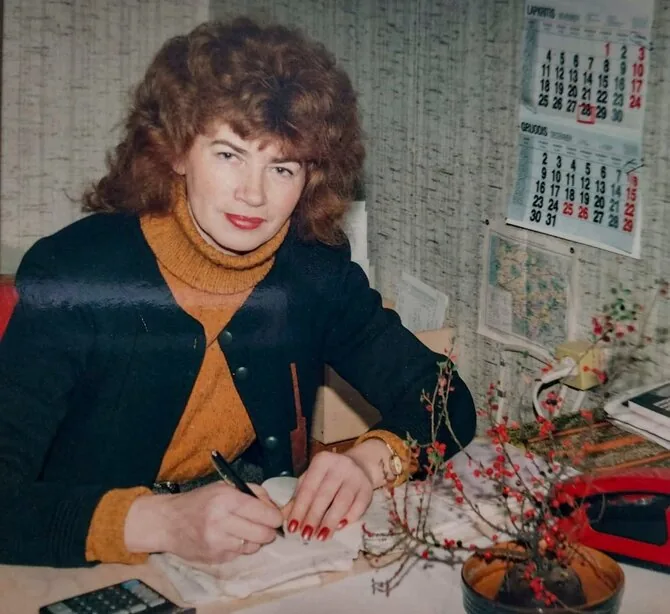
The idea of the bookstore was brought to the hospital
Although Ringaudas himself does not emphasize it, it is easy to understand that the idea of opening his own bookstore was born not only out of love for books but also from an endless desire to save his mother.
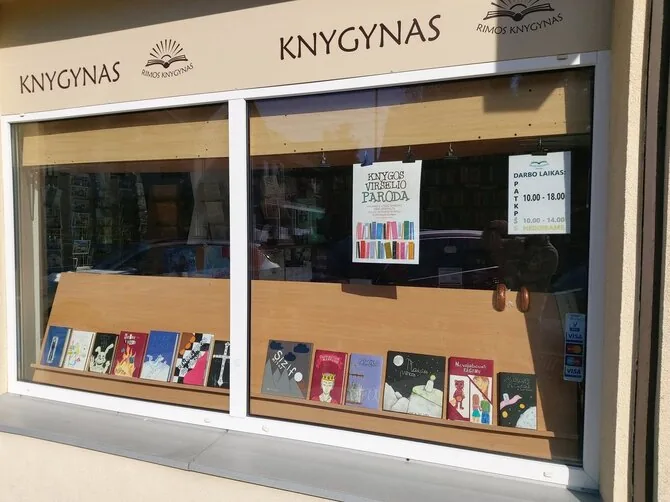
“Mom was still in the hospital when I met a neighbor. She casually mentioned that there were premises for rent in Palanga. I went to see them – the view was not very inviting: everything was messy, cut up, and it was immediately clear that a lot of work would be needed.
But that same day, I rushed to the hospital to mom and suggested opening our own bookstore. She liked the idea.
The beginning was not as hard as it might have seemed. Mom was known not only by readers and townspeople but also by publishing house owners. They sincerely rejoiced to learn that Rimutė was not going to say goodbye to books and would start her own business.
That’s how suppliers, connections, and all the other, much less romantic but necessary things for business appeared.
We worked together as best we could, but it didn’t seem hard – both mom and I found great joy in this work,” Ringaudas recounts.

E-readers did not become the enemy
It would seem that the emergence of e-books should have hit a small, increasingly niche business that had been operating successfully for so many years.
The ability to download the desired work to an e-reader in just a few seconds is indeed tempting, especially since the electronic version often costs much less than the paper one.
But Ringaudas shakes his head: most readers were taken away from bookstores not by e-books but by online shopping.
Sitting on the couch, people can choose the books they want and pick them up from a parcel locker a few days later. No hassle – no need to go to the bookstore, browse the shelves, or spend a long time choosing.
The shortened supply chain allows online sellers to offer much lower prices, and according to Ringaudas, these prices become one of the main factors that draw buyers away from small bookstores.
“If someone comes to me and I see that the price clearly prevents them from buying a much-desired book, I sometimes give a discount. Sometimes such a big one that it’s almost not worth it for me. But I would go bankrupt if I did that every time.
No matter how much I want to, I can’t compete with online prices, so I had to say goodbye to some customers for whom price is the decisive factor. Still, I’m very glad it’s not all of them.
Recently, it’s especially nice to see more and more readers who need authenticity, live communication, and the ability to run their fingers over the spines of books when choosing a book.
These are very valuable customers whom I recognize from afar. I don’t rush them, don’t talk to them, let them be as long as they want. It’s very important to feel the reader, let them be themselves, and not forcefully intrude into their world of silence.
Sometimes such people choose a book themselves, and sometimes they come back several times without buying anything until they finally dare to ask for advice. That is the greatest compliment to me as a bookstore owner.
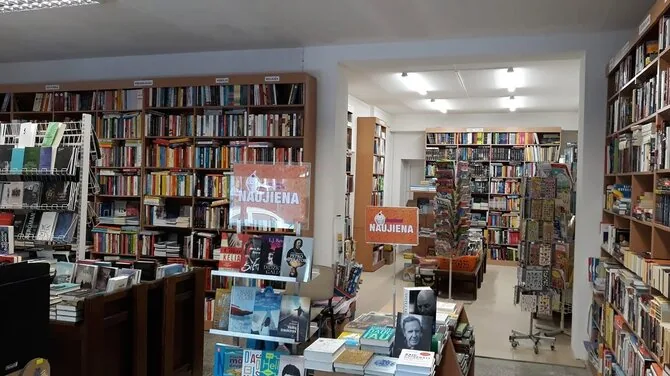
There have been customers for whom I almost had to become a doctor. The person tells how they feel, what is happening in their life, and asks what book to read.
Small bookstores are different. People come here not only to buy a book – they want to talk, consult, discover,” Ringaudas says.
He is convinced that e-books will not replace paper ones but will only complement the libraries of those who love to read.
“Back when e-books started to become popular, there were discussions about whether paper books would survive at all. I remember Rolandas Rastauskas said: ‘That’s it, probably the end for books, e-books are coming.’ I replied that paper books will not be replaced.
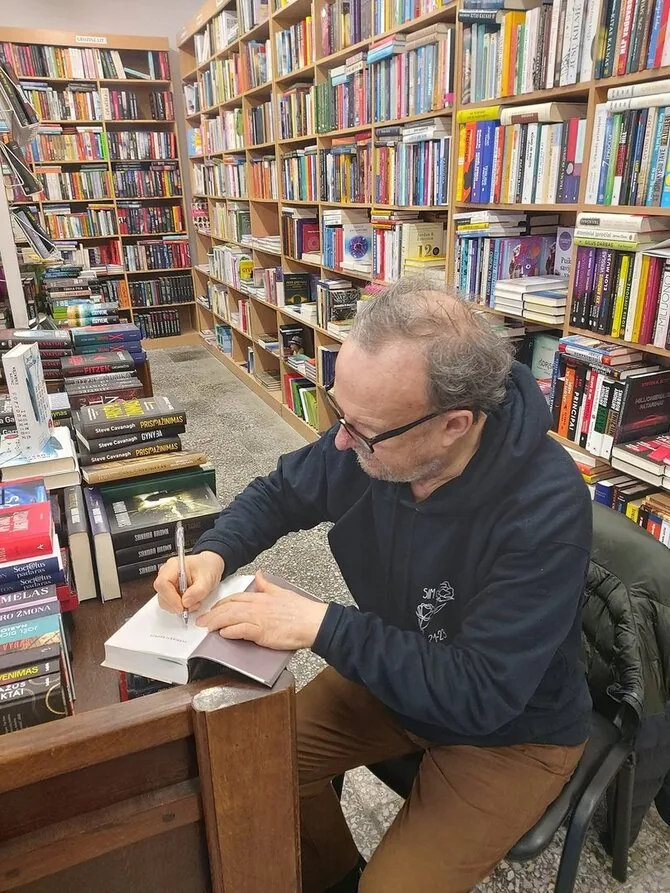
After all, from a young age, we get children used to paper books. They grow up flipping through and touching them. E-books have their place, especially when traveling: when you go away for a month and want to take five books, it’s much more convenient to have everything on one device.
However, e-books never became as popular in Lithuania as in some other countries. Now, audiobooks seem to be gaining popularity more.
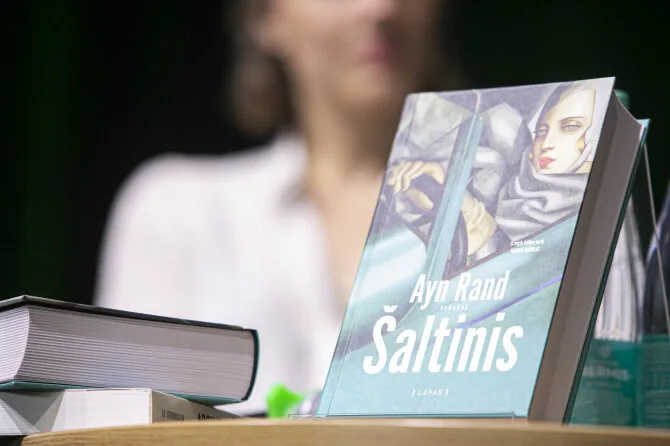
Still, the paper book remains. The whole reading process is important to me personally. For example, during the pandemic, when bookstores were closed, I read ‘The Fountainhead.’ I set a goal to read 50 pages a day – almost like doing a job.
After finishing, I couldn’t read other books for a while because everything else seemed too banal. Now I jokingly call myself the ‘Fountainhead’ ambassador – I don’t know how many people I have persuaded to read it,” Ringaudas smiles.
Visitors – like family
The bookstore owner says that sometimes a book is chosen so aptly that over time friendships develop with the customers who come here.
“Over the years, many have become almost friends. Some come to talk about books, others about basketball or life. We already know each other’s stories.
Read more In Anykščiai district, an injured man was found, next to him – a weapon
For example, this hat was brought to me by a woman who really wanted to read about travel and distant lands. Instead of just selling her a travel guide, I offered a fiction book with a plot twist – a guy moves to live in Vietnam.
She liked the book so much that she eventually decided to visit Vietnam with her whole family. They even brought me souvenirs from there.
This hat is not only a pleasant memory for me. I keep it in one of the most visible places in the bookstore because such things best remind me why what I do is important and how much meaning it can have. Emotionally, it is one of the nicest rewards,” Ringaudas smiles.
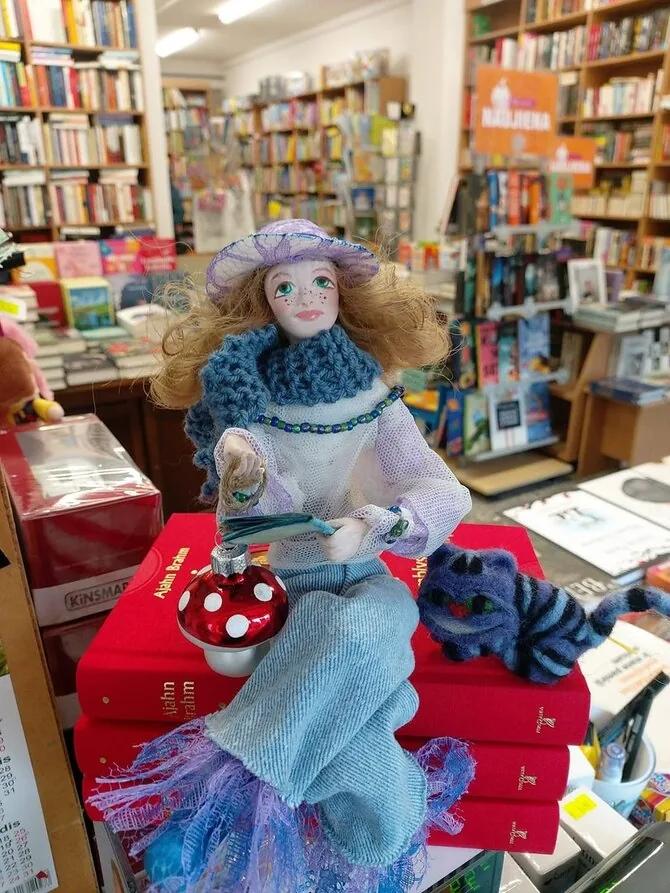
“Here is Alice in Wonderland. A customer gave it to me – she made it herself. When she brought it, I immediately said the doll looked very much like my mom. And everyone who sees it says the same: this is the real Rimutė, guarding the bookstore.
These are very beautiful things. They show that this bookstore is not just a place where money and goods are exchanged.
These are very beautiful things. They show that this bookstore is not just a place where money and goods are exchanged.
That’s how we communicate with the people who come here. They come, and we talk about life. I offer one person a book about psychology, another about spiritual matters, according to each person’s needs. But after talking longer, those needs sometimes change, and the person’s literary horizon expands.
Sometimes a person comes and asks for a book to help overcome burnout. They buy it. But while talking, I also suggest some fiction – about what is most important in life, about essential things.
The person takes the book I recommended and later comes back to thank me. They say that fiction helped them find more answers than a textbook about burnout.
Readers look for answers in books. Psychological books are good, but I personally find more answers in fiction. Reading about characters’ experiences, you try to empathize with them, recognize part of yourself. For me, that path often seems closer and more effective,” reveals Ringaudas, who now runs the bookstore.
The pleasures of a slow bookstore
Ringaudas is convinced that a bookstore should not be about rushing, so he is happy to maintain a different pace here than in most chain bookstores.
“Now everything is very much connected with business, profit, and speed. In most bookstores, a print run is delivered that must be sold as quickly as possible. People buy some books, they suddenly disappear, then everyone rushes to buy others.
Mom and I have always tried not to drive horses like that. Out of respect for the reader, we kept at least one copy of a book until the last moment – precisely for the person who will need it one day.
Sometimes mom and I would already pack unsold books into boxes and prepare to return them to the publisher. Then, as if on purpose, someone would come and ask for exactly that book. We hadn’t sent it yet – so we have it. We were very happy in such cases.
The happiness in a person’s eyes when they find a book they no longer expected to find anywhere is incomparable. That’s why you can still often find last copies in our bookstore that are no longer available elsewhere.
If a book waited on the shelf for a year and was finally bought, I will put another copy in the same place – even if it stands there for another year. It’s important to me that a person comes, asks, and I can say: ‘Yes, I have it.’
Sometimes I keep my own copy and lend it to read – just for free. If the print run is finished, I try to find out who has it, where else it could be found.
There have been times when I promised a customer to keep a book but accidentally sold it. When she came, I had to promise I would still find it. If a book is very important to a person, you try to help,” the bookstore owner shared the behind-the-scenes of running a small bookstore.
Family business
Ringaudas says that his mother was forced to step away from books due to an incurable illness, but even while in the hospital, she maintained a connection with the bookstore through her son.
“Mom retired around 2021–2022, when the stores were closed for the last time during the pandemic. It seemed that then, once again detached from the bookstore, her health began to deteriorate, Parkinson’s disease progressed. Later she suffered an injury and now practically does not get out of bed.
If not for her health, she would still be working at full speed at 76. I still tell her what’s happening in the bookstore, how things are going. Although it is now difficult for her to speak and move, she remains part of this place.
Now I work alone. When mom needed constant care, sometimes a woman helped me with the bookstore so I could go help mom, but basically, I take care of everything myself.
The bookstore is my whole life. I grew up here and can’t imagine myself in another job,” Ringaudas confesses.
He does not hide his hope that one day one of his daughters will inherit the love of books and the bookstore’s helm.
“So far, the youngest shows the most interest. Sometimes she poses with books, presents them. She likes the cash register, interacting with people. The older one has also mentioned wanting to work here, although her character is different.
It would be very nice if the bookstore stayed in the family, but we will see how everything turns out,” Ringaudas talks about future plans.
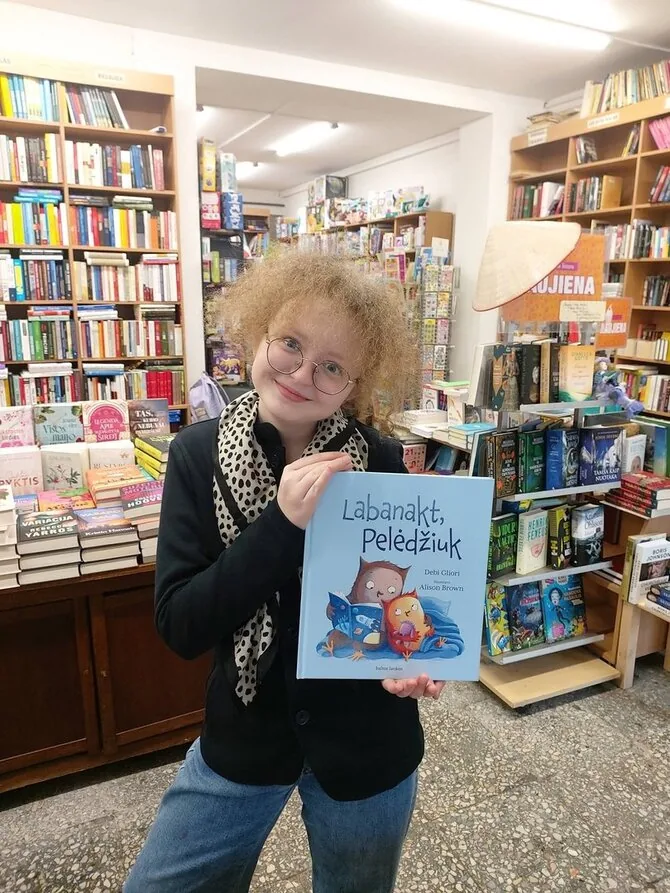
When the person matters more than marketing
The owner of Rima’s bookstore can tirelessly explain the advantages of small bookstores. According to him, over many years of work, a loyal community has formed around this place, and it is one of the most important things that give meaning to the work.
“Many people from big cities say they are tired of faceless bookstores. In large chains, marketing often decides everything: which book to place in one spot, which in another, what needs to be sold at that moment. The bookstore itself loses its face.
That’s why I first want to thank our loyal customers – both locals and people who regularly come to Palanga. Without them, we wouldn’t exist. Such trust had to be earned over many years – by recommending books, communicating, listening.
Some people joke that when they come to Palanga, they go to us first, and only then to the sea. We have many such customers. They are our foundation,” the bookstore owner rejoices.
Ringaudas says that over the years, a unique rhythm of the resort bookstore has been established. Summer is the busiest time when vacationers flock to Palanga.
But there is no shortage of action at other times of the year either. In September, preparations for school begin – ordering exercise books, taking care of stationery. Then Christmas comes. A little rest is possible only after the New Year, but this calm doesn’t last long – as soon as the weather starts to warm in spring, people begin to flood Palanga again.

“When it rains, there are definitely more people in the bookstore. No one goes to the beach, so they walk around the shops. But we couldn’t wish for it to rain all the time – if the weather weren’t good, people wouldn’t come to Palanga at all. There has to be harmony.
Once, an article about us and mom was written during a very rainy summer. Everyone in Palanga complained about the bad weather, and we said that our sales were good. It seemed as if we were the only happy people in the whole city.
Book sales are never just sales. Of course, you need to earn money, maintain the premises, pay the bills. But if you only think about that, such a bookstore probably wouldn’t survive.
The most important thing is the people. When a customer returns, tells what they read, brings a gift from a trip, or admits that the book you recommended changed their decision, you understand why you do all this.
Sometimes you get tired, sometimes it seems like too much. But my life is here. I can’t imagine myself without the bookstore anymore,” smiles the owner of Rima’s bookstore.