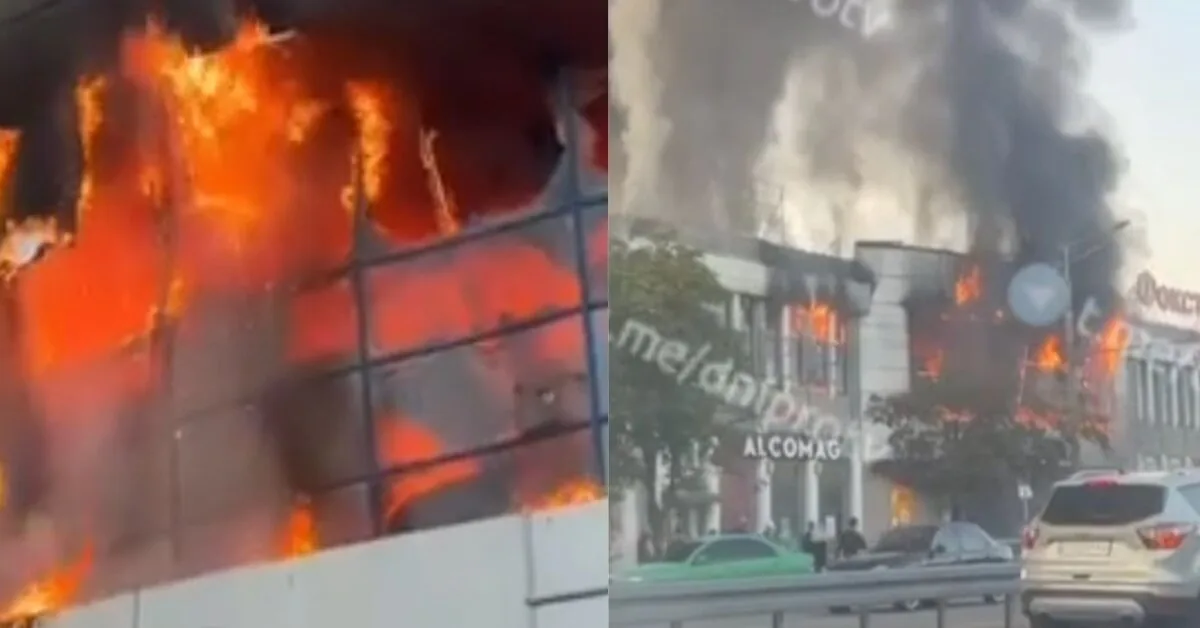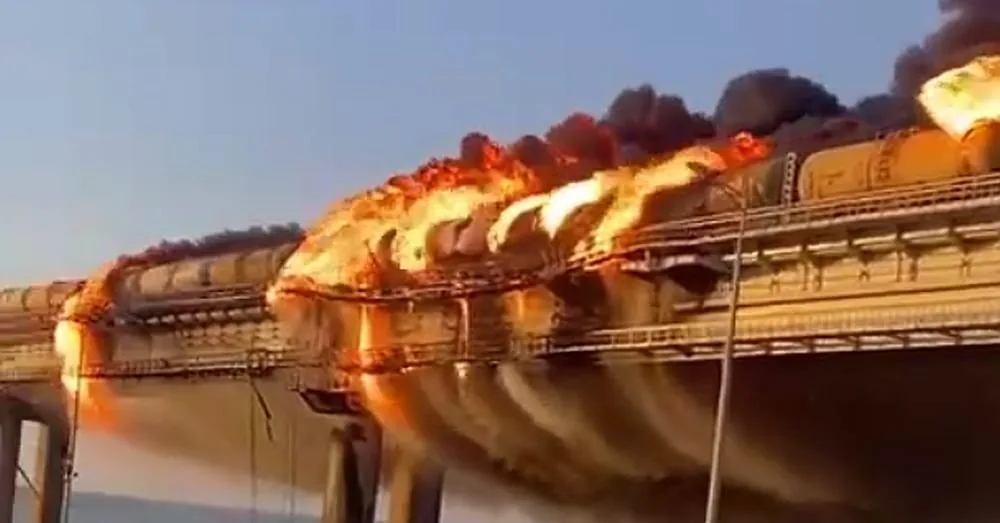
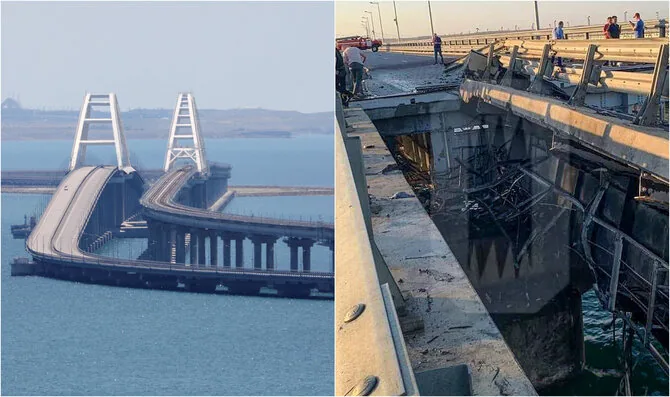
On the morning of October 8, 2022, a truck exploded on the Kerch Bridge connecting Russia with occupied Crimea.
This news spread widely around the world as an example of a successful and unexpected operation by Ukraine against Russia.
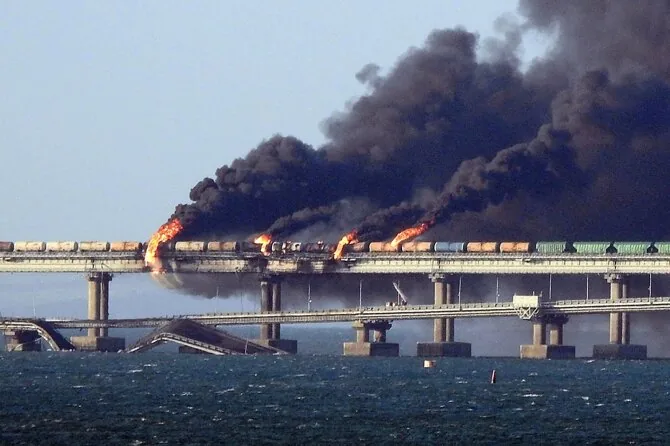
At that time, the truck driver and four other people traveling nearby were killed in the explosion, the road section of the bridge was severely damaged, and the railway tanker cars caught fire.
The head of the Ukrainian Security Service (SBU), Vasyl Maliuk, later publicly revealed details of the operation and confirmed the role of Ukrainian services.
In November 2025, the Southern District Military Court in Rostov-on-Don found eight defendants guilty of being members of an organized group recruited by the Ukrainian Armed Forces to blow up the bridge and sentenced them to life imprisonment.
However, “The Insider,” after examining the case documents, questions whether some of the convicted even knew what they were transporting. Even more interestingly – why did Russian customs and other officials avoid responsibility?
Explosives transported as construction film
According to the Russian investigation version, the explosives were hidden in a shipment of about 22 tons of polyethylene film. The cargo traveled a complicated route – from Bulgaria to Georgia, then to Armenia for customs procedures, then back through Georgia to Russia.
According to “The Insider,” such a scheme was not necessarily suspicious by itself. Armenia and Russia belong to the Eurasian Economic Union, and Russian customs officers confirmed in court that at that time such cargo routes were used in regular business.
The truck carrying the cargo was checked twice with X-ray equipment – at Armenian customs and at the Russian border. The explosives were not detected during any of the inspections.
This is one of the main mysteries of the case. Armenian customs representatives claimed that the X-ray inspection could not have missed metal structures in which, according to the later official version, the explosives were hidden. Doubts were also expressed in court by the head of Crimean customs.
The scheme involved through a chain of acquaintances
“The Insider” reconstructed the chain of people involved in transporting the cargo who were eventually convicted of terrorism.
One of them – farmer Roman Solomko – after the Russian invasion could not bring agricultural equipment purchased in China to his farm in the occupied Kherson region by the usual route. Searching for an alternative route through Georgia and Crimea, he contacted an acquaintance, Denis Kovach.
The latter, according to the investigation, communicated with Mikhail Ciurkalo, who had previously been imprisoned with him and offered to transport construction film to Crimea for money.
Then customs intermediaries, farmers, warehouse owners, and logistics workers became involved in the process. Some of them, according to the case materials, simply helped to reload goods or find the cheapest available truck.
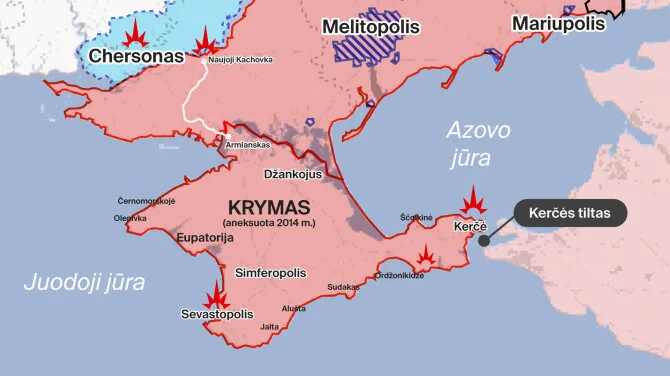
The last driver, 52-year-old Machir Jusubov, took the cargo on the evening of October 7 and headed towards Crimea. The next morning his truck exploded on the bridge. The driver himself died.
Initially, investigators called them witnesses
According to the convicted, none of them tried to hide or flee after the attack. Some did not realize for several hours that the truck that exploded was the one associated with the cargo they had organized.
Read more Tragic accident in Telšiai district: woman killed
They were questioned by FSB and Investigative Committee officers and initially released.
One participant in the case told “The Insider” that the head of the investigative group from Moscow allegedly told them: “We have no claims against you – you are witnesses, you were kept in the dark.”
However, after a few days, five of them were detained. Others were later arrested as well.
“It was a shock for us. A minute ago we were free people, and now we are accused of terrorism?” one of the convicted said.
According to them, investigators repeatedly said for a long time that they understood the accused were not the real organizers of the operation and urged them to “just wait.”
The investigation version appeared after an interview with the head of Ukrainian intelligence
“The Insider” also draws attention to another circumstance.
Although about 60 investigators worked on the case, about a hundred witnesses were questioned, and about a hundred expert examinations were conducted, a specific official version of what explosives were used and how they were hidden appeared in the case materials only after Vasyl Maliuk’s interview in 2023.
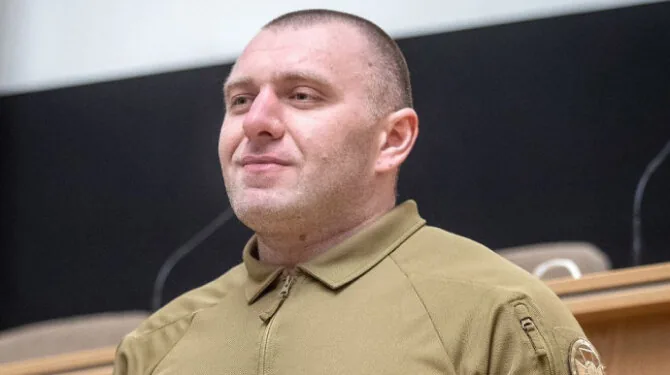
At that time, the SBU head said that the explosives were hidden in metal cylinders inside rolls of polyethylene film.
Later, Russian experts came to a very similar conclusion: the decision mentions an explosive charge equivalent to about 10 tons of TNT and a GPS system used to activate it.
One participant in the case told “The Insider” that he got the impression that investigators “adapted their version to the Ukrainian statement.”
The court: they “could not not understand”
The case began to be heard behind closed doors in February 2025.
On November 27, Judge Valeriy Opanaska found all eight defendants guilty of a terrorist act, smuggling explosives, and other crimes.
One of the court’s main arguments was that the defendants, due to their education, business experience, and the circumstances of the cargo documents, “could not not understand” that something else might be hidden in the shipment.
For example, the court noted that R. Solomko knew that one of his contacts had previously been convicted and called himself a smuggler, and false information was provided in the cargo documents. The cargo also bore Ukrainian markings.
The court also considered other violations in the defendants’ lives – tax arrears, working without necessary permits, or traffic violations – as evidence that they only gave the impression of “law-breaking citizens.”
All were sentenced to life imprisonment.
“The Insider” notes that at the same time, no Russian customs, border, or security service officials through whom the cargo entered the country were held accountable.
“I am not a convicted criminal – I am a prisoner of war”
The convicted deny their guilt and are awaiting appeal.
One of them told “The Insider”: “We were convicted of one of the most serious crimes, with which we have absolutely nothing to do. And the people who put us in the dock know this very well.”
He said he could not perceive imprisonment as punishment for his actions.
“I am not a convicted criminal – rather, I am a prisoner of war,” the man said.
Another convicted said he lost faith in a fair court decision during the trial.
“Everything was arranged so that I could not defend myself. The verdict only finally confirmed what I was told from the very beginning: everything was already decided,” he said.