Members of the Lithuanian swimming team are flocking to Paris from different places.
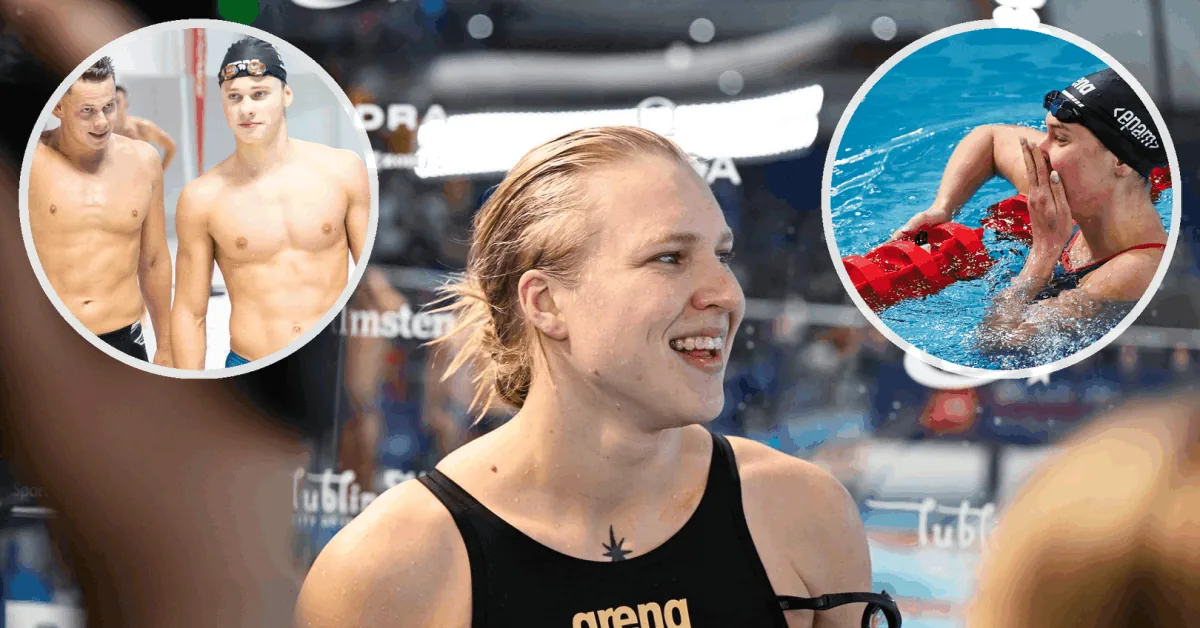
Rūta Meilutytė has recently been training in Kaunas, where the most decorated swimmer of our country was preparing for the European Championship according to a personal plan.
Read more You can lose all your tomatoes if you forget these 5 tasks in August
Some of our swimmers have recently been training in Mallorca, while the core of the team was again preparing in the Sierra Nevada highlands in Spain.
During the conversation, the Lithuanian swimming team coach Paulius Povilionis was also there, who, with the help of ten other specialists, will assist the team of 19 swimmers at the European Aquatics Championships, whose swimming competitions will start on Monday and last throughout the coming week.
- The European Aquatics Championships in Paris began on July 31.
- The swimming competitions, in which 19 of our swimmers will start, will take place from August 10-16.
- Lithuania had two representatives in the diving competitions – Sebastianas Konecki took 26th place diving from the 3 m springboard and 28th place from the 1 m springboard. Gertas Varneckis, who debuted at the championship, finished 31st in both events.
– Paulius, how did the last days of preparation for the championship go, was it not too hot in Spain? – 15min asked the Lithuanian swimming team coach.
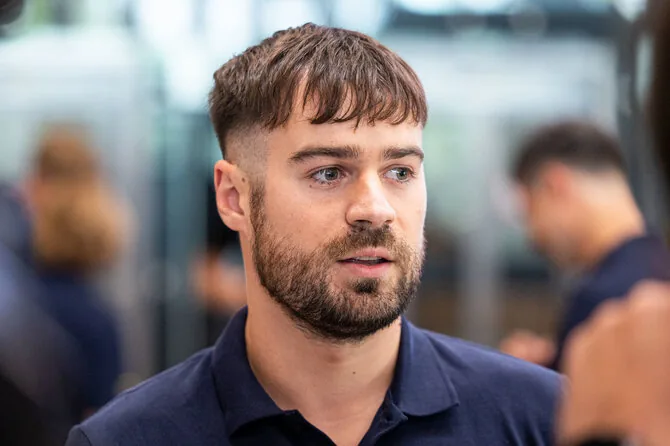
– No, everything was very good. As far as I know, it has been hotter in Lithuania recently, while in the Sierra Nevada mountains it was 21-24 degrees during the day. The sun is strong in the mountains, but this was one of the best camps in terms of conditions. It was not too hot, and the Spaniards finally, after many of our camps there over the years, installed air conditioning systems. Everything is only getting better.
– And is the sporting form of Lithuanian swimmers also improving as they approach the European Championship?
– The further we go, the better. We avoided injuries or serious setbacks, everything is going according to plan. Now we will see if we have prepared as expected.
– For the first time, 19 swimmers from our country will compete at the European Championship. How did you manage to assemble the largest team?
– That’s how the selection worked. We usually consider the results of the twelfth places from the last three championships, which would more or less guarantee swimming in the semifinals. Of course, the situation has changed – some countries will send stronger teams, the competition has increased. This will be a stronger European Championship than in 2024.
On the other hand, more and more of our swimmers are rising to the European level, at least compared to recent championships. That’s why so many of them made it this time.
– Would I be wrong to say that the most realistic hopes for winning medals at this European Championship will be in three events – Rūta Meilutytė in the 50 m breaststroke, Kotryna Teterevkova in the 200 m breaststroke, and the Lithuanian men’s 4×200 m freestyle relay?
– Yes, those will probably be the highlights. The girls can win individual medals, and my main goal as a coach is the relays. We are a small country in terms of population, but we can compete at the world level with the biggest swimming stars in relays.
We aim to prepare a team for future competitions, the 2028 Olympic Games, and we want to assemble competitive relay teams for Los Angeles – both men’s and women’s.
– How does Rūta Meilutytė look currently, having not competed in any events this year and preparing for the championship individually?
– I don’t have much information. We travel through camps and competitions ourselves, so we often haven’t seen each other, but as far as I know, she is preparing according to an individual plan and will try to defend her title.
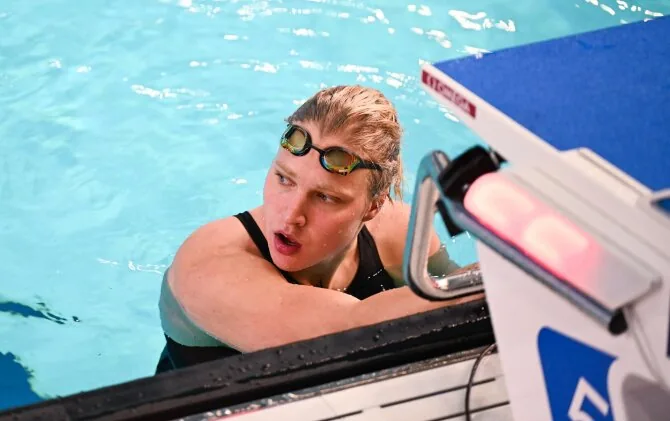
– Has her competitive field changed in the 50 m event?
– We don’t have the full list of swimmers yet, but there will be strong competitors. The same Estonian Eneli Jefimova, who beat Rūta in the fight for gold at the last European Championship in the 25 m pool in Lublin.
That’s only 50 meters. The start, the dive, underwater movements after surfacing, a few strokes… anything can happen. Knowing Rūta’s talent and explosive power, which she should not lose soon, I think Rūta will compete for first place.
– And how is Kotryna Teterevkova, our second swimmer who won a medal at the last European Championship in Lublin (bronze in the 200 m breaststroke) preparing?
– She, like Jokūbas Keblys and Mantas Kaušpėdas, has recently been training at a camp in Mallorca.
I think she can compete for a prize in the 200 m. It will be interesting to see the difference for her between the “short” and “long” pool. She swam well in the 25 m pool, but also looked good in the 50 m pool. Still, it won’t be easy in the “long” pool because the competition is tougher, as this year’s results show – a couple of girls swam faster than 2 minutes 20 seconds, while Kotryna’s record is 2 minutes 22 seconds. Of course, if Kotryna shows her best time, she can compete for a medal.
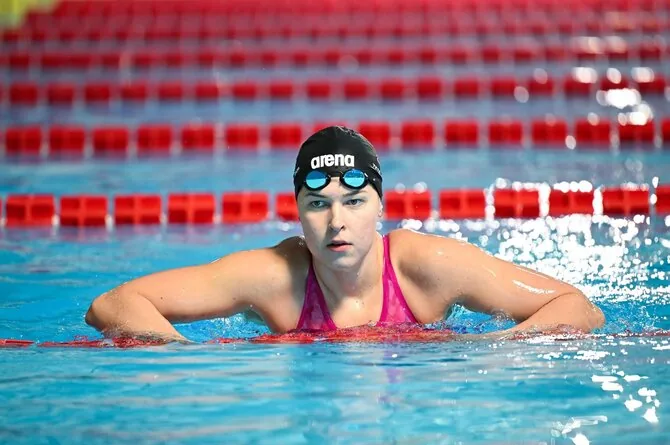
– How would you explain the Lithuanian swimmers’ phenomenon in breaststroke – from the times of Lina Kačiušytė and Robertas Žulpa and Arvydas Juozaitis, to now having the strongest athletes in this distinctive swimming style?
– I think the reason lies with those from whom it all started – Kačiušytė, Žulpa, who won the first Olympic gold medals (in 1980), causing a big stir. They ended their careers, and often athletes who swam breaststroke later become coaches, training other breaststroke swimmers.
Breaststroke is a very technical swimming style, probably the most technical of all. Working with athletes swimming this style probably requires great patience and the most time from coaches to train them as well as possible.
We have had and still have coaches who do not necessarily work with 15-20 athletes but devote the most attention to one and have the patience to polish them for many years. For example, Giedrius Titenis worked mostly with coach Žilvinas Ovsiukas for many years, and Kotryna was coached for many years by Michailas Romanovskis. Rūta was initially coached by Giedrius Martinionis, then Jonas Rudd developed her for a long time in Plymouth. Of course, Rūta is an exceptional talent.
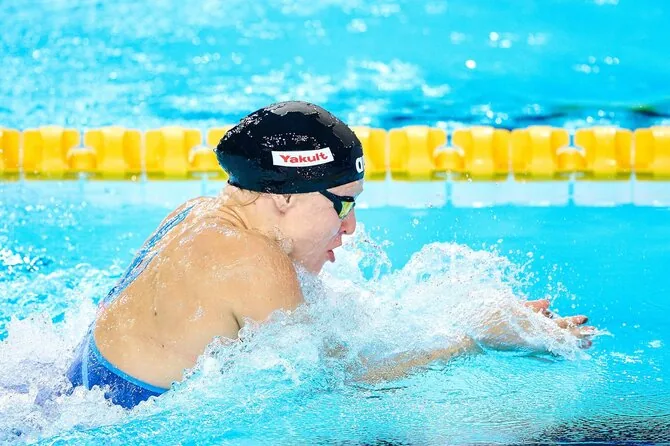
The stir also contributed, especially after Rūta’s success, when everyone wants to be “breaststrokers” more. I might not call it a phenomenon, but we are close to it.
– In recent years, even five of our swimmers have shown high-level results in the 200 m freestyle distance, but due to strong competition, not all made it to the semifinals in Lublin last year (only two swimmers from one country can advance from the heats). Who is our leader in this distance now?
– There is no clear leader. This year, the best result was shown by Tajus Juška, who was recently second at the European Youth Championships. Tajus swam under 1 minute 45 seconds (1 min 45.87 sec), which is elite level; in previous (adult) championships, this could even win a medal.
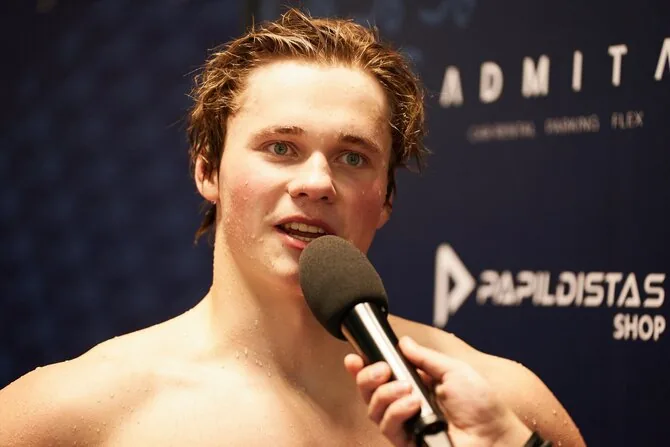
On the other hand, this says nothing, because many strong athletes will swim this time. Looking at the statistics, about 10 athletes swim under 1 min 45 sec. Of course, it may not be the same at the European Championship, nerves will come, and other circumstances will contribute.
I think Danas Rapšys can also swim well. Although an injury prevented him from testing his strength this year, he now looks good.
As does Tomas Lukminas, who was just a hair away from a prize place at the European Championship in the 25 m pool in Lublin last December. Tomas also had no opportunities to compete in serious competitions this season, so it will be interesting how he manages to transfer his result from the “short” to the “long” (50 m pool) water.
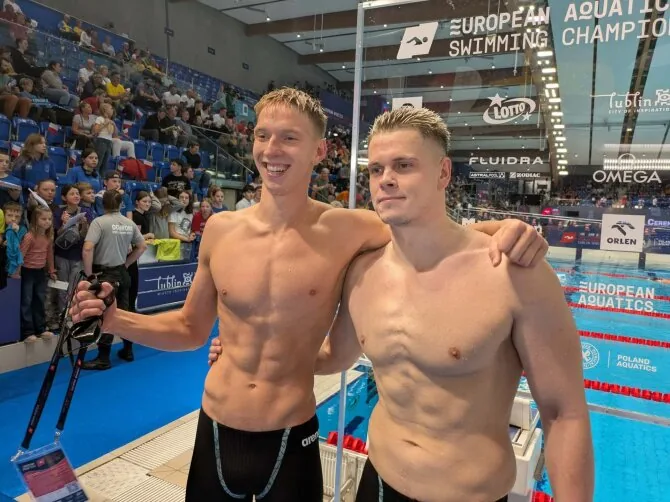
There are also Tomas Navikonis and Kristupas Trepočka – the latter has the second-best result this year (after T. Juška).
I believe the relay will be strong and competitive, and it is hard to single out a leader because everyone can swim at a similar speed. We will see how Tajus feels a month after his main season competition (the European Youth Championships), what the most experienced Danas still has hidden inside, as well as Lukminas, Navikonis, and Trepočka.
I think the 200 m final for us will be in the morning (during the heats), when the fight for advancing to the next stage will heat up among our swimmers. Each of them can reach the final, but first, they will have to beat each other.
– There are also several debutants at this level of competition in the team. What would you advise to pay attention to in Paris?
– I would say that you should watch not only individual athletes but also relays. At this European Championship, we will compete for the first time in mixed relays 4×100 and 4×200 m freestyle. Sylvia Statkevičius and Ieva Jurkūnaitė, who narrowly missed a medal at the European Youth Championships, will swim in those relays. We will add strong men, of whom we have a large selection – whether Danas, T. Navikonis, or T. Lukminas.
Also, for the first time, the women’s 4×200 freestyle relay will swim. The goal of young swimming debutants is to qualify for the Olympic Games. It is very difficult to qualify individually, but we can have a whole team.
After many years of break, after Ugnė Mažutaitytė, we have a backstroker Emilija Pociūtė raised in Lithuania, who is very fast in sprint events and recently took fifth place at the European Youth Championships. Dominikas Grudinskij will debut in the 200 m backstroke event; he was fourth at the European Youth Championships.
We want to see how athletes who were among the youth elite will integrate into the adult European Championship, how they will handle psychological pressure, and compare the difference between youth and adults.
- Composition of the Lithuanian swimming team:
- 1. Rūta MEILUTYTĖ (breaststroke)
- 2. Kotryna TETEREVKOVA (breaststroke)
- 3. Danas RAPŠYS (freestyle)
- 4. Ieva JURKŪNAITĖ (freestyle)
- 5. Ieva NAINYTĖ (freestyle)
- 6. Ieva VISOCKAITĖ (freestyle_
- 7. Sylvia STATKEVIČIUS (freestyle)
- 8. Emilija POCIŪTĖ (backstroke)
- 9. Andrius ŠIDLAUSKAS (breaststroke)
- 10.Tajus JUŠKA (freestyle/butterfly)
- 11.Tomas NAVIKONIS (freestyle)
- 12.Tomas LUKMINAS (freestyle)
- 13. Jokūbas KEBLYS (freestyle)
- 14. Aleksas SAVICKAS (breaststroke)
- 15. Kristupas TREPOČKA (freestyle)
- 16. Mantas KAUŠPĖDAS (backstroke/butterfly)
- 17. Džiugas MIŠKINIS (freestyle)
- 18. Barbora MILEIŠYTĖ (butterfly)
- 19. Dominikas GRUDINSKIJ (backstroke)
– Can you imagine what the environment will be like at the European Championship, where the swimming competitions will take place in a different pool than at the Paris Olympic Games?
– We will swim in the pool where the Olympic diving, water polo, and artistic swimming competitions took place. It is also an Olympic center, but there should not be a big difference.
Conditions and circumstances are always different; this time in Paris it should be very hot, so we will need to get used to the heat. Our athletes like air conditioners, so we will need to talk so that after coming back from outside, where it will be 35 degrees, they don’t end up somewhere at 16 degrees in the bus or other spaces. We will swim in an indoor pool, so we will need to warn so that no one gets sick again in the summer.
It is always difficult to quickly adapt to new conditions, but we focus on preparation, not conditions. It is important that there is water, at least 2 m deep, and we can swim.
– This championship is the most important competition of the year for all swimmers, and there will be no shortage of stars: Sarah Sjostrom returns after having a child, Leon Marchand after an injury, Adam Peaty competes again at the European Championship after a long break, as well as Yulia Yefimova (despite Russia’s war in Ukraine, swimmers from the aggressor country have recently been allowed to compete under a neutral status). What interests you most as a swimming specialist?
– I am very interested to see how Leon Marchand will look. In some interview, I read that on the first day, when the 400 m individual medley competition takes place, the Frenchman will try to break his own world record. However, I read that he recently withdrew from some competitions due to injury.
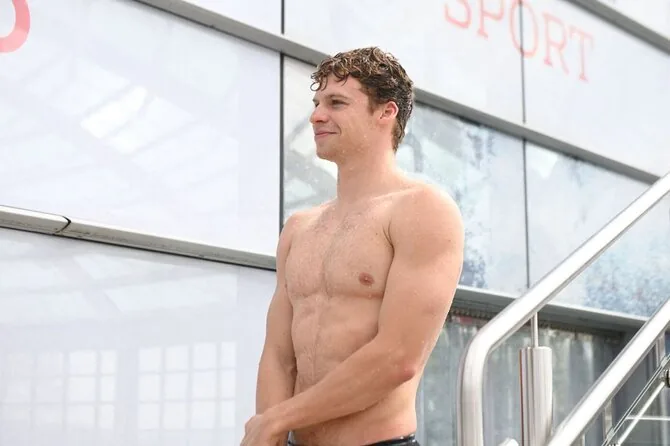
I followed Adam Peaty at the Commonwealth Games; the Brit was not very impressive there, so it will be interesting to see how he recovers in a few weeks.
Another interesting start is Marrit Steenbergen – the Dutch swimmer broke the world record in the 100 m freestyle this summer.
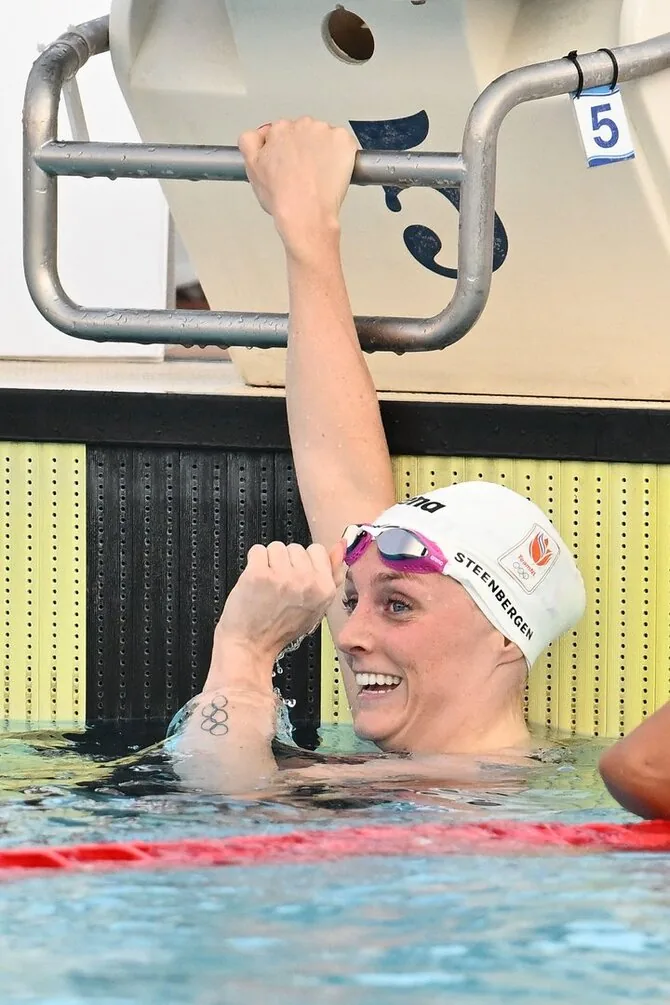
On the other hand, we will not look at the stars. They are around – for example, we trained together with the Italian Thomas Ceccon, and now the Australian Kyle Chalmers, who should be among the spectators at the European Championship, camped nearby.
For us, the most important thing is to gain as much experience as possible, to reach the semifinals as many times as possible, to collect ranking points that help secure funding – which will be needed to prepare for next year’s World Championships, where we will already compete for Olympic quotas.
We want to perform as well as possible, not forgetting that this is an intermediate stop on the way to the Olympic Games. So in Paris, we will focus most on our results.