
Previously, the United States repeatedly assessed that V. Putin would not provoke NATO members until the war in Ukraine ended. However, their assessment changed earlier this year, as the Kremlin’s host faced increasing pressure in Ukraine and domestically.
Read more Druskininkai try to fix the storm damage
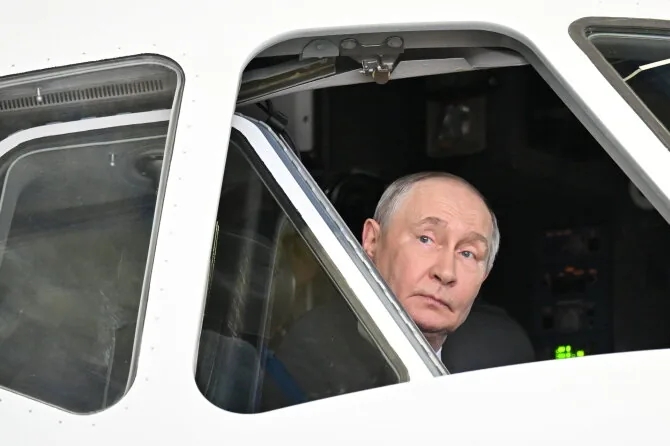
Ukrainian drones cause confusion both in the Russian military and the oil industry, while V. Putin’s forces on the front make little progress and suffer heavy losses.
According to U.S. officials, V. Putin’s goal in attacking any NATO member while the war against Ukraine is ongoing would be to divide the Alliance.
“The question is how the United States would respond in such a case,” Heather Conley, senior analyst at the American Enterprise Institute, told The Wall Street Journal, commenting on a possible Russian invasion. “The [Russian] goal has always been to sow doubt about NATO’s reliability and to separate the United States from its allies.”
Timing and scenario of the attack
V. Putin is struggling to consolidate his gains in Ukraine, so U.S. intelligence officials predict that Moscow may soon intensify aggressive actions against European allies.
Officials are concerned that a cornered V. Putin could become even more dangerous.
“Possible threats range from a cyberattack against a NATO country or sending unidentified armed groups to seize territory to a limited invasion of the Alliance’s eastern flank. According to U.S. intelligence assessments, any Russian actions could occur during the period from this autumn to 2029,” the article states.
The likelihood of the most extreme scenario—a limited ground invasion—remains low, but it is reported to be increasing over time. Such a move has always been considered unlikely because it would unquestionably trigger NATO’s Article 5, obliging members to collective defense. However, Article 5 does not provide for such a clear NATO response to cyber or hybrid threats.
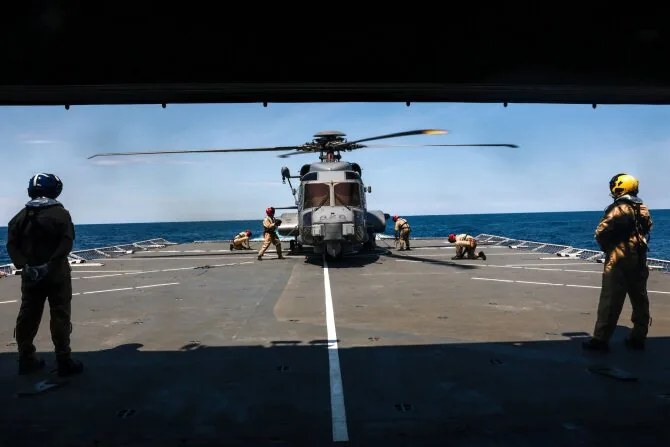
“We constantly consider various scenarios and prepare for them. NATO is watching us, we are ready to deter and defend when necessary, and we continue to demonstrate this,” emphasized NATO representative Colonel Martin O’Donnell.
The Baltic states and Poland are considered the most likely directions for a possible Russia-NATO confrontation. Such assessments come from both Western intelligence and war analysts and the leadership of NATO’s eastern flank countries.

American intelligence has previously warned Warsaw about the risk of possible Russian provocations against Poland’s critical infrastructure, aimed at testing NATO’s reaction.
The U.S. military itself currently lacks certain critically important ammunition needed for a potential future war with Russia or China. The U.S. has heavily depleted these weapons’ stocks due to transfers to Ukraine after the Russian invasion, as well as due to the prolonged U.S. war against Iran.
Read more Ukraine hit the «Wildberries» warehouse far from the front line
Other officials said the danger arose from the stocks of long-range Precision Strike Missiles (PrSM), Army Tactical Missile Systems (ATACMS), and short-range surface-to-air Stinger anti-aircraft missiles. However, President Donald Trump insists that the U.S. has enough of everything and threatened to imprison those who say otherwise.
“False flag” operation
Lithuanian military intelligence also has data that Russia is considering attacks on critical infrastructure in the Baltic region, using Ukrainian-made drones for this purpose. This information was confirmed to the portal 15min by the Minister of National Defense Robert Kaunas.
“We have data that Russia is considering conducting unconventional kinetic attacks on critical infrastructure in the Baltic region. It is likely that Russia could use Ukrainian-made drones for this,” the minister told 15min.
According to him, this would be a so-called “false flag” operation, where a state carries out an action but creates the impression that it was done by another country.
“Zero phase”
As noted by experts from the Institute for the Study of War (ISW), Moscow continues its “Zero Phase” campaign, aimed at creating psychological conditions for possible provocations against NATO in the future.
Part of this campaign includes Russian “false flag” provocations, including drone incursions, sabotage, electronic warfare measures, and disruption of operations and flights.
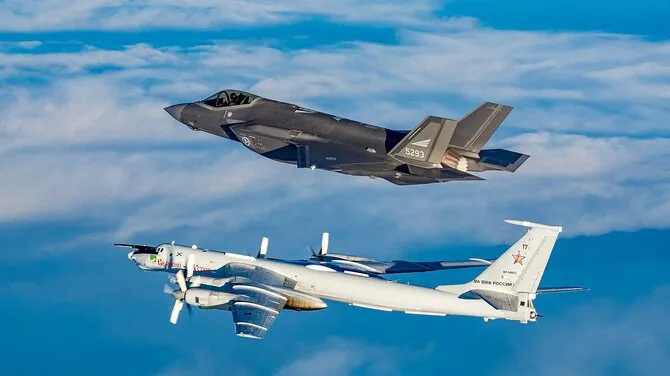
Analysts in the latest report drew attention to warnings from Lithuanian officials about a possible Russian “false flag” operation against NATO’s eastern flank, using drones taken from Ukraine.
Similar warnings were expressed by Polish Deputy Prime Minister and Defense Minister Wladislaw Kosiniak-Kamysz, who noted that Russia could use Ukrainian drones for a sabotage attack against NATO.
Ukrainian experts also stated that Russia has likely already begun using captured Ukrainian drones for its provocations.
Meanwhile, Latvian Defense Minister Raivis Melnis stated that Riga currently sees no signs indicating possible attacks on specific critical infrastructure objects in the country.
According to analysts, Russia continues its “Zero Phase” campaign to create conditions for possible provocations against NATO countries.
Moscow constantly violates the airspace over the Baltic Sea and may do so using Ukrainian drones as part of an information operation and/or a “false flag” provocation to test NATO’s reaction.