







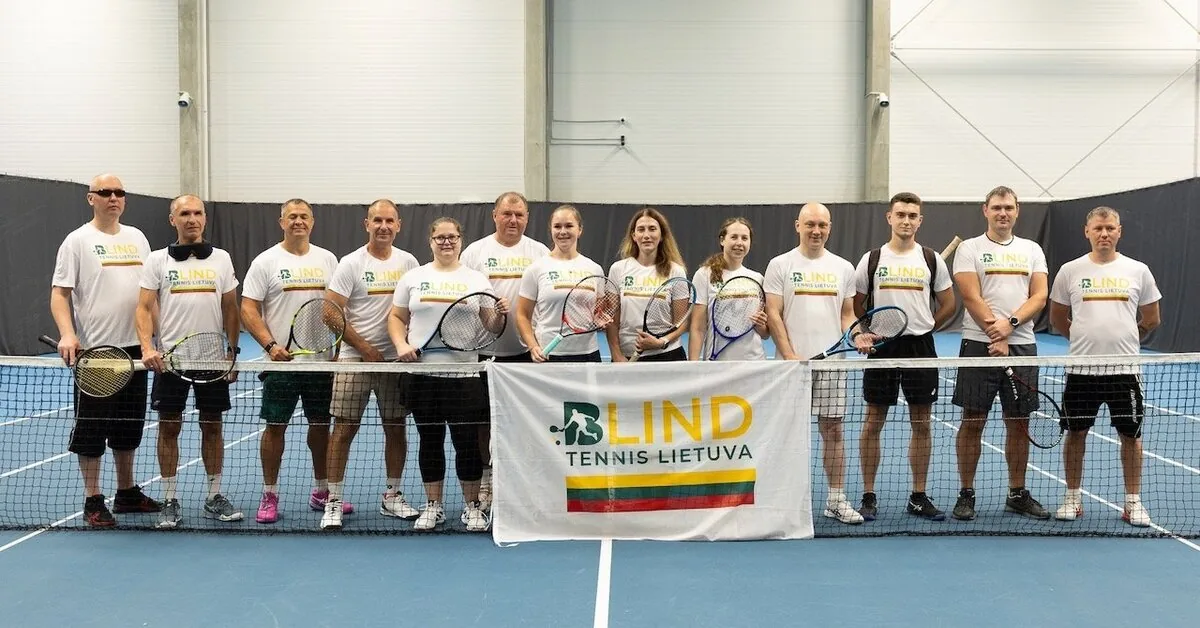
Coaches Aidas Danilovas, Tomas Butvilas, Arūnas Rozga, and Nikita Babenko worked with the national team at the camp. There were two training sessions each day of the camp, with educational activities in between focused on sports psychology, tactical game nuances, and physical preparation.
Read more The Competition Council decided not to investigate grain drying pricing
More attention to small details
According to Aidas Danilovas, at this stage of preparation, the most important thing is no longer improving basic skills, but the small details that often determine the outcome of the match.
“There is little time left until the World Championship, so now we work less on technique and pay more attention to tactics, physical and psychological preparation, non-standard situations, and similar decisions on the court. It is precisely these details that often determine who will be stronger on a given day in top-level competitions,” says A. Danilovas.
The first day of the camp, according to him, was very intense, and the athletes have already begun to feel physical fatigue.
“However, that is exactly what such camps are for – to recharge batteries and get the maximum load. So that the competition will be much easier.”
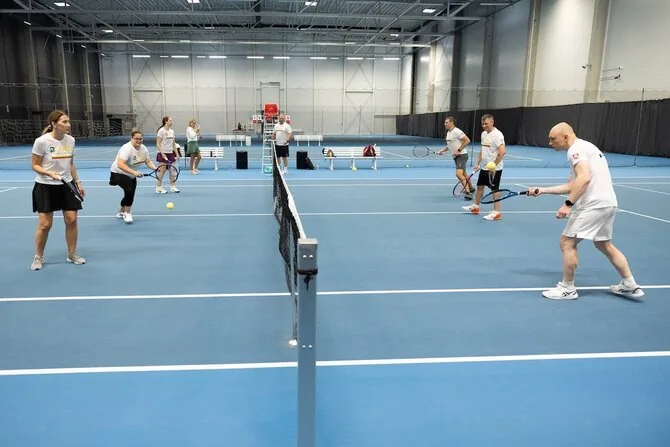
Opportunity to get used to the championship environment
An important advantage of this camp is that it took place in the same “SEB arena” where the World Championship will be held in a few weeks.
In blind tennis, the environment is much more important than in traditional tennis. Athletes orient themselves by sound, so it is important for them to get to know the space, the layout of the courts, and the color scheme of the court and surroundings also affects the game, along with other small nuances.
Read more “Energus” cyclist triumphed in gravel and forest road races in Lithuania
“It is very important for us that the national team trains at the future championship venue. Athletes get used to the space, its acoustics, and the courts. Of course, conditions are not yet the same as they will be during the championship – other tennis players are training nearby, and there is more external noise. However, these more challenging conditions during the camp can also be called a useful experience,” explains A. Danilovas.
European champion and rising leaders in the Lithuanian national team
At the World Championship, the Lithuanian national team will be led by European champion Karolis Verbliugevičius, as well as Justas Pažarauskas, Oksana Dobrovolskaja, and Denas Damskis. However, the coaches emphasize that today practically all members of the national team are capable of challenging the strongest players in the world.
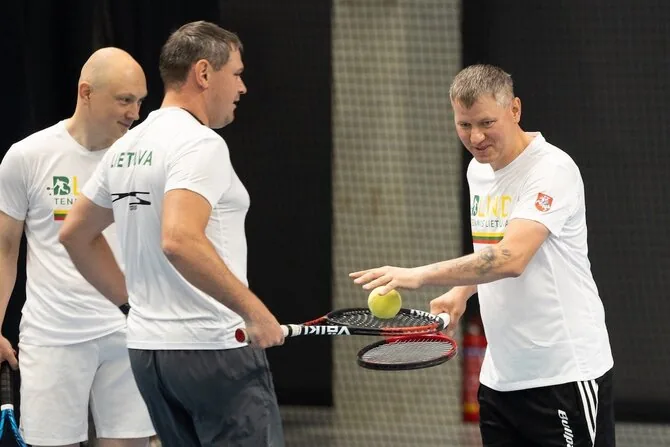
One of the national team coaches, Tomas Butvilas, who works in Klaipėda with 11 visually impaired tennis players, is convinced that victories in blind tennis are often determined by very different factors than in regular tennis.
“Of course, technique is important, but it is not the main focus. It is much more important to be able to hear the ball, maintain complete concentration, and make non-standard decisions – using slices, drop shots, or other similar strokes. These are exactly what cause additional difficulties for opponents. Psychology is no less important. Many visually impaired people initially doubt themselves, so the coach’s task is to help them believe in their abilities and express themselves more confidently on the court,” says T. Butvilas.
The IBTA Blind Tennis World Championship at the “SEB arena” will take place from August 24-29. About 120 athletes from approximately 20 countries around the world are expected. This will be the first time that top-level blind tennis competitions are held in Lithuania.
Read more Six people injured in Russian drone strikes in the Kherson region