









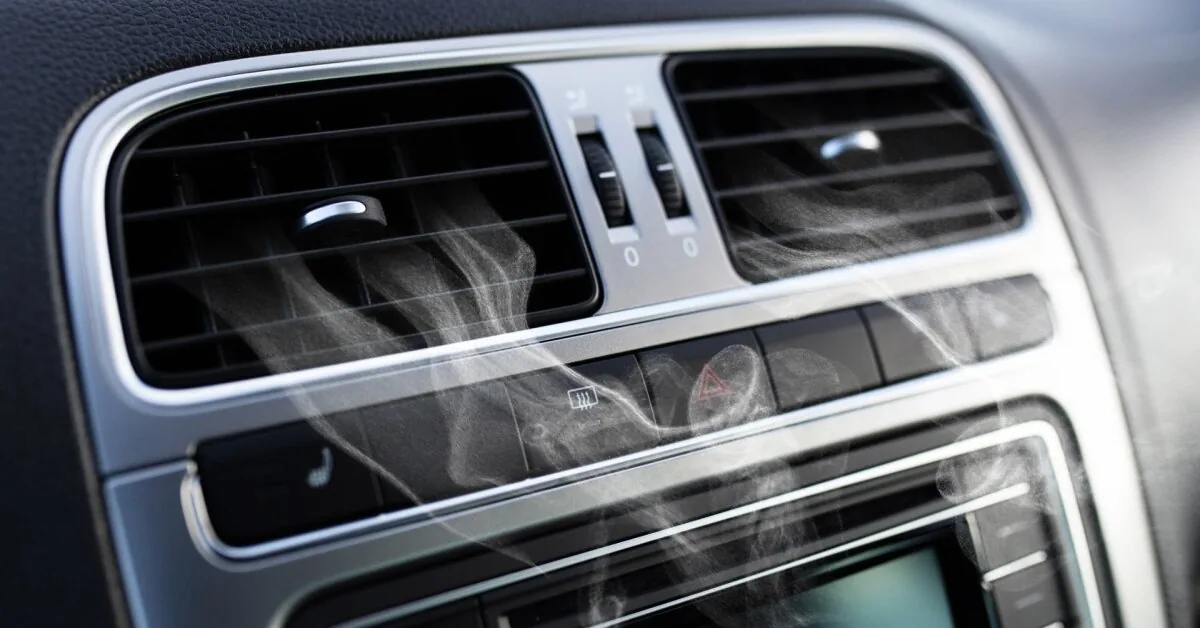
Heat has returned to Lithuania: on the last day of July, the thermometer columns exceeded the 30-degree mark, and they will be close to this limit on Saturday as well.
Under such conditions, a car left in the sun quickly turns into a real sauna – the steering wheel, seats, dashboard, seat belt buckles heat up, and the stuffy air inside the cabin is uncomfortable even before starting the trip.
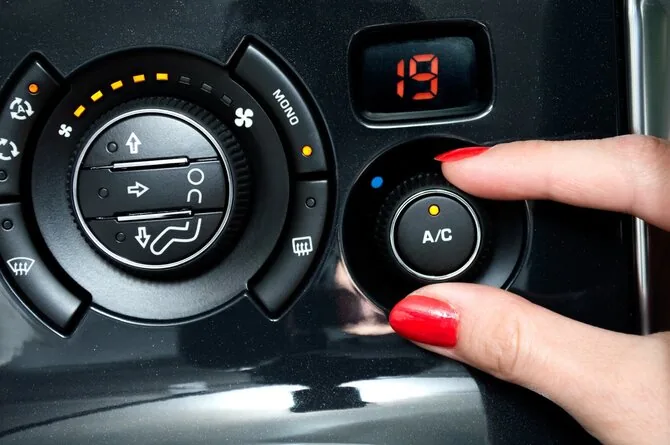
However, some drivers make the same mistakes as soon as they get into the car: they immediately set the lowest temperature, direct the cold air flow straight to their face, or drive for a long time with the windows slightly open and the air conditioner on.
The head of the used car sales company “Longo LT,” Paulius Valiukėnas, says that climate control in summer is not just a matter of comfort – it also affects driving safety.
“In an overheated cabin, the driver gets tired faster, becomes more irritable, has poorer concentration, and may feel drowsy or dizzy. Heat can also slow reaction time and increase the likelihood of mistakes, especially on longer trips or in heavy traffic. In other words, the air conditioner helps not only to avoid sweaty shirts but also to maintain the driver’s alertness and attention longer,” says P. Valiukėnas.
The lowest temperature is not the solution
According to the expert, the cabin of a car heated by the sun does not cool down instantly because the heated surfaces continue to emit heat for some time. Therefore, closing all windows and setting the lowest temperature immediately after getting in is not the most effective solution.
“First, it is worth releasing the hottest air – briefly open the doors or windows, and after starting to drive, leave them slightly open for a few more minutes. Then you can turn on the air conditioner, increase the fan power, and briefly select internal air circulation. When the cabin starts to cool, the windows should be closed, and the system switched to automatic mode,” he advises.
Driving for a long time with the windows slightly open while using the air conditioner is not rational – the system constantly tries to cool the hot air coming from outside. Similarly, cold air flow should not be directed straight to the face or chest. This cools only one part of the body faster, which can cause dry eyes, throat irritation, or muscle tension.
“For many people, a suitable cabin temperature is about 22–24 °C, but the most important thing is to consider the passengers, clothing, and trip duration. It is better to avoid not the temperature difference itself but sudden very cold air blowing directly on oneself,” explains P. Valiukėnas.
When is it time to check the car’s air conditioner?
Signs of climate control malfunctions may include the cabin cooling more slowly than before, only slightly cool air blowing, and weak airflow even when the fan power is set higher. Uneven cooling, where one side of the cabin cools better than the other, constant temperature fluctuations, or the system cooling briefly but soon blowing warm air again can also indicate a problem.
“Unusual noises – whistling, rattling, or other strange sounds when the air conditioner is turned on – can warn of issues. It is also worth paying attention to frequently fogging windows, moisture, mold, or a sour smell inside the cabin. If the air conditioner has been running for a long time on a hot and humid day but no condensation water appears under the car, this can also be a signal that the system should be checked,” the expert lists.
Weak airflow is often related to a clogged cabin filter, fan problems, or dirty ducts. Poor cooling may indicate insufficient refrigerant, system leaks, or compressor failure. Constantly fogging windows can also be a sign that too much moisture accumulates in the cabin or the filter is no longer effective.
Air freshener spray will not solve the problem
Another common sign is a smell reminiscent of mold or a damp basement. This usually occurs due to a dirty cabin filter or microorganisms accumulated on the air conditioner’s evaporator.
When the system operates, the evaporator becomes cold and damp, causing condensation to form on it, which, together with dust, creates a favorable environment for bacteria and mold.
“An air freshener spray does not solve such a problem – it only temporarily masks the symptom. Usually, it is necessary to check and, if needed, replace the cabin filter, clean or disinfect the evaporator, and ensure that the condensation drain is not clogged,” says P. Valiukėnas.
The cabin filter should be replaced according to the manufacturer’s specified interval, but when driving in the city, on dusty roads, or frequently parking under trees, it may need to be changed more often. A dirty filter not only worsens airflow but also burdens the entire system’s operation.
Turning it on for a few seconds is not enough
Climate control should be carefully evaluated when buying a used car. According to P. Valiukėnas, a few seconds of checking often shows nothing – time is needed to assess whether the system operates steadily.
“Climate control should be checked for at least 10–15 minutes. First, set the lowest temperature, turn on the air conditioner and increase the fan power. The air from the central vents should start to cool clearly, and the temperature should not fluctuate constantly. If the car has two- or four-zone climate control, all zones must be checked separately,” advises the “Longo LT” manager.
Cold air blowing on one side and warm air on the other may indicate problems with the flaps, their drives, sensors, or insufficient refrigerant. It is also worth trying different fan settings, airflow to the face, feet, and windshield, turning internal circulation on and off, and assessing the noise and smell emitted.
“It is advisable to check whether the passenger side carpet is damp, ask when the cabin filter was last changed and when the system was last checked. It is also useful to perform a computer diagnostic, as the climate control unit may have recorded errors related to flaps, pressure sensors, or other sensors,” he concludes.
Read more ES accuses «Temu» of obstructing inspection in Ireland