









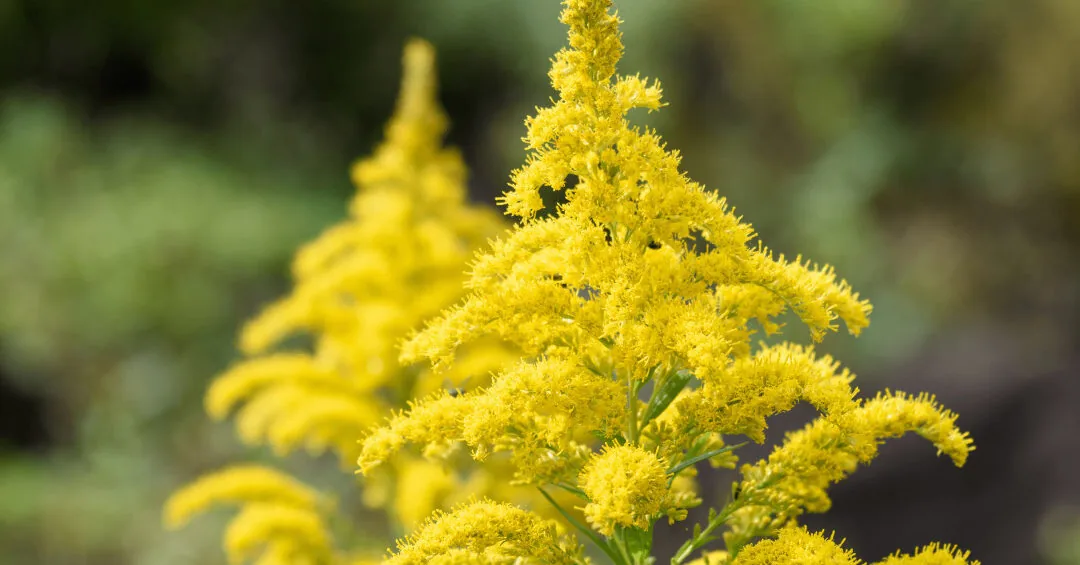
Damage caused by invasive goldenrods to nature
Invasive goldenrods acidify the soil, produce a large number of rhizomes, form dense thickets, and displace native plant species. The spread of goldenrods is dangerous because these plants occupy large areas and expand rapidly.
Read more Per year – significantly more labor disputes: the most common reasons have emerged
Goldenrods take more nutrients than native plants, causing other plants in the soil to become impoverished or disappear entirely. This threatens not only plants but also animals – their habitats are disturbed.
Identification of invasive goldenrods
Goldenrods are distinguished by bright yellow panicle-shaped inflorescences. They usually grow in open areas but can spread around cities, settlements, abandoned agricultural lands, forest edges, roadsides, and other places. These invasive plants bloom from mid-summer to early autumn.
Effective methods to stop the spread of goldenrods
People often unknowingly spread goldenrods – cut inflorescences are thrown into garbage dumps, landfills, forest edges, riverbanks, or other places, and new plants grow from the seeds. It is important to prevent further spread of goldenrods – it is recommended not to cultivate any goldenrod species or varieties, to dig out individual plants and spray the remaining plants with herbicides, to mow thickets before flowering (to prevent seed spread), and to apply agrochemical and chemical eradication measures.
More about invasive species
The Environmental Protection Department has prepared a memo “Invasive Species,” which contains information about invasive plant and animal species found in Lithuania.
Read more Self-operating OpenAI AI agent attacked four more companies
You can also check invasive species and learn more about them in the Invasive Species Information System.
Responsibility
Keeping, growing, breeding, propagating, exchanging, importing, exporting, or otherwise using invasive species in violation of legal acts incurs a fine of 280 to 1,550 euros for individuals and 300 to 2,300 euros for heads of legal entities or other responsible persons.
Placing invasive species on the market, intentional release into the environment, or introduction in violation of legal acts incurs a fine of 300 to 800 euros for individuals and 800 to 1,500 euros for heads of legal entities or other responsible persons.