








This AB “Klaipėdos uostas” project also includes an experimental port service vessel powered by electricity obtained from hydrogen fuel cells or a rechargeable battery.
Read more Linas Linkevičius. Moscow will face Ukrainian ballistic missiles
The design of this vessel is unique in the world, and time will tell whether such a combination of technologies (fuel cells and battery) is economically attractive. However, a significant part of the hydrogen production station’s capacity is intended specifically for road transport.
After the opening of the station, statements appeared in the public space that do not reflect the real facts about hydrogen cars and related technologies.
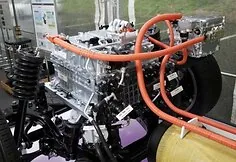
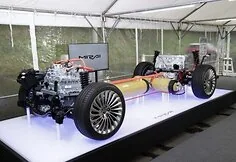
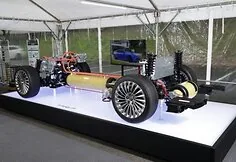
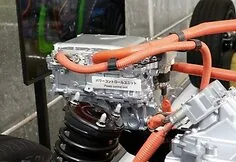
The following technical information is based on documentation from hydrogen car manufacturers, other publicly available information, and results from experiments by KTU researchers and physics students operating and studying the “Hyundai ix35 FCEV”, “Hyundai Nexo” cars, and “Toyota” hydrogen systems.
These works are carried out in the hydrogen transport technology laboratory operating at KTU – the only laboratory of this kind in Lithuania, where physics students have the opportunity to work with real fuel cell and hydrogen car systems.

Hydrogen car
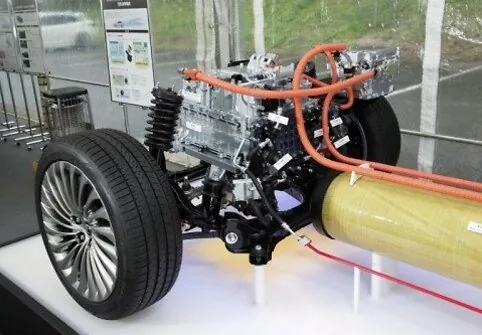
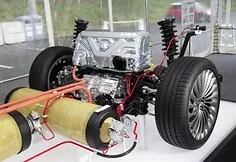
Hydrogen cars are essentially electric vehicles, but instead of a large capacity rechargeable battery, they use an electrochemical reactor – a fuel cell, where hydrogen combines with oxygen from the air to form water vapor, and the electricity generated during the process is used to turn the wheels and/or charge a small battery (about 1 kWh, as in hybrid cars).
Hydrogen is stored in special tanks at 700 bar pressure, with two or three tanks in cars depending on the model. The hybrid battery is needed to start moving and accelerate faster, as the fuel cell requires time to ramp up. Additionally, the battery allows the regenerative braking system to operate – it charges during braking. Cars can carry up to 5–6 kg of hydrogen depending on the model and can travel up to 600 km in summer and about 300–400 km in winter.
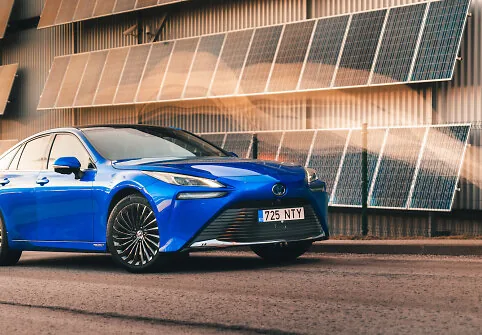
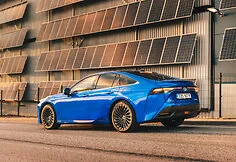
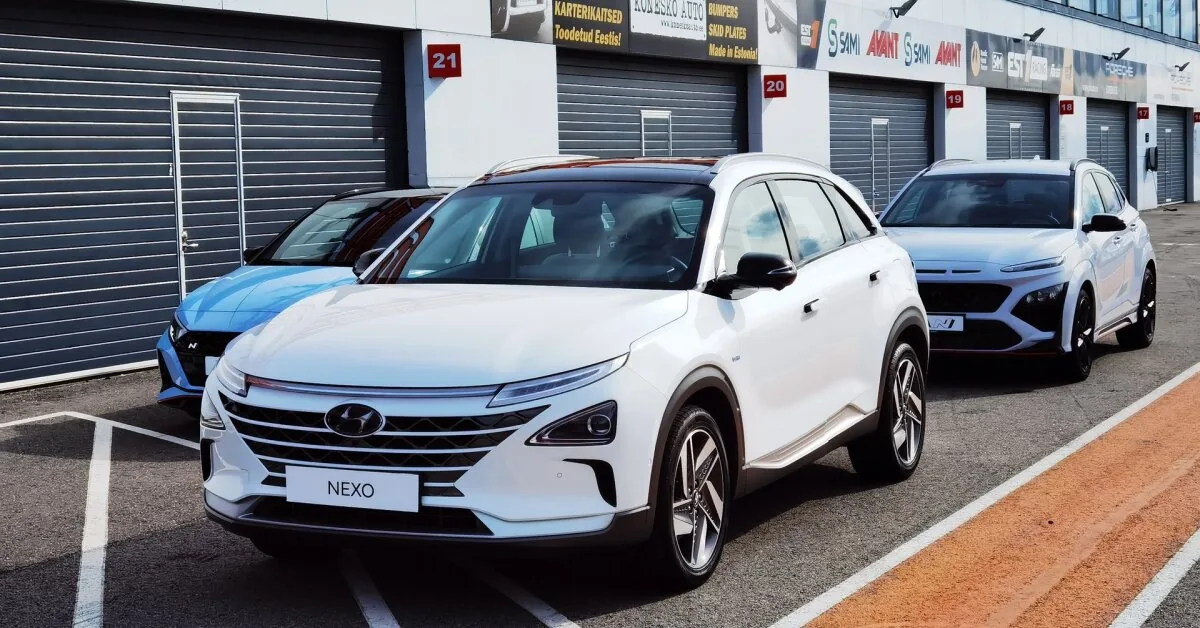
In Europe, four hydrogen car models have been available so far (excluding the possibility to rent “Honda” and “Mercedes” cars): “Hyundai ix35 FCEV”, “Hyundai Nexo”, “Toyota Mirai JPD10”, and “Toyota Mirai JPD20”.
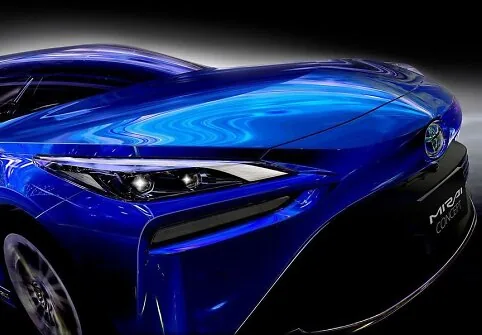
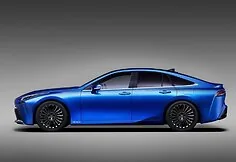
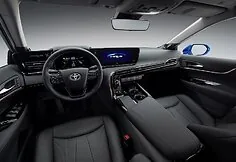
“Nexo” and “Mirai JPD20” are still available today – their price is about 70,000 Eur. Last year, the second generation “Hyundai Nexo” was introduced in South Korea, and in Europe, the BMW group announced that it will start selling hydrogen models in early 2028. It is important to mention that BMW models will use “Toyota” hydrogen technology.
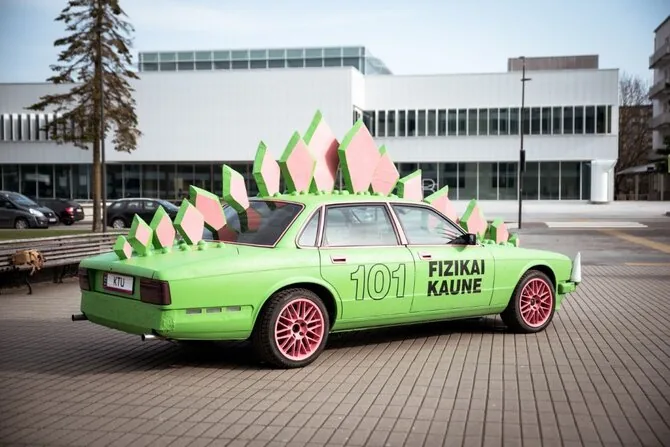
Separately, cars where hydrogen is used as fuel in internal combustion engines can be mentioned. There are only a few such passenger cars worldwide (including the “Slibinomobilis” created by Kaunas physicists). Due to very low energy efficiency, this technology is considered a technological dead end and has no significant potential for decarbonizing the transport sector.
The reality of hydrogen cars
Hydrogen cars should be compared with electric vehicles, as both technologies allow abandoning fossil fuels. However, in terms of energy efficiency, hydrogen transport is significantly inferior to pure electric vehicles.



To cover the same distance, a hydrogen car will require 2–3 times more green electricity than a pure electric car. This is due to technological processes occurring before hydrogen finally turns into mechanical energy in the car’s electric motor. These include electrolysis, cooling to –40 °C at the station, compression to 700 bar, and subsequent conversion back to electricity in the fuel cell.
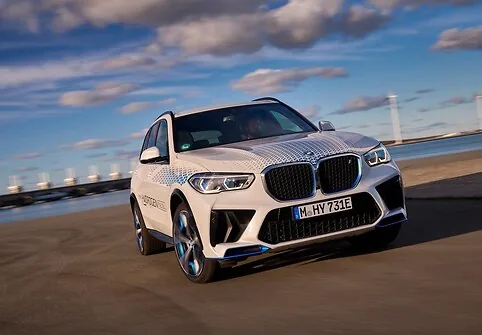

An important factor in the competitive battle of transport technologies is operating cost. This is especially evident in Lithuania, where diesel-powered cars traditionally dominate due to higher economy. Regarding hydrogen cars, under real conditions, 1.2–1.3 kg of hydrogen is needed to cover 100 km, almost regardless of the car model.
Considering a hydrogen price of 15 Eur/kg, 100 km can be traveled for 18 Eur. This figure corresponds to real driving conditions when the ambient temperature is positive.
KTU experiments and other studies (e.g., a study conducted by the Quebec municipality) showed that when the temperature drops below 0 °C, fuel consumption increases by about 30% (23 Eur/100 km), and when the temperature drops below –10 °C, it increases by 60–100% (29 Eur/100 km). At –20 °C or lower, the fuel cell system does not start at all. Specifically, for the “Hyundai Nexo”, the manufacturer declares the ability to start the system at –30 °C, but experiments showed that the practical limit is about –20 °C.
Increased consumption occurs due to lower fuel cell efficiency – in cold environments, water vapor formed during operation condenses near the active fuel cell layers and hinders the chemical reaction. To solve this problem, a larger amount of gases (both hydrogen and oxygen (air)) is used to blow through the active fuel cell surfaces.
At extremely low temperatures, the system simply does not start due to programmed protection – formed water vapor can freeze immediately, and formed ice crystals can damage the fuel cell’s active layer. In such a case, the fuel cell would be irreparably damaged. It is important that increased consumption also means a significant reduction in driving range – in Lithuanian winter, it would be about 300–400 km.
Operating costs and technological limitations
Regarding operating expenses, it is necessary to mention that hydrogen cars use a specific coolant (they have two separate cooling systems – one for the fuel cell, another for power electronics and the motor), characterized by very low electrical conductivity, and a special filter for this fluid.
Hydrogen cars require extremely pure hydrogen: not less than 99.97% purity and meeting strict impurity requirements according to ISO 14687 standard. Otherwise, the fuel cell would be irreparably damaged and would need to be replaced. The price of a new fuel cell, based on parts catalogs, for the “Toyota Mirai JPD20” model is about 30 thousand euros, and for the “Hyundai Nexo” about 50 thousand euros. This essentially means writing off the car.
Read more Warning to Vilnius residents: it is still unsafe to swim at this beach
Of course, stations use special hydrogen purity measurement and control systems, but there are examples where contaminated hydrogen caused significant damage.
For example, in March 2025 in Poznan (Poland), 23 out of 25 hydrogen buses were damaged due to contaminated hydrogen. The affected buses had to have their fuel cells replaced.
It is also worth mentioning the service life of hydrogen tanks. Due to high pressure (700 bar), special type IV hydrogen tanks are used, with a limited service life – 15 years (“Hyundai Nexo” – 20 years). Since there is no possibility to inspect and extend the service life of these tanks, this essentially means the end of the car’s operation. The price of one new tank, depending on the manufacturer, ranges from 10 to 15 thousand euros. Meanwhile, the average age of cars in Lithuania is about 16.5 years.
Compared to electric vehicles, hydrogen cars have practically the same weight (1.9–2.0 tons) but only a 100–120 kW power motor. Hydrogen cars are at least twice as noisy when driving at low speeds (up to 60 km/h) than electric cars because they use an air compressor.
Moreover, based on publicly available analytical data, they lose 70–80% of their value within the first three years of operation. Of course, fast hydrogen refueling (up to 10 minutes) is still mentioned as a main advantage of such cars, but if it takes 20 minutes to drive to the station one way, this advantage diminishes significantly, especially when the cost per 100 km is about three times higher than for electric cars (5 Eur/100 km, according to the Lithuanian Energy Agency data).
Misleading information in the public space
After the opening of the hydrogen station in Klaipėda, misleading information about these cars appeared in the media.
A misleading claim was made that with the “Toyota Mirai JPD20” it is possible to travel 760 km using 5.6 kg of hydrogen. The volume of “Toyota Mirai JPD20” tanks is 142.2 liters (the car declares 143 liters to the station during filling), which theoretically corresponds to 5.6 kg of hydrogen. However, it is technically impossible to completely empty the tanks while driving.
Therefore, the maximum real filling amount is 5.3–5.4 kg.
760 km with 5.6 kg of hydrogen would mean consumption of about 0.74 kg/100 km. Modeling the fuel cell operation, such consumption would be possible only under ideal conditions – in summer, at a maximum speed of 80 km/h, practically without stops, no wind, and driving on a flat road.
Considering that it is impossible to fill 5.6 kg of hydrogen under normal operation, the 760 km distance should not be presented as a representative real operation indicator – it is possible only under very favorable or specially optimized conditions.
“Toyota” declares about 0.85 kg/100 km consumption under ideal conditions. As mentioned, under real conditions, these cars consume more than 1 kg/100 km, and consumption increases by up to 70% at negative temperatures.
The TV3 news report compared the cost per 100 km when driving on hydrogen (12 Eur), gasoline (12.7 Eur), diesel (11.3 Eur), and LPG (7.2 Eur).
This information is misleading because the stated cost per 100 km does not reflect reality. Moreover, the cost per 100 km when driving an electric car was not provided.
Applying the calculation methodology used by the Lithuanian Energy Agency, on the day the report was aired, a 100 km trip by gasoline or diesel would cost about 10–11 Eur, LPG about 7.4 Eur, electricity about 5 Eur, and hydrogen (considering a price of 15 Eur/kg) about 17 Eur.
From an economic perspective, hydrogen practically cannot compete with other fuel types, especially with its direct competitor – electricity.
The transport minister’s statements that hydrogen cars can repeat the development path of electric cars sounded insufficiently substantiated. The data presented above show that hydrogen passenger cars cannot systematically compete with battery electric vehicles in terms of energy efficiency, operating costs, or infrastructure development.
Moreover, in countries that have invested the most in hydrogen transport – Germany, the Netherlands, and California in the USA – hydrogen passenger cars remain a niche technology, and their market share is statistically insignificant and decreasing. Meanwhile, battery electric vehicles in Europe already account for about one-fifth of new car sales, and in some countries, their share exceeds 30%.
What next?
According to the EU regulation, by 2031, five public hydrogen refueling stations should operate in Lithuania – in Vilnius, Kaunas, Klaipėda, Panevėžys, and Marijampolė. The emergence of these facilities is primarily determined by Lithuania’s commitments to the European Union and the requirements of the trans-European transport network, not by real market demand. Currently, the number of registered hydrogen passenger cars in Lithuania is symbolic, so in the coming years, the infrastructure will be used much less than needed to ensure its economic sustainability.
Systematic analysis shows that hydrogen passenger cars increasingly resemble the history of compressed natural gas (CNG) transport. Both technologies were presented as an important part of the future of transport, but over time they were overshadowed by more efficient alternatives. Today, the production of new CNG passenger cars is practically discontinued, and infrastructure in many European countries is maintained only at a minimal level.
If a decade ago hydrogen passenger transport was considered a serious alternative to electric cars, today accumulated practical experience shows the opposite. Despite billion-dollar investments, state support, and more than a decade of development, hydrogen passenger cars have not become a significant part of the transport market.
Therefore, the station opened in Klaipėda can be viewed in two ways. On the one hand, it is an important infrastructure project allowing Lithuania to fulfill international commitments and accumulate technological experience, especially in shipping. On the other hand, it is an investment in a technology whose competitiveness in passenger transport decreases every year.
Considering energy efficiency, operating costs, infrastructure expenses, and market trends, there are no signs that hydrogen passenger cars could repeat the success story of electric cars or become a significant part of the transport market in the future.
Read more In the spotlight – video with Jessica Shy: blowing up the internet