The Japan Meteorological Agency had issued a tsunami warning, but it was canceled after two hours.
Read more “Grinda” started the reconstruction of the surface sewage network in Vilnius, Asanavičiūtės street
The agency indicated that the tsunami warning applied to the nearby Ariake and Yatsushiro seas off the western coasts of Kumamoto, Nagasaki, Fukuoka, and Saga prefectures, located about 900 km southwest of Tokyo.
The US Geological Survey initially reported that the earthquake magnitude was 7.1, but later revised it to 6.8.
Japanese Prime Minister Sanae Takaichi stated in a message posted on the social network X that her government had established a special group to collect information, assess possible damage, and prepare for rescue operations if necessary.
Later, S. Takaichi told journalists that reports had been received about many injured people, damaged roads, bridges, and buildings, as well as power outages and fires, although more detailed information was still unclear.
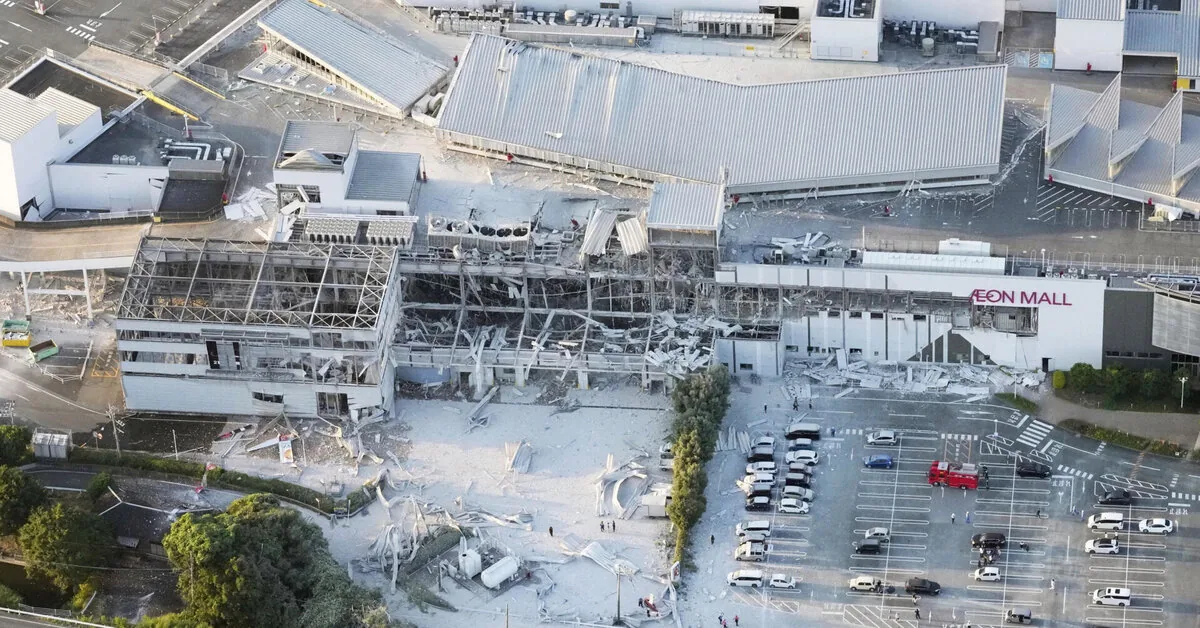
Broadcaster TBS reported that many people died in a shopping center damaged by the strong earthquake.
Police officers told the news agency AFP that they could not confirm whether there were any casualties in the shopping center in the town of Kashima.
Rescue services earlier reported that many people were trapped inside the building after a floor collapsed.
Many emergency calls
The Kyodo news agency reported that the Yatsushiro city hospital received about 40 people injured in the earthquake. A train derailed and overturned on its side at Yatsushiro station, and stone walls were damaged at Kumamoto Castle, Kyodo reported.
The priest of a Shinto shrine in the nearby town of Mashiki, Yozo Kai, said that several stone lanterns had fallen over.
“I was afraid that the main hall and gates might tilt again,” he told Kyodo.
“The shocks reminded me of the Kumamoto earthquake (10 years ago), and I was scared,” said Hiroki Shimoda, an official at Mifune town hall, who saw roof tiles falling from nearby houses.
The Japan Fire and Disaster Management Agency reported that no reports of damage to important public facilities and infrastructure had been received, although officials were still assessing the extent of the damage.
Local fire and rescue services received many emergency calls reporting fires and damaged houses.
“People’s lives are our highest priority,” said S. Takaichi, urging residents of heavily shaken areas to be cautious about possible aftershocks.
Read more TEST. 10 questions about engagements – how many will you answer correctly?
Shinji Kiyomoto, an official of the Japan Meteorological Agency’s Earthquake and Tsunami Prevention Planning, said at a press conference that this shallow earthquake triggered active seismic activity in the area and urged residents to be especially cautious for the next two or three days.
However, he added that no tsunami was recorded due to the earthquake occurring on land.
The Japan Nuclear Regulation Authority reported that no disruptions were detected at the three nearby nuclear power plants.
Trains stopped
For safety checks, Shinkansen bullet trains and local trains on Kyushu Island were stopped, and the runway at Aso Kumamoto Airport was closed, according to a statement on the airport’s website.
The Japanese Ministry of Defense reported that it sent aircraft to the area to assess the situation.
On June 25, a 7.2 magnitude earthquake occurred in northern Japan, but it caused no casualties and did not cause major damage.
Japan is one of the most seismically active zones in the world, located on four major tectonic plates along the western edge of the Pacific “Ring of Fire.”
The archipelago, home to about 125 million people, typically experiences hundreds of underground shocks annually. About 18% of all earthquakes worldwide occur in Japan.
The vast majority are weak, although the damage they cause varies depending on location and depth beneath the Earth’s surface where they originate.
The country is still haunted by memories of the powerful 9.0 magnitude underwater earthquake in 2011, which triggered a tsunami that claimed or displaced about 18,500 lives and caused a disaster at the Fukushima nuclear power plant.
On April 20 this year, a 7.7 magnitude earthquake struck northern Japan, injuring at least 10 people and causing tall buildings to sway in Tokyo.
This prompted officials to issue a special recommendation warning of an increased risk of earthquakes of magnitude 8 or stronger.
A week later, this recommendation was withdrawn.
Kumamoto Prefecture was shaken by a devastating earthquake in 2016, which killed more than 50 people, injured 1,800, and damaged or destroyed tens of thousands of homes.
Read more Linas Linkevičius. The window for Putin to escape closes: here is what reveals it