Looking back at what her entire family had to go through at the time, the girl urges everyone not to dismiss symptoms that may seem insignificant at first glance. “It all started with what seemed like a simple stomach ache for my mother,” says Irma.
Read more Cuba’s president accused the US of seeking to seize the island
First symptoms were misleading
As Irma tells the portal 15min, her mother was struck by inflammation of the pancreas, otherwise known as pancreatitis, in May 2016. It started suddenly, accompanied by severe pain in the upper abdomen. True, at first Aldona did not attach too much importance to it – after all, everyone occasionally experiences stomach pain. Maybe she just ate something unpleasant for her stomach.
However, when common digestive aids did not help, and the unpleasant sensations only intensified, the woman asked her husband to take her to the emergency room.
“I remember, my mother’s face was simply contorted with pain, she was very nauseous, nothing could help. Upon arriving at the hospital, doctors performed blood tests and found that her C-reactive protein (CRP) levels were elevated. They immediately hooked her up to an IV with painkillers,” Irma recalls.
After a few hours, with the pain almost subsided, the doctors discharged Aldona home. It was Saturday at the time, so they simply recommended that she go to her family doctor on Monday for a more precise examination to find out what the problem was. According to the interviewee, at that time no one even mentioned possible pancreatic inflammation.
Unfortunately, the disease quickly showed its claws again. Late that same evening, Aldona’s abdominal pain returned – and even stronger. The family decided to go back to the emergency room, knowing that over-the-counter medications would not help here.
“I still remember my mother’s words. She stood in the doorway with a packed bag and said: “I don’t know when I’ll be back, hold on.” I understood that the situation was very serious, but I couldn’t even imagine that my mother wouldn’t set foot in our home for 3 months,” Irma recounts.
The disease progressed rapidly
When Aldona appeared at the hospital for the second time, everything happened very quickly. Repeated blood tests showed that the inflammation was only getting stronger, so it was decided to immediately transfer the woman from the district hospital to Kaunas Clinics. Doctors there quickly determined that Aldona had developed acute pancreatitis.
“We couldn’t believe how quickly the inflammation spread. The pancreatic tissue had already started to necrotize, and surgery was needed as soon as possible. The situation turned out to be so bad that, after removing the dead part of the organ, only about 20 percent of her pancreas remained,” says Irma.
Unfortunately, Aldona’s condition did not improve after the surgery. While in intensive care, the woman developed sepsis, her consciousness was disturbed, and she could not breathe on her own. Doctors were afraid to predict anything good for the family.
“When I went to visit my mother, I couldn’t believe it was her lying there. She was incredibly emaciated, with thinning hair, and often didn’t understand who I was when she looked at me, she would rave. I wasn’t sure if I would ever see her healthy again,” the daughter confides.
The situation eventually became so serious that Irma’s aunt called a priest to administer the anointing of the sick. At that time, Aldona had experienced clinical death once, but doctors managed to bring the woman back to life.
“The priest was like a last resort for us. Of course, we didn’t think that the anointing of the sick would suddenly cure our mother. It’s just that she had been a believer all her life, so we wanted her to face death with blessing and peace,” the interviewee asserts.
A long road to recovery
Fortunately, after some time, to the doctors’ own surprise, Aldona’s condition began to improve. Finally, both the treatment and the prayers worked – the woman started breathing on her own, moving more in bed. It was decided to transfer the patient from intensive care to a regular ward. Quite quickly, with the help of her relatives, Aldona also started eating on her own.

“Every small step forward brought us immense joy. Of course, my mother’s health was far from good. Her muscles were incredibly wasted from constant lying down, bedsores had formed, and a urinary catheter was attached. But her mind was already clear. Just being able to talk to my mother again overshadowed everything else for me,” Irma recounts.
Aldona’s road to recovery was indeed long. After about 3 months spent in the hospital, the woman went directly to rehabilitation, where she gradually learned to control her legs again and could walk a little with a walker. After rehabilitation, another year of incapacity followed. Although Aldona later returned to work, she was diagnosed with a disability.
“For several years after that, we all still felt on edge. It seemed as if the disease was lurking somewhere around the corner, just waiting for us to relax. Doctors removed my mother’s gallbladder and told her to completely change her diet so as not to irritate what was left of her pancreas. If necessary, my mother still takes pancreatic enzymes.
After that May of 2016, our family’s life changed irrevocably. To this day, I have nightmares and fear that the disease will return. When my mother calls, my first thought is always: “She’s in the hospital again.” I hope that one day this will not become true,” says Irma.
What usually causes pancreatic inflammation?
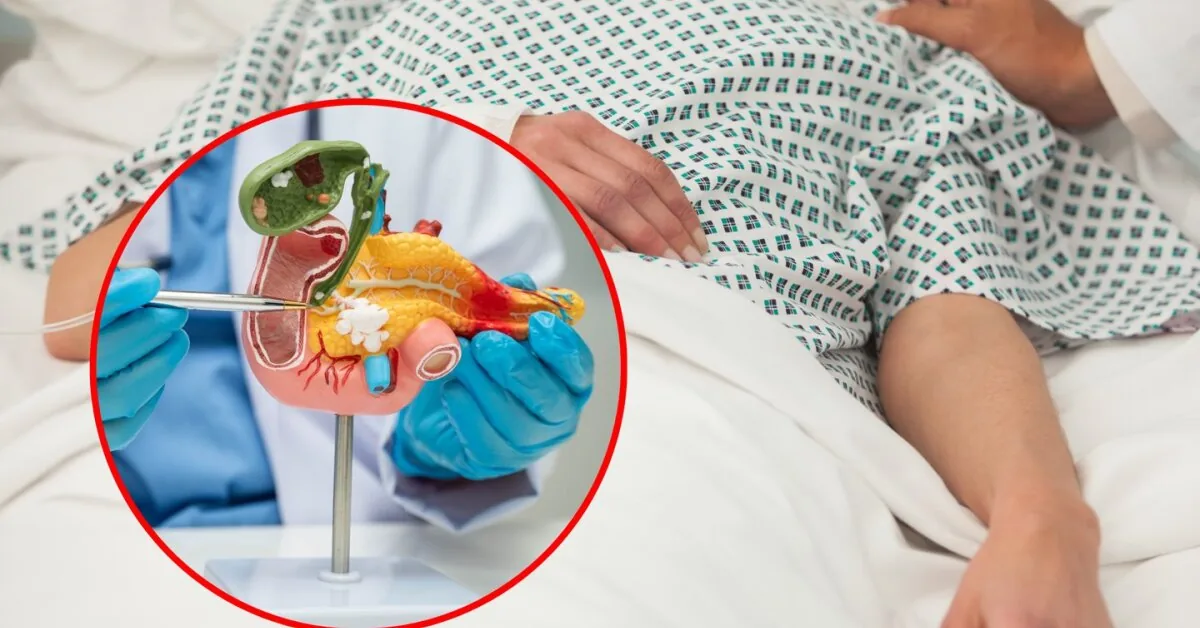
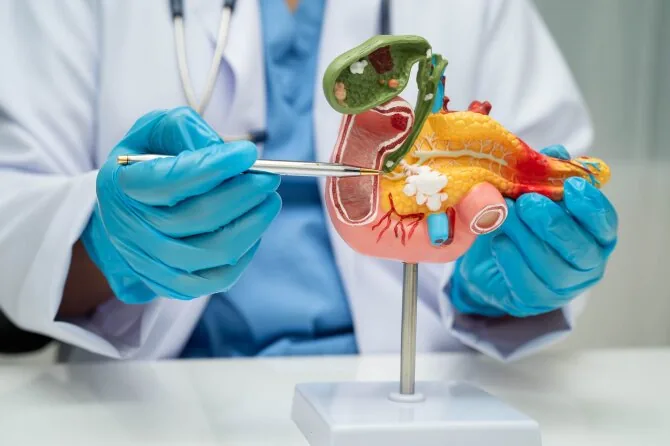
As Evelina Ruibienė, a gastroenterologist at the Šilainiai branch of Kaunas City Polyclinic, explained to the portal 15min, pancreatitis is a disease affecting the pancreas, an organ that produces digestive enzymes and hormones, including insulin. Pancreatitis can be acute or chronic.
“Acute pancreatitis begins suddenly. The inflammation can be mild and resolve within a few days, but some patients develop pancreatic tissue necrosis, infection, or organ dysfunction,” says the doctor.
Meanwhile, chronic pancreatitis, the specialist adds, develops gradually – due to recurrent inflammations, pancreatic tissue degenerates, organ function is impaired, and various complications can eventually develop – from pancreatic enzyme deficiency and diabetes to an increased risk of pancreatic cancer.

According to the doctor, the most common causes of acute pancreatitis are gallstones and alcohol consumption. Less frequently, the disease can be caused by elevated triglyceride levels in the blood, certain medications, abdominal trauma, autoimmune diseases, smoking with alcohol, genetic factors, or tumors. There are also cases where the exact cause cannot be determined.
Nevertheless, the specialist emphasizes that one of the most common beliefs about pancreatitis is false. “Diet itself is usually not a direct cause of pancreatitis. Fatty foods can provoke gallbladder contraction and stone migration in a person who already has gallstones, but a single fatty meal does not ‘ignite’ a healthy pancreas,” asserts E. Ruibienė.
What symptoms should cause concern?
As Irma’s mother’s story shows, one of the main signs of acute pancreatitis is a sudden onset of severe pain in the upper abdomen. The gastroenterologist says that it often spreads to the back, sides, or chest, and may also be accompanied by nausea, recurrent vomiting, abdominal bloating, fever, general weakness, or an increased pulse.
In the case of chronic pancreatitis, symptoms usually develop gradually – recurrent abdominal pain, weight loss, fatty stools, diarrhea, vitamin deficiency, or more difficult to control diabetes may occur.
It is important to emphasize that in severe cases, pancreatitis can also lead to life-threatening complications.
“Complications of acute pancreatitis can be varied – from fluid deficiency and circulatory disorders to respiratory, kidney, or heart failure.
Pancreatic and surrounding tissue necrosis, infected necrosis and sepsis, fluid collections, bleeding, or vascular thrombosis can also develop. After a severe or necrotizing illness, some patients may develop pancreatic enzyme deficiency or diabetes,” the doctor lists.
What treatment is applied?
When diagnosing pancreatitis, not only symptoms are evaluated – blood tests, ultrasound, and, if necessary, computed tomography or magnetic resonance imaging are performed.
According to E. Ruibienė, the treatment strategy depends on the cause of the disease and its severity. Typically, pain is relieved, fluid balance is ensured, vital organ function is monitored, and the cause of the inflammation is eliminated.

“In cases of mild pancreatitis, when there are no pronounced signs of nausea, vomiting, or intestinal obstruction, it is recommended to start eating within the first 24–48 hours. There is no longer a need to start only with tea or clear liquids – one can immediately choose light, low-fat solid food according to tolerance,” explains the gastroenterologist.
She also emphasizes that antibiotics are not prescribed to all patients.
“Antibiotics are not prescribed prophylactically, even in cases of severe disease or sterile pancreatic necrosis. They are only needed if a bacterial infection is suspected or confirmed, for example, infected pancreatic necrosis, cholangitis, or another focus of infection,” says the interviewee.
When pancreatitis is caused by gallstones, medical treatment alone is not always sufficient. In such cases, interventional procedures or surgery may be required. After mild gallstone pancreatitis, it is usually recommended to remove the gallbladder during the same hospitalization to prevent recurrence of the disease.
Treatment for chronic pancreatitis also requires long-term care – pancreatic enzymes may be prescribed, diabetes is treated, and endoscopic or surgical treatment is applied if complications arise.
How to reduce the risk of pancreatitis?
To reduce the risk of pancreatitis, according to the doctor, the most important thing is not to look for a universal “pancreatic diet,” but to identify the specific cause of the disease and eliminate it.
“It is recommended: after gallstone pancreatitis, not to delay the gallbladder surgery recommended by the doctor, not to consume alcohol, not to smoke, to treat hypertriglyceridemia and properly control diabetes, maintain a healthy body weight, and be physically active,” states E. Ruibienė.
The doctor also notes that very strict dietary restrictions can be harmful.
“A long-term extremely low-fat diet is not recommended for anyone. It can promote weight loss and vitamin deficiency. In cases of chronic pancreatitis, it is usually more important to eat enough, choose smaller and more frequent portions, and take the correct dose of pancreatic enzymes,” emphasizes the doctor.
More health tips can be found on gastroenterologist Evelina Ruibienė’s Instagram account @gydytoja_evelina and in the podcast “Gastro Paprastai”.
Read more Pentathlete Liutauras Valeika – in the World Youth Championship final