„I first witnessed such behavior in December 2021. I was stunned by the sheer force of the impact – it was a breathtaking sight to see a top predator ramming into a giant fish at such immense speed.
We immediately realized we were observing something highly unusual, as after the impact, the tissues simply exploded and scattered in all directions,” said Erick Higuera Rivas, a marine biologist from the Mexican organization „Conexiones Terramar“, to “Science Alert.”
This was not an isolated incident. Since then, such behavior has been recorded at least two more times – in 2024 and 2025. This allowed scientists to study it in more detail.
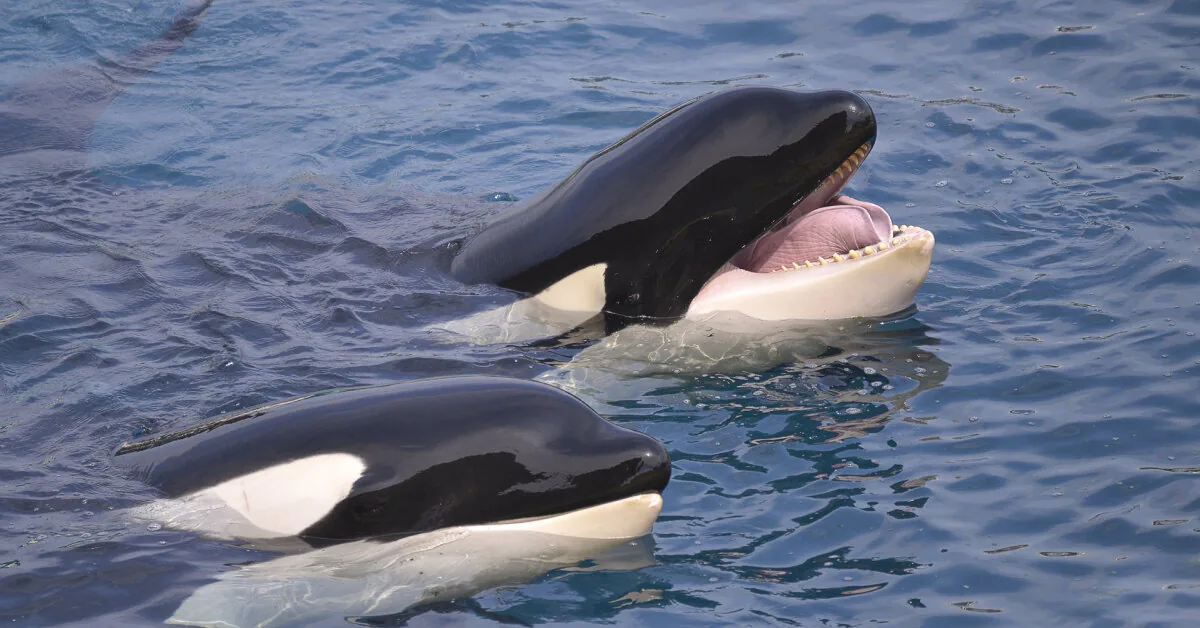
Researchers found that orcas act in a highly coordinated manner, but their behavior raises more questions than it provides answers – what exactly are they trying to achieve by acting this way?
As described in a new article published in the journal „Frontiers in Ethology“ by E.H. Rivas, marine scientist Kathryn Ayres from the non-profit organization „Beneath The Waves”, and their colleagues, both subsequent observed cases unfolded almost identically.
A group of orcas approaches a sharp-tailed sunfish, which appears to be simply swimming calmly.
Then one orca grabs the sunfish and holds it, while another swims a little further away to gain momentum. Accelerating, it rams into the fish at full speed, tearing its body into pieces.
Read more Four people died in Russian attacks in Ukraine
In one of the observed cases, a young orca approached the torn fish and began to greedily feed on its body parts. However, the story becomes even stranger here – it turned out that in none of these cases did the impact itself kill the sunfish.
„Initially, upon seeing a high-speed impact, we instinctively assume it’s a decisive blow meant to stop moving prey. However, after carefully analyzing the footage, we determined that the sunfish were likely already dead, and their most nutritious internal organs had been removed even before this impact,” said E.H. Rivas.
Instead, scientists determined that this enormous burst of energy is likely used not to kill the prey, but to process it – to break down the carcass into more easily consumable pieces.
But why do orcas expend so much energy crushing prey that is already dead? The answer may partly lie in the unusual anatomy of the sharp-tailed sunfish.
Sunfish are slow and large – in other words, easy prey that poses little danger to orcas. However, their bodies are extremely difficult to dismantle.
„Sunfish skin cannot simply be easily torn. It is an incredibly dense, water-saturated collagen shield. Instead of using tensile force to tear it, orcas employ immense kinetic energy. While one orca holds the prey, the other, striking orca, uses its multi-ton body as a high-speed projectile – the impact breaks down the tough collagen structure into more easily consumable pieces,” explained E.H. Rivas.