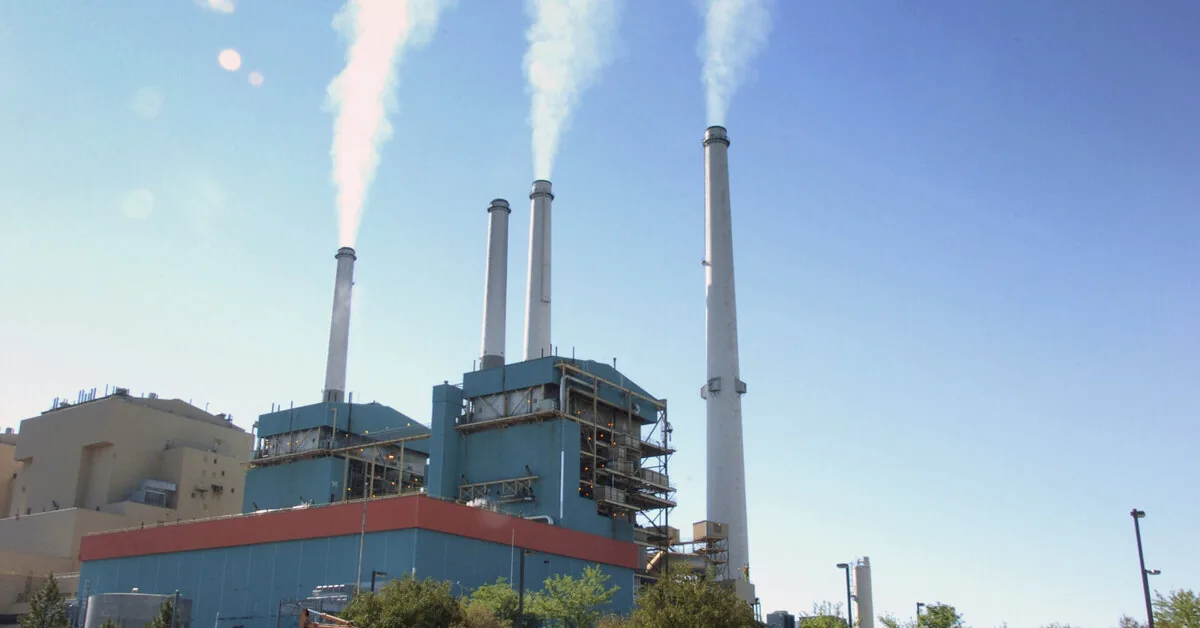
The conflict in the Middle East, which has effectively blocked the Strait of Hormuz, through which about a fifth of the world’s oil and gas is transported in peacetime, is forcing some countries to return to coal burning. As a result, “global coal-fired electricity generation is projected to increase by 1.4 percent in 2026, after remaining almost unchanged last year,” according to a new IEA report.
The increased use of coal-fired power plants is also driven by rising energy prices this year. Compared to the first half of 2025, they have increased by 30 percent and are “at their highest level since the 2022–2023 energy crisis” provoked by the war in Ukraine, the IEA stated.
Therefore, global carbon dioxide (CO2) emissions from electricity generation are projected to increase by one percent this year, but there will be significant regional differences. Emissions are expected to rise by 6 percent in Southeast Asia, while a 5 percent decrease should be recorded in the European Union.
However, CO2 emissions are expected to stabilize in 2027 due to the growth of renewable electricity generation, which, according to the report, “having reached an almost equivalent level with coal in 2025, is now becoming the largest source of electricity in the world”.
Renewable energy supply is projected to increase by 8 percent in 2026, and its share in global electricity supply is expected to grow from 33 percent in 2025 to 37 percent in 2027.
In this sector, electricity generation from solar energy is growing the most. This year, solar-generated electricity volumes are projected to surpass wind energy production, thus “becoming the second largest source of renewable electricity in the world after hydropower,” according to the IEA report.
Overall, electricity demand, according to the IEA, “is expected to remain on a stable growth trajectory,” particularly driven by industry, electric vehicles, and data centers.
Projected demand growth will reach 3.6 percent in 2026 and 3.8 percent in 2027, compared to 3 percent growth in 2025.
Finally, the “El Niño” phenomenon – a natural climate fluctuation that causes temperature increases and changes in wind currents – will be stronger this year than expected. This meteorological phenomenon “can affect electricity demand,” increasing cooling needs and limiting hydro and wind energy production, according to the IEA.
Read more Spanish giant lures Lonnie Walker, who played for Zalgiris