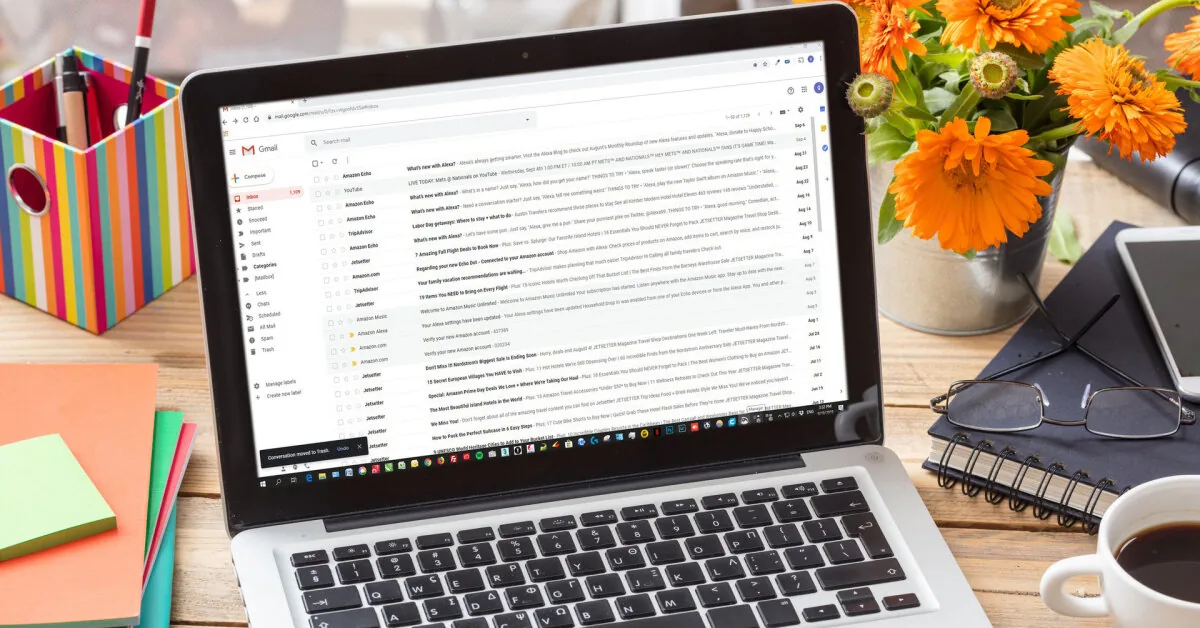
Although modern email systems automatically identify most unwanted emails and direct them to the spam folder, their protection is not flawless. Cybercriminals constantly improve their methods, so some scam emails still reach recipients’ inboxes.
Read more FT: Samsung considers investing hundreds of millions of euros in French AI company Mistral
8 reasons why your email inbox is flooded with scam emails
As cybersecurity expert D. Jatautas explains, spam emails can vary widely – from intrusive promotional messages to dangerous phishing emails (Eng. phishing) or emails distributing malicious software (Eng. malicious spam). If their number has significantly increased recently, it is likely due to one of these reasons.
1. Your data has been leaked
One of the most common reasons why your email inbox is suddenly flooded with spam or scam emails is leaked personal data. After cyberattacks, stolen email addresses and other information are often sold on illegal platforms, so scammers soon start using them.
“Having your email address, name, or other data, scammers can create more convincing emails – pretending to be banks, couriers, or other well-known companies. If the number of such emails has suddenly increased, it is likely that your data has ended up in a leaked database,” explains D. Jatautas.
2. Scammers use increasingly advanced tools
Today, scammers no longer need to create convincing emails or fake websites themselves – for this, they use special scam toolkits that can be purchased on illegal platforms. These already contain prepared email templates, imitations of well-known brands, and other tools that help deceive victims, says the cybersecurity expert, adding that artificial intelligence is also increasingly used for this purpose, allowing for the rapid creation of correctly written, recipient-specific emails, making them increasingly difficult to identify.
The creators of such tools constantly improve them, aiming to bypass email service providers’ protection, so as soon as a new way to bypass spam filters emerges, the number of scam emails can suddenly increase.
3. Specific groups of people are targeted
Sometimes scammers target not all internet users, but specific groups of people – employees of certain companies, clients of a particular bank, or users of popular online platforms such as Google, Microsoft, Facebook, or Netflix.
Such campaigns are usually triggered by leaked data or publicly collected information online. Since the emails are tailored to a specific audience, they appear more convincing and have a higher chance of achieving their goal.
4. Seasonal events and current affairs
As the cybersecurity expert explains, scammers actively exploit widely discussed events in society and certain periods of the year: “Spam and scam emails usually increase before Christmas, during major sales, when residents declare income, after widely publicized data breaches, or other events that have attracted significant public attention,” says D. Jatautas.
Read more Vilnius Waters will modernize Nemenčinė wastewater treatment plant: will invest 15 million euros
During such periods, people are more often expecting deliveries, making payments, or anticipating important notifications, thus becoming less vigilant. This is precisely what cybercriminals try to exploit, asserts D. Jatautas.
5. Your email address was found publicly online
Spam senders collect email addresses not only from leaked databases. They use automated programs that scan social networks, forums, websites, and other public sources, searching for contact information.
“If your email address was published publicly, it could have ended up on such lists and become another target for scammers,” says the IT expert.
6. You clicked a link or replied to a spam email
Spam senders constantly check which email addresses are active. If you clicked a link in an email, replied to it, or otherwise indicated that you use it, scammers might interpret this as a sign that the address is active. In such a case, your email address becomes more valuable, and the number of unwanted or scam emails may increase even further.
7. You became a target of “email bombing”
If you received hundreds or even thousands of emails in a short period, you might have become a target of so-called email bombing (Eng. email bombing). The goal of such an attack is to flood your inbox with newsletters and automatic notifications so that you miss an important email among them. This could be a bank alert about account login, a payment notification, or another security message that would allow you to detect fraud in time.
8. Email security settings have changed
Some email protection systems gradually “learn” to identify which emails seem suspicious to you and which are safe, but if default settings are restored or security parameters are changed, this accumulated information may be lost. As a result, spam filters may perform worse for a while, leading to more unwanted emails entering your inbox than usual.
How to reduce the flow of spam and scam emails?
As cybersecurity expert D. Jatautas says, although completely avoiding unwanted emails is almost impossible, a few simple habits can significantly reduce their quantity and the risk of becoming a target for scammers:
- do not publish your email address. If possible, do not display it on social networks or other publicly accessible platforms;
- do not rush to click links. If you receive a suspicious email, do not click on the links in it and do not reply to it. If in doubt, contact the sender using official contacts;
- use an alternative email address. When registering on less reliable websites, use email address hiding functions or a separate email inbox;
- check if your data has been leaked. There are free websites, such as “Have I Been Pwned,” where you can check if your email address has been included in publicly known data breaches;
- use reliable security solutions. They help identify scam emails, block dangerous links, and reduce the amount of spam entering your inbox;
- review marketing consents. When registering or shopping online, pay attention to whether you automatically agree to receive promotional offers.
What not to do?
To reduce the risk of becoming a target for scammers, avoid these mistakes:
- do not click the “Unsubscribe” button in spam emails. This may only confirm that your email address is active;
- do not open suspicious email attachments. They may contain malicious software;
- do not provide login or bank details via email. Even if the email seems genuine, first make sure it was actually sent by the stated company or institution;
- do not store your data in online stores unnecessarily. In the event of a data breach, they may fall into the hands of scammers;
- do not disable spam filters and other security measures. They help stop some dangerous emails before they even reach your inbox.
“Cybercriminals are constantly looking for new ways to bypass security measures, so completely avoiding spam or scam emails is unlikely. However, vigilance, responsible digital habits, and reliable security solutions can significantly reduce the risk of becoming their target,” advises cybersecurity expert D. Jatautas.
Read more Scored five perfect scores – what’s next? High school graduates reveal their plans