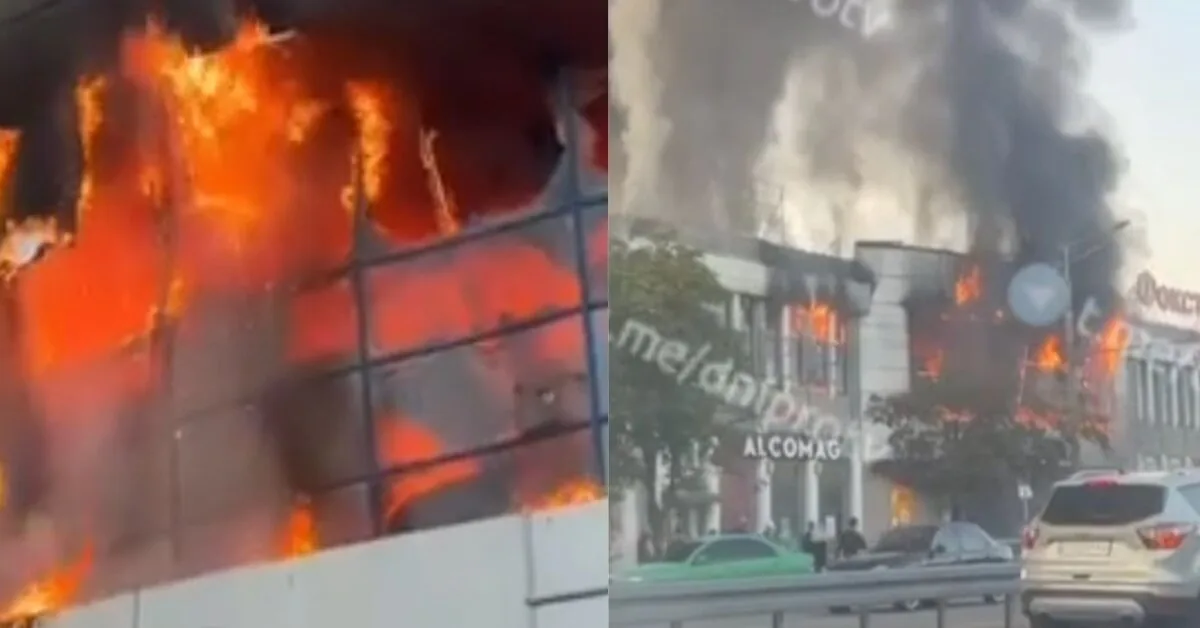
The publication reports that a state of emergency has been declared in Crimea, and in other occupied Ukrainian territories, attempts are being made to secure essential resources, as civilians continue to suffer from deteriorating living conditions.
Read more «Financial Times»: EU must not weaken sanctions on Russia — this could have severe consequences
Ukraine’s long-term drone and missile campaign against Russian oil refineries, fuel depots, and logistics facilities is causing real damage to Moscow’s ability to sustain both its war machine and domestic stability.
“The turning point has not yet been reached. However, the balance of power is shifting in Kyiv’s favor,” the publication states.
It is also noted that whatever the final outcome of the war, it has been largely determined by the catastrophic inefficiency of the Russian armed forces.
According to the publication, Russian President Vladimir Putin may remain in power, but the country’s economic foundations are rapidly crumbling beneath him.
“Even if Russia retains the currently occupied territories of Ukraine, it is unlikely to gain enough benefit from them to justify the human losses, financial costs, diplomatic isolation, and industrial decline suffered since 2022. Victory, however Moscow defines it, will no longer bring the prosperity that conquests once promised,” the article states.
The publication emphasizes that the most important question is not how the war will end, but what Russia will be like after the fighting ceases.
“Long-term instability in one of the world’s largest energy exporters will change investment flows, supply chains, and energy prices from Vietnam to Ireland,” the publication predicts.
According to the publication, politicians focused solely on military actions are overlooking the economic changes that are already underway.
It is predicted that even if sanctions are lifted after the war, Russia’s reputation as a supplier will continue to make investors seriously reconsider. Europe, long the largest consumer of Russian hydrocarbons, is the clearest example of this.
Read more Historian who defended Ukraine – openly about the mood in the country: ‘No end to the war in sight’
As recently as 2025, Russia accounted for about 12% of the European gas market, but in January 2026, the European Union officially banned all imports of Russian gas and plans to completely phase out remaining supplies by the end of 2027. Brussels no longer wants to return to a situation where the continent had become a hostage to “Gazprom”.
It is noted that US exporters have become the largest suppliers of liquefied natural gas to Europe – in the first quarter of 2026, they secured about 63% of all EU LNG imports.
“Increased Chinese energy purchases after a peace agreement will not be a sign of goodwill towards Moscow. It will only strengthen Beijing’s leverage. The longer this imbalance persists, the more opportunities China will have for economic expansion in Russia’s Far East and Eastern Siberia,” the publication notes.
Barring a political upheaval, which is unlikely as long as V. Putin remains in power, Russia will formally retain sovereignty but will gradually transform into a semi-vassal state, whose ability to act independently will diminish year by year.
A peace agreement on Ukraine will not stop competition in global markets. According to the publication, Russia’s damaged infrastructure, sanctions, and uncertain political future provide real opportunities for competitors to take over its market share.
“Even China – most likely the largest buyer of Russian products – is interested in keeping all options open: both to push down prices and to maintain political influence over Moscow,” the publication states.
It is noted that peace with Ukraine, whenever it is achieved, will not automatically rehabilitate Russia. Moscow will emerge from this war either more authoritarian or more unstable, economically weaker, more dependent on China, and a significantly less reliable energy partner than it was in 2021.
“Damage to its reputation as a supplier is not a public relations problem. It is a structural problem,” the publication notes.
Read more Deimantė Radzevičiūtė triumphed in the «Drift Grounds» stage after a fierce battle