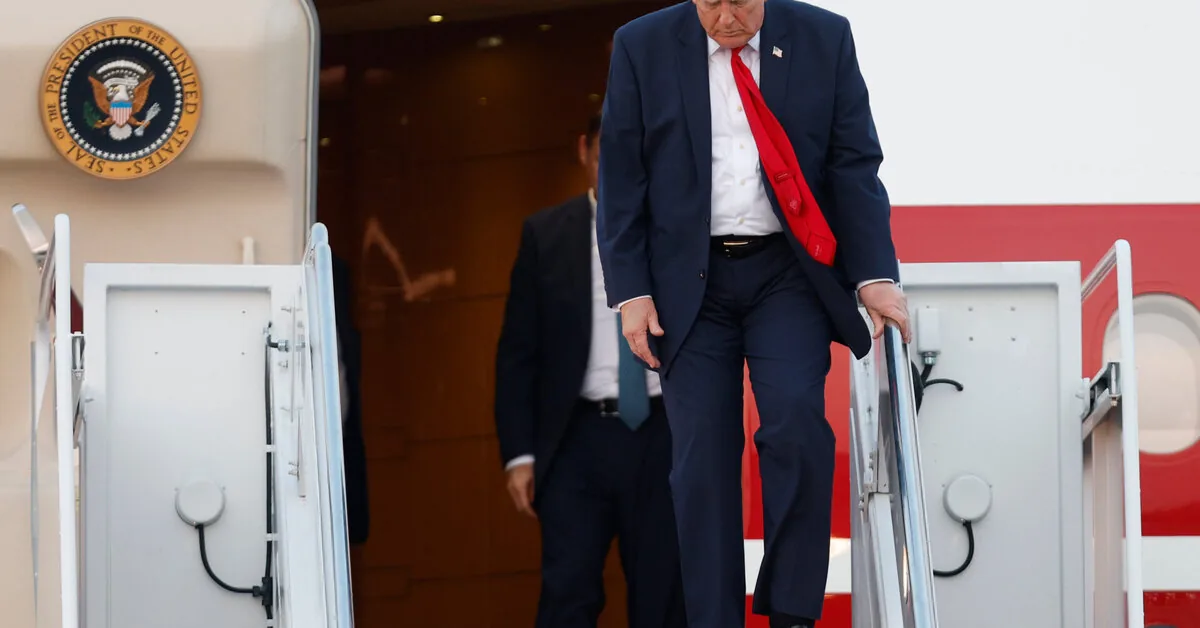
According to sources familiar with the plans, US officials have prepared possible scenarios that would allow D. Trump to impose new tariffs on dozens of countries when the 10 percent global import tariffs announced by the president expire this week.
Read more In Spain – mass poisoning of holidaymakers: dozens of people ended up in hospital
On Monday, D. Trump announced 50 percent tariffs on Canadian goods, having previously applied a 25 percent tariff on imports from Brazil. This shows that the president remains focused on using tariffs as a leverage tool against trade partners.
New tariffs would be introduced following an investigation into forced labor practices – US authorities would assess whether imported goods are produced using forced labor. Such a mechanism would allow D. Trump to apply tariffs based on ordinary trade laws, rather than emergency powers, the use of which has been restricted by the Supreme Court. It is expected that new tariffs will soon be similar in size to the existing 10 percent tariffs, but the US administration is also conducting other investigations – including those into unfair trade practices, national security threats, and other potential violations. Their results could provide a legal basis for D. Trump to impose higher tariffs. Behind the scenes, high-ranking officials have urged the president to maintain stability in relations with trade partners and adhere to agreements Washington made with them in 2025 to reduce tariffs, according to two sources familiar with the situation.
Following the Supreme Court’s decision in February, Washington switched to a 10 percent tariff regime, but these measures are expected to expire on Friday.
Read more Selected the best and worst World Cup XIs
D. Trump’s attempt to renew the trade war comes at a time of increasing tension between the US and Iran. This situation has shaken global energy markets and poses a risk that the conflict could escalate into a broader regional confrontation.
The war has caused economic hardship for ordinary Americans – this week, gasoline prices again rose above $4 per gallon, which could further fuel voter dissatisfaction over high living costs.
Read more Russia’s National Guard is preparing for the worst