Greta has been suffering from migraine for 16 years. She says that the impact of the illness is felt even between attacks – she constantly has to monitor her environment, avoid triggers, and plan even the simplest activities. “Migraine affects me not only on the days when the pain is severe. Even between attacks, I have to think about what might provoke the pain – light, sounds, smells, or physical exertion,” Greta shares.
Read more Pep Guardiola Award – an unexpected national team call-up
Because of this, she constantly wears sunglasses, uses earplugs in noisy places, and assesses whether there will be too many triggers before going to a new place. “The biggest provocateur for me is light, especially flashing lights. Because of this, I have to limit events, concerts, or even certain TV broadcasts,” she says.
An invisible illness does not mean it does not exist
Greta says that one of the hardest things is the lack of understanding from others. At school, migraine was often taken as a simple headache, although during an attack she can experience not only pain but also visual or sensory disturbances.
“People think that drinking water, sleeping, and it will get better. But migraine is a neurological disease that affects the whole body. During the pain, I can lose vision in my right eye, one side can go numb, and the whole environment starts to irritate me,” Greta shares.
She felt more understanding only at university, where there was an opportunity to study under adapted conditions. Still, Greta says that invisible illnesses are still talked about too little in society. “An invisible illness does not mean it does not exist. I live with it every day and feel controlled by my illness,” the young woman insists.
Migraine is not revealed only by the intensity of pain
Family doctor Jurga Dūdienė emphasizes that migraine is not just a stronger form of tension-type headache, but a specific neurological disorder, according to a press release from the “Meliva” clinic and “Gintarinė vaistinė”.
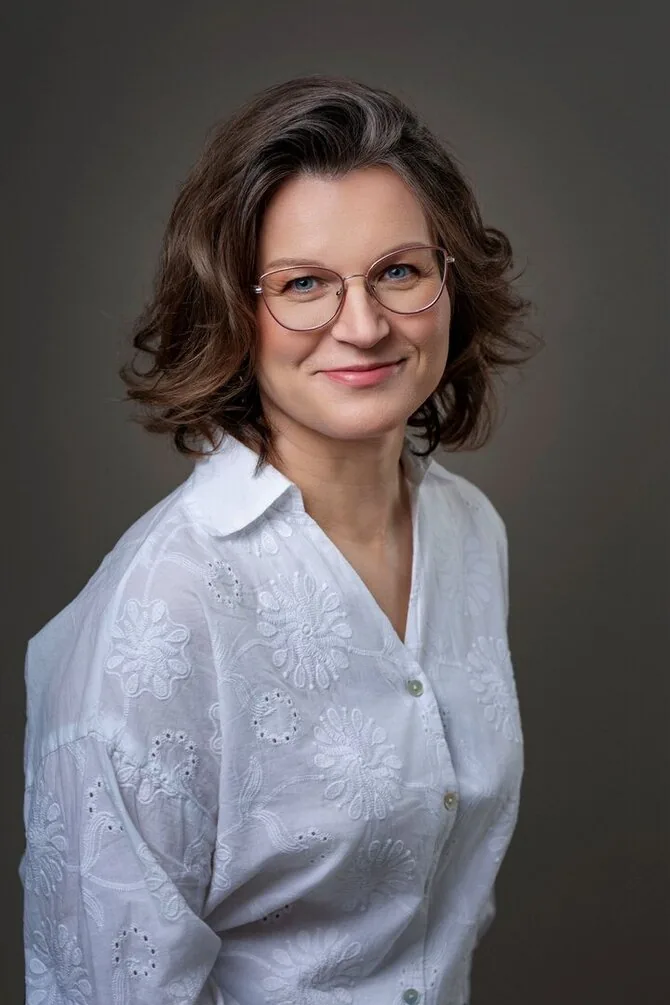
“Migraine is characterized by a pulsating, throbbing pain often felt on one side of the head. It intensifies with movement – climbing stairs, bending over, or even changing body position. Therefore, people often look for a position where they can lie down and move as little as possible,” the doctor explains.
According to her, migraine pain can last from several hours to several days. It is often accompanied by nausea, vomiting, sensitivity to light, sound, and sometimes smells. Some people experience an aura before an attack – visual flickering, “blind spots,” numbness in the hands or face, speech disturbances.
“Tension-type headache is usually different – more pressing, bilateral, resembling a band around the head, and movement usually does not worsen it as much. Also, it is not characterized by severe nausea or strong sensitivity to the environment,” notes J. Dūdienė.
Accepting the pain
Pharmacist Kristina Šnirpūnienė says that patients who come to the pharmacy with frequent headaches have already come to terms with them. They know which painkillers help them but do not consult a doctor, even though the pain recurs for years.

“In Lithuania, migraine was diagnosed in 24 thousand residents in 2023, but I am sure there are more sufferers. People find painkillers or methods that ease the condition during an attack and do not seek medical help,” says the pharmacist.
In such cases, it is important not only to dispense medication but also to ask how often the headache occurs, how many painkillers are used, whether the attacks have changed, and if there is nausea, sensitivity to light, sound, or smells.
“Frequent use of painkillers can cause adverse effects on the body and over time contribute to the headache problem itself. Therefore, it is important not only to relieve each attack but also to seek appropriate treatment,” emphasizes K. Šnirpūnienė.
When not to delay a visit to the doctor
According to J. Dūdienė, it is necessary to see a doctor when the headache becomes very severe, its usual nature changes, neurological symptoms appear, changes in consciousness, severe nausea or vomiting. Also – when attacks become more frequent, interfere with studying, working, or living a normal rhythm.
“A family doctor can diagnose migraine when symptoms are typical and the course is not complicated. However, if chronic migraine, atypical aura, migraine complications, or headache due to medication overuse are suspected, the patient is referred to a neurologist,” she says.
According to J. Dūdienė, when attacks are frequent, preventive migraine treatment may be prescribed – daily medications reduce the number of attacks. In more complex cases, neurologists can select biological therapy. “With properly adapted treatment, a person’s quality of life can significantly improve. Patients often regret only one thing – that they did not seek help earlier,” says the doctor.
When the disease is difficult to predict, people start to avoid travel, events, and look for more flexible work. “Life starts to revolve around the question: what if an attack starts now? Even between attacks, some people feel fatigue, concentration difficulties, the so-called migraine shadow. This can lead to anxiety, social isolation, conflicts at work or studies,” notes J. Dūdienė.
One medication is not suitable for a lifetime
The pharmacist notes that some patients take the same medications for a long time, even though their condition has already changed. If attacks become more frequent or medications work less effectively, it is necessary to inform the doctor.
“Specific medications can be prescribed to treat migraine, including triptan group drugs. They are intended to relieve migraine attacks and can help reduce not only pain but also other symptoms such as nausea or sensitivity to light. However, the most appropriate treatment is selected by the doctor, considering the frequency of attacks, comorbidities, and other medications used,” explains K. Šnirpūnienė.
She recommends that migraine sufferers keep an attack diary, noting when the pain started, how long it lasted, its intensity, what medications were used, and what triggered it.
“Migraine can be triggered by stress, hunger, lack of sleep, alcohol, smoking, hormonal changes, or certain foods. However, these factors do not always act the same – what triggers an attack one day may cause nothing the next. A diary helps to notice patterns and allows the doctor to assess treatment effectiveness,” says the pharmacist.
Read more Exceptional case at Santaros Clinics: three heart transplants in one week