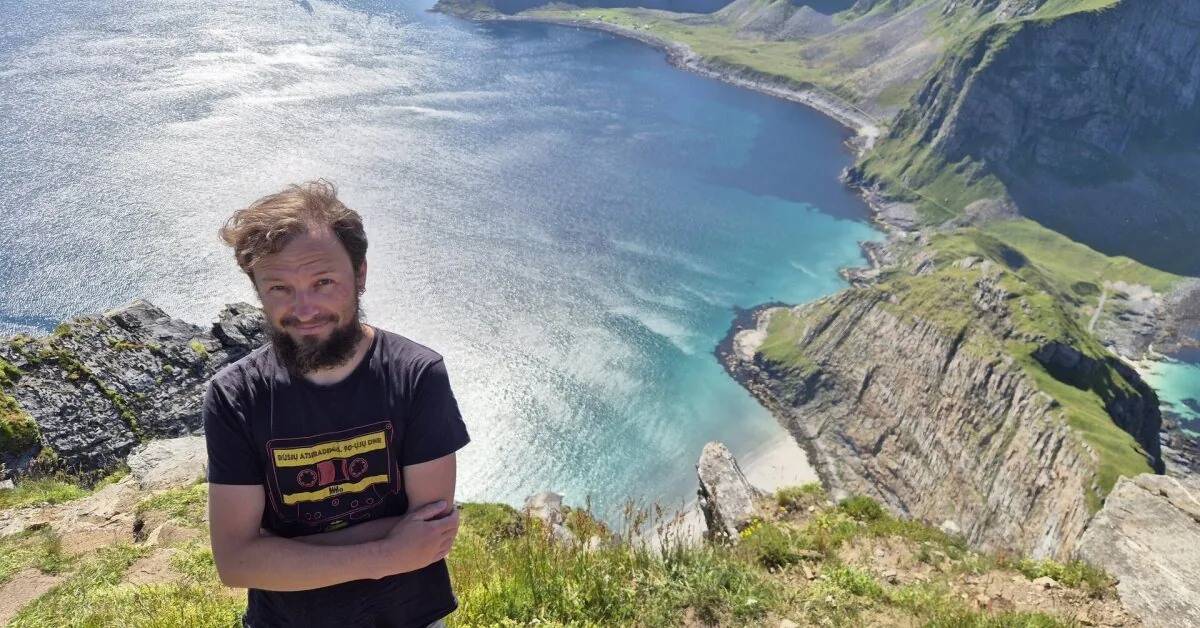
15min.lt interviewed Džiugas about what he is living for today, how he feels, and what message he could convey to the person who needs support more than ever today.
Read more He who dared to challenge Putin: then the masked Kremlin men knocked on the door
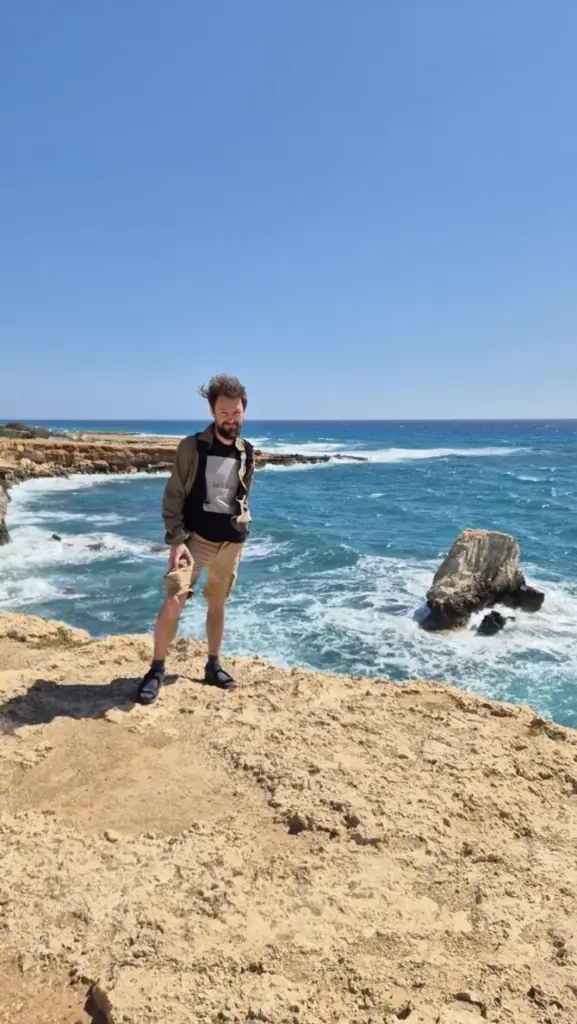
“Today I feel good – I try to live exactly as I did before. True, that normality is somewhat different because new routines have appeared, but despite them, I do everything as before: I work, eat, try not to limit myself too much, travel, swim,” the man shares about his daily life and adds that after telling about his illness on Facebook, he did not expect to receive so much attention.
The beginning of the illness – almost unnoticed
Asked about the onset of the illness, he says it is hard to say when it all started because he did not feel bad, and the first possible symptoms did not seem frightening.
The main problem he struggled with for a long time was more frequent bowel movements. However, as Džiugas notes, there were days and weeks when everything settled down, and his condition returned to normal.
“That’s how I lived, attributing the symptoms to other causes, telling myself it was nothing serious, and there was no blood, so I continued living. My weight did not drop, I was not nauseous, I felt good. Still, the more frequent bowel movements, which I later read about and which was the only most obvious symptom of rectal cancer in my case, eventually led me to doctors,” Džiugas recalled.
After visiting specialists, everything happened quickly. One test after another, so the diagnosis was revealed both quickly and unexpectedly. “After the colonoscopy and hearing the diagnosis, silence started ringing in my ears. I looked at other people and thought how happy they were and what a failure I was. As it turned out later, comparing myself to others would be one of the hardest tasks to overcome in order to help myself come to terms with the new situation and adapt to it without losing self-esteem. Even now I marvel at where I found the strength and determination that same afternoon to pick up Albert from kindergarten, then go with him to sledding training – playing in the forest. As it also turned out later, allowing myself not to stop life was the best decision, allowing me to chase away thoughts about a collapsed, thus perhaps not worth continuing life, and move forward,” Džiugas wrote in his Facebook post.
He continues that the unexpected news took a lot of time to come to terms with what happened, to model what awaits later, how to tell the children, parents, and other closest people, and to be able to ask them for help.
“From the very first day, there was no desire to hide or conceal. There was some withdrawal, but as much as possible, I tried to experience it openly before myself and by talking with the closest ones. And those conversations helped me not to break down, not to think that everything had collapsed. But that time was difficult. I lived with the news that I had cancer for less than a month, so half of it passed with uncertainty about what would happen, what treatment awaited.
I had to wait for the results, so there were all kinds of thoughts – maybe this is my last skiing trip, which we organized with the children at that time? There was quite a lot of inner drama, but I am glad I managed to withstand everything that awaited, make decisions about treatment, which were also extraordinary,” the man said.
Surgery and life after it
As Džiugas tells, after the tests, a treatment plan was presented to him – it was suggested to perform surgery and form a stoma. “The tumor is large and located low, but still without metastases, so the hospital council proposes to form a stoma and completely remove the anus. Wiping away tears and waiting for the surgery date, and later the surgery itself, I had to become a self-taught doctor for a couple of weeks and try to find out if modern medicine really had nothing less radical to offer for my case,” Džiugas wrote, finally deciding on surgery after long considerations.
Read more Protesters demand a ban on tourist horse carriages in the Polish Tatras
He adds that one can choose not to agree, but at that time his own knowledge about this particular disease and treatment was limited. After researching other treatment methods and consulting doctors, he wanted to be sure. “I had to weigh everything, find arguments. That’s what I did – I don’t know if I did everything, but I feel I found out a lot,” the man said.
Speaking about how he lives today with a stoma, he says that time is the factor that helps the most. In the first week and the first couple of months, those dark thoughts were much more frequent than now. “Thinking about why I need to change that bag, why it hurts when sitting, and in general – why me? Such thoughts definitely existed, but today I try not to drown in such reflections. Life has changed, you need to adapt, overcome yourself, learn not to compare yourself and not look at other people’s bellies. Time heals – it helps to come to terms, not question what happened. The question ‘why’ will not provide an answer. The less you ask yourself that question, the easier it will be to live and enjoy what you have today,” the man says.
Children help the most
Facing a serious illness, the path is not easy, and emotional storms do not leave peace for a long time. What becomes a counterbalance and helps Džiugas find balance? The surprise and sudden illness helped him clarify certain values, and what was important in life before became even more important.
“I started to value it even more. Also, other things appeared, for example, the ability to say ‘no.’ I don’t do what I don’t want to do. And the main strength is the relationship that changed with myself. I listen to myself even more. Experience has shown that life can be too short to do what you want,” the interviewee shared.
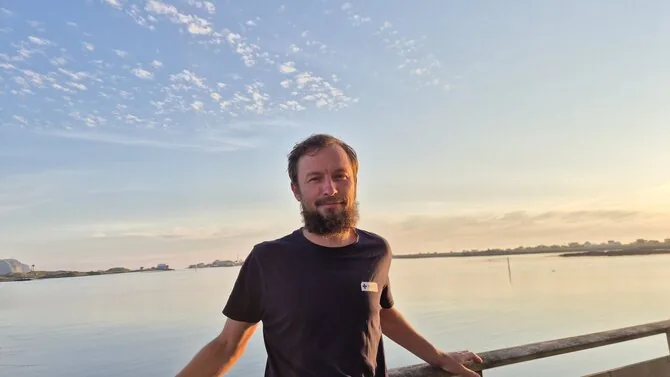
The biggest supporters are Džiugas’s three children. Time with them both before the illness and now, being together, gives the most motivation and strength not to stop, not to break, not to give up. “I can’t allow myself that. And with the children, everything seems very clear. That joy makes up for everything,” says Džiugas.
A word to another
Asked what advice he would give to others, what he could say to someone who is on a similar path, hearing a diagnosis that changes life, the man openly says that there is no single piece of advice.
“During the colonoscopy, I asked myself why this happened to me? But there is no single reason why people get this cancer. There are known factors – diet, alcohol, stress, lack of physical activity, lack of sleep, but these factors can apply to any disease and its prevention. If you can live healthier, you should do so. In my case, looking back, you blame yourself for eating or drinking too much of something, but the most important thing is to listen to your body and if one or another symptom worries you, go get tested,” Džiugas says and adds that only after researching did he learn that this cancer is getting younger, cases are increasing, and it is often called a disease of young people.
He continues that if he could turn back time, he would have gone to doctors to get checked after a month, not waiting, especially since the first test – the occult blood test – is very quick and painless. “I advise not to delay, not to attribute your condition to other factors, because health is the only one,” the man says.
What would he say today to someone facing a similar diagnosis? “If I had to say one word – it would be ‘gratitude.’ Gratitude for what you have. That was my starting point in the first weeks after surgery. Feeling it made it a little easier to look ahead, come to terms with the situation. You can be angry, blame yourself or others, but I choose to be grateful for what I have – for the opportunity to walk this earth, raise children, enjoy life and travel. That was the most important thing for me in overcoming myself and getting out of the blame cycle,” said Džiugas.
Read more „Atlanta Hawks“ traded the Frenchman selected with the first pick